
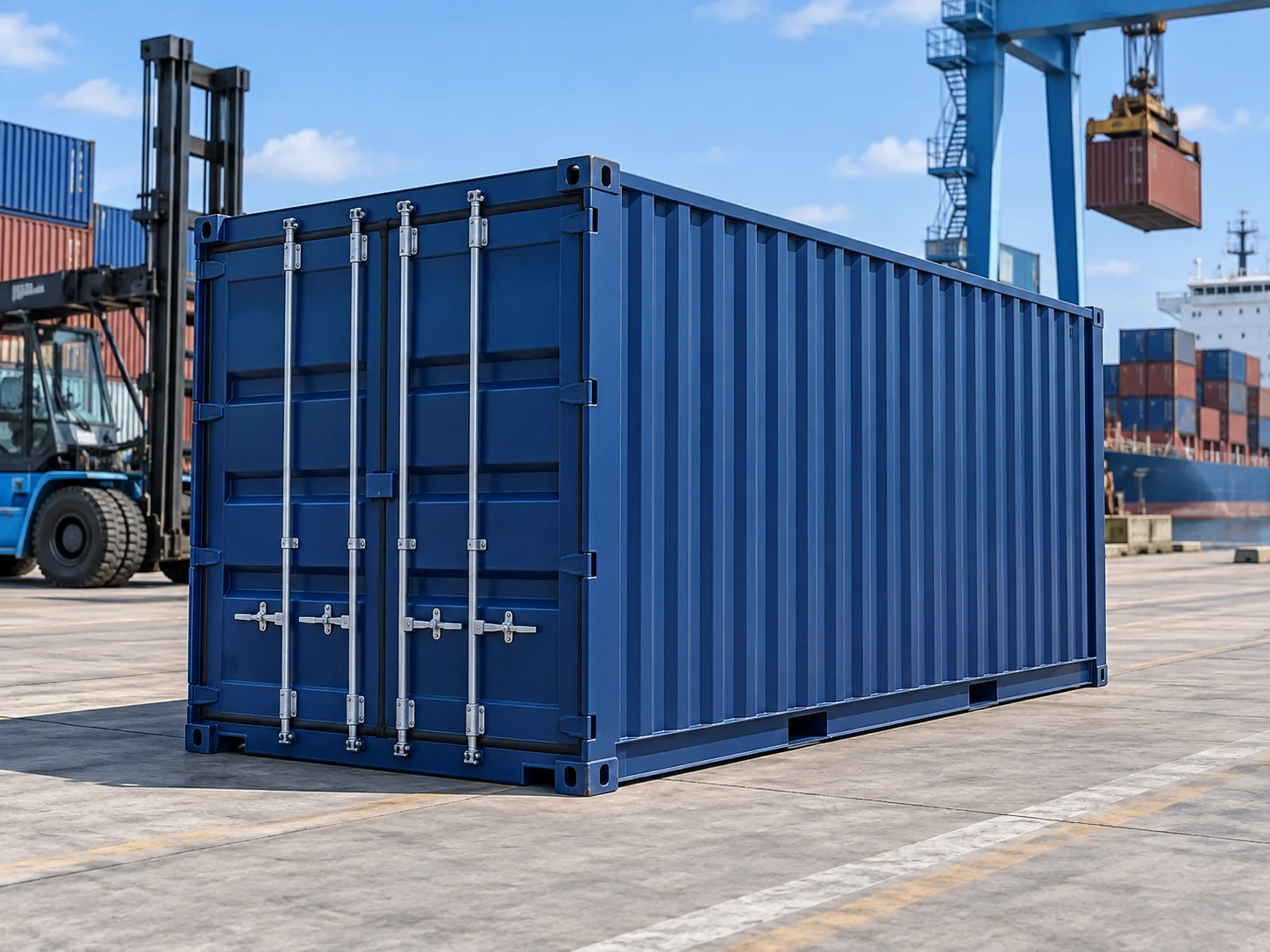
20ft standard container
A compact format widely used for dense cargo, industrial goods, crates, cartons and palletised freight. Its nominal internal capacity is about 33 m³.
Understand the differences between 20ft, 40ft, 40ft High Cube, reefer, open-top and flat-rack containers and choose the right equipment for international sea freight.
Definition
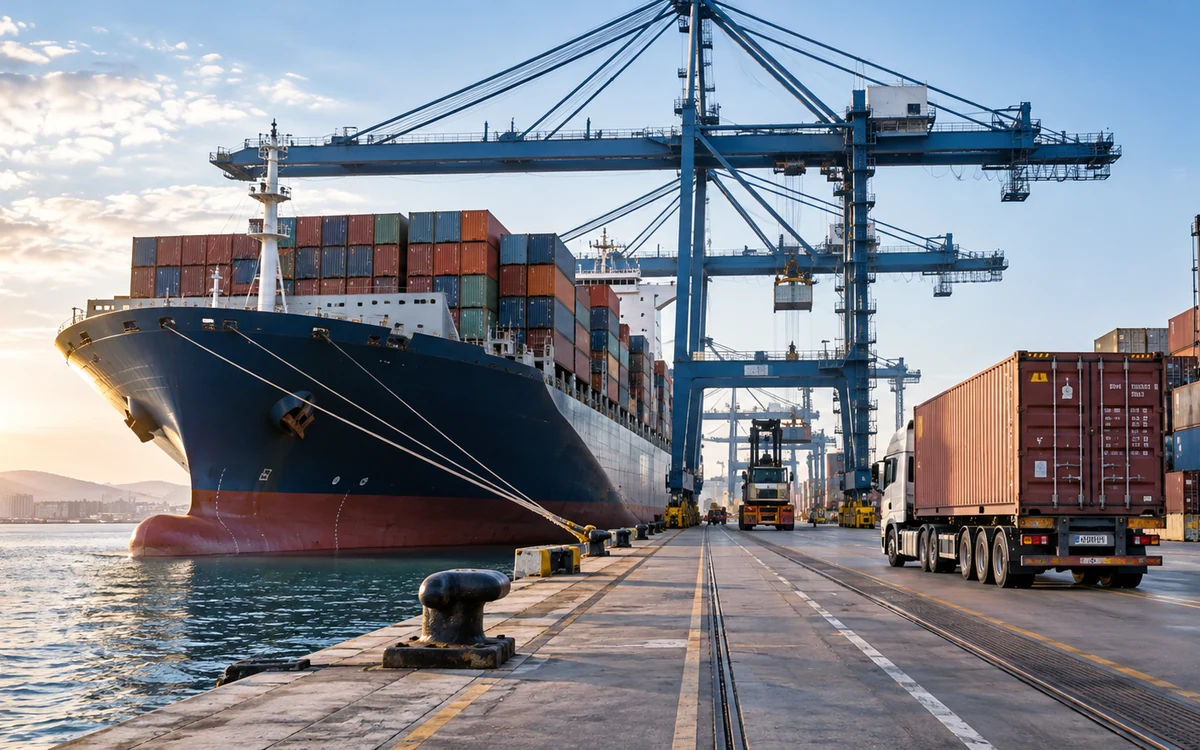
A shipping container is a standardised transport unit designed to move goods through several modes without repeatedly unpacking and reloading the cargo. The same unit can travel by truck, rail and vessel, which is the basis of modern intermodal transport.
The most common units are 20ft and 40ft dry containers, but the shipping industry also uses High Cube, reefer, open-top and flat-rack equipment. The correct choice depends on the dimensions, weight, loading method, temperature requirements and whether the cargo is standard or out of gauge.
Drivet Transport International reviews the complete shipment rather than selecting a container from volume alone: inland access, stuffing method, port routing, sea-freight service, customs requirements and final delivery all need to remain consistent.
Container types
Each container type answers a different loading requirement. The dimensions and capacities below are indicative and must always be checked against the equipment actually supplied by the shipping line.
A compact format widely used for dense cargo, industrial goods, crates, cartons and palletised freight. Its nominal internal capacity is about 33 m³.
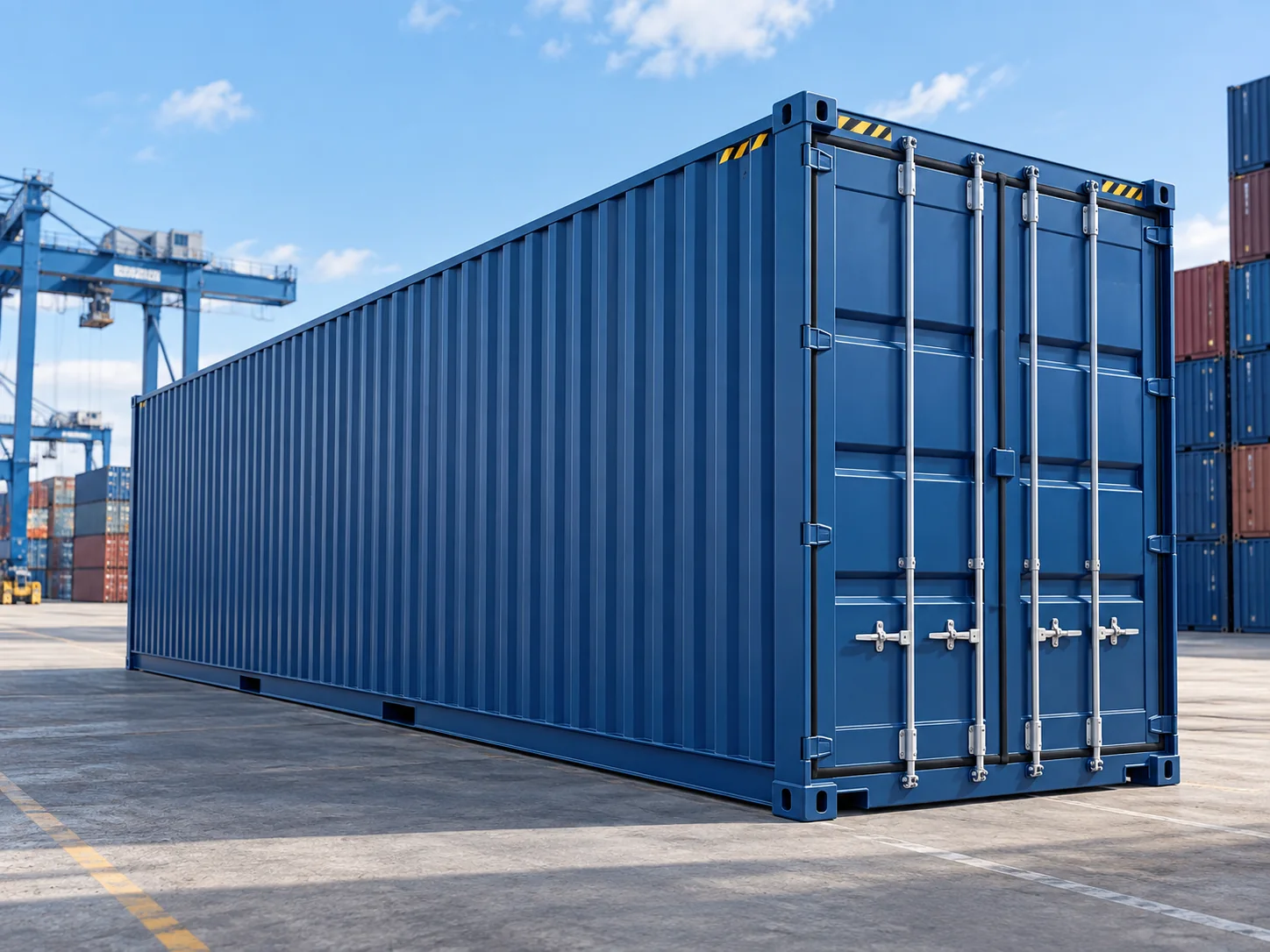
Nearly twice the internal volume of a 20ft container, with around 68 m³ nominal capacity. Suitable for larger consignments and bulky standard cargo.
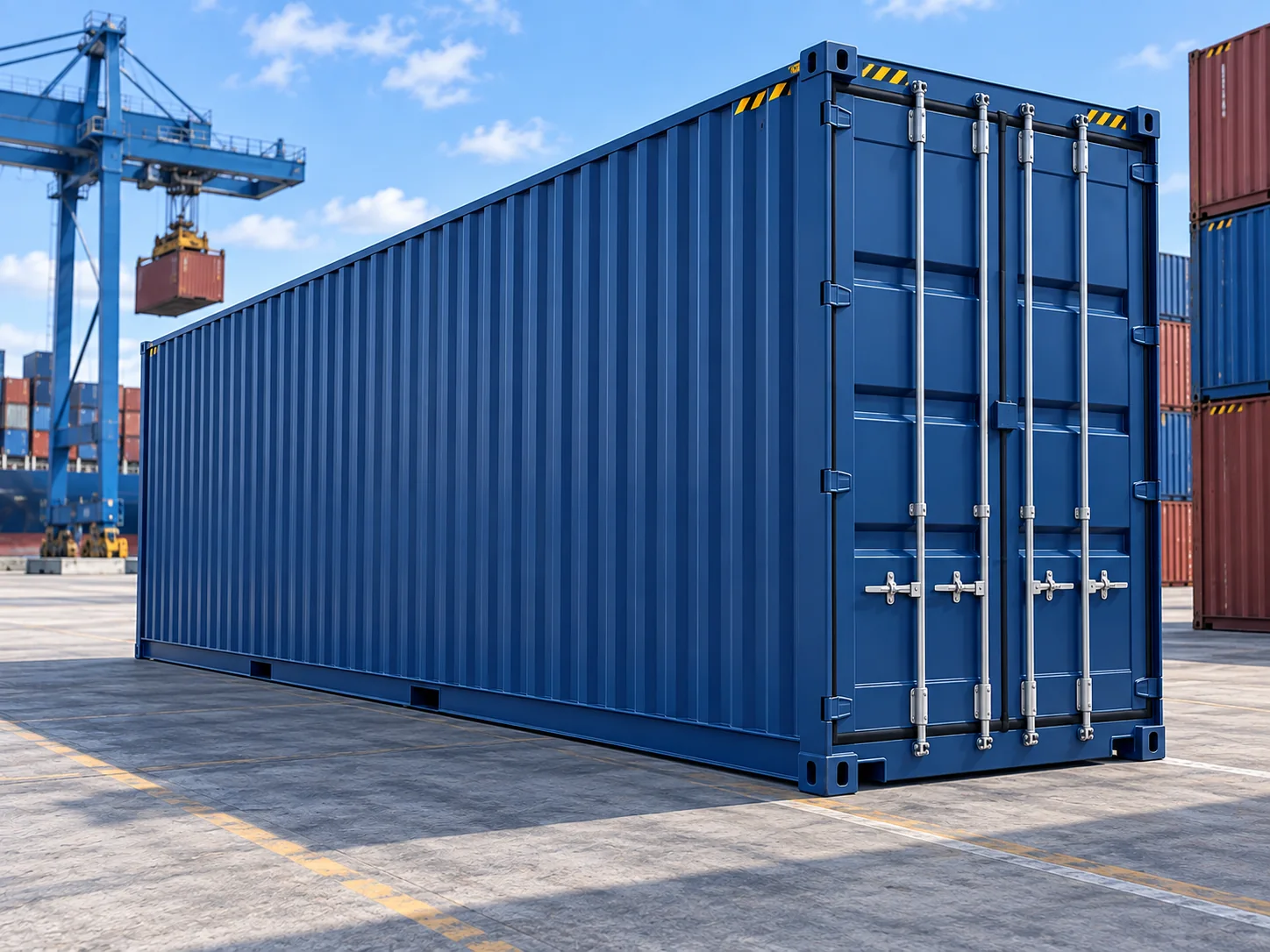
Higher than the standard 40ft container, with around 2.70 m of internal height and about 76 m³ nominal capacity. Useful for high-volume, relatively light cargo.
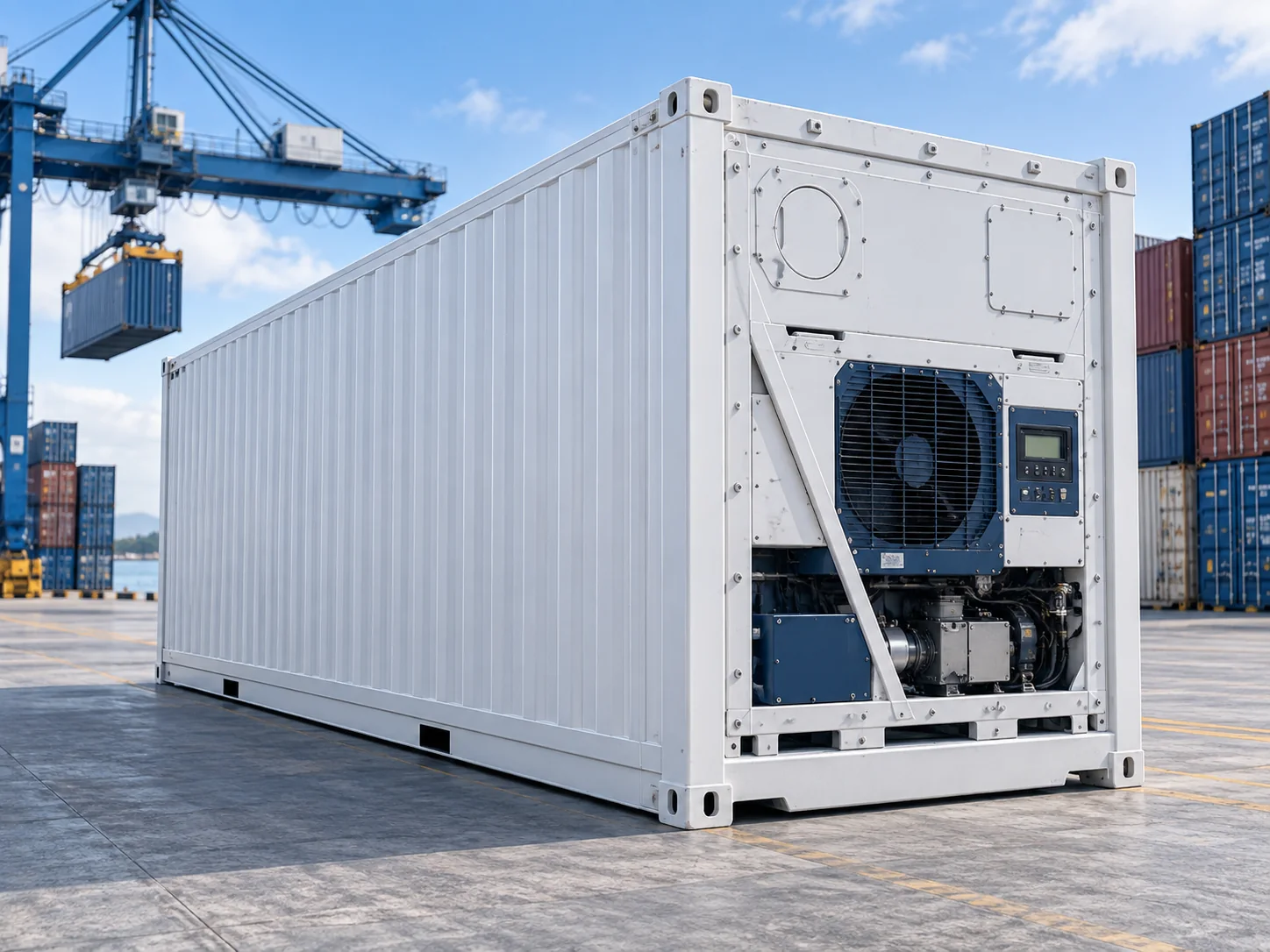
Thermally insulated and equipped with a refrigeration unit for cargo requiring controlled-temperature transport. Internal dimensions are reduced compared with a dry container.
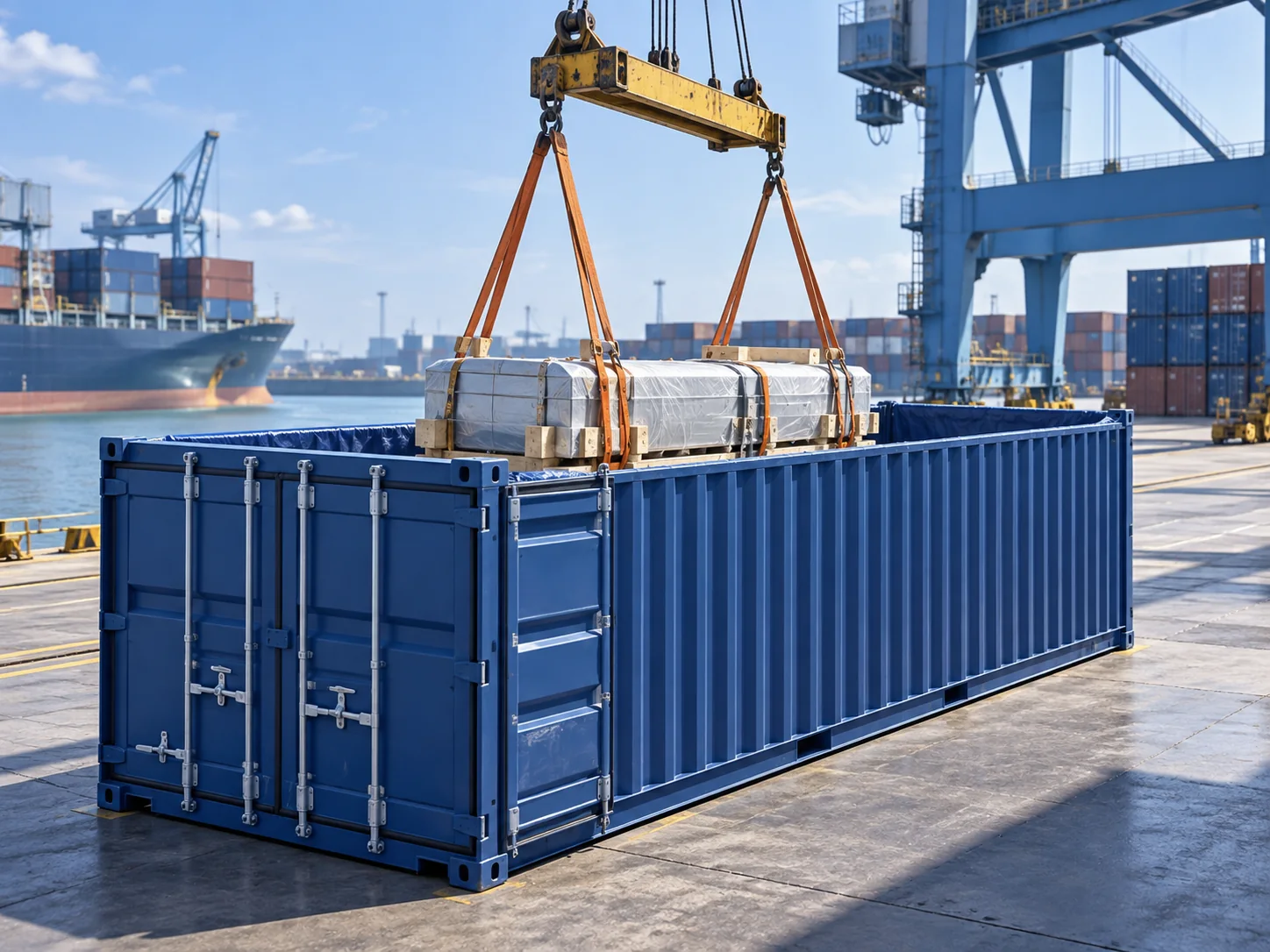
Designed without a fixed rigid roof so that heavy or bulky cargo can be loaded vertically by crane or overhead lifting equipment.
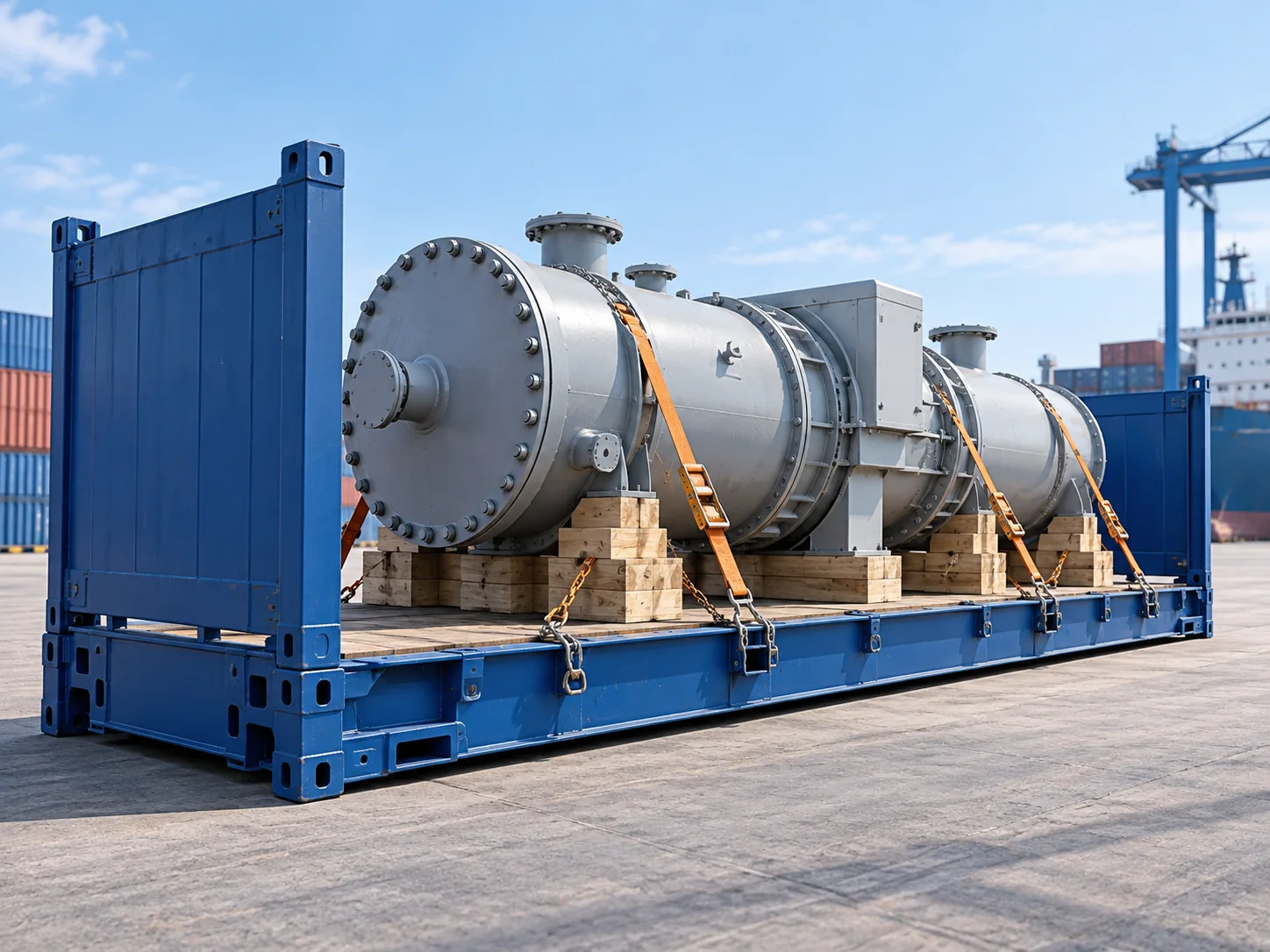
Designed for heavy, oversized, over-height or over-width machinery and industrial equipment. Securing and out-of-gauge dimensions require specific review.
Technical guide
The figures below are representative values from current carrier fleets. Tare, payload and exact measurements can vary from one unit to another.
Internal dimensions
5,90 × 2,35 × 2,39 m
A compact unit with a high payload-to-volume ratio, often relevant for dense cargo.
Internal dimensions
12,03 × 2,35 × 2,40 m
The standard large-volume container for palletised goods, crates, cartons and industrial cargo.
Internal dimensions
12,03 × 2,35 × 2,70 m
The additional internal height provides more cubic capacity for bulky or relatively light cargo.
FCL & LCL
In FCL (Full Container Load), the container is reserved for one shipper’s cargo for the shipment concerned. In LCL (Less than Container Load), several shippers share the same container through consolidation and deconsolidation operations.
The right choice depends on volume, weight, sensitivity, handling, transit time and total cost. Our dedicated sea-freight page explains how Drivet Transport International reviews FCL and LCL solutions.
Loading and safety
The goods must be distributed coherently inside the container, taking account of axle loads during inland transport, centre of gravity, fragile areas and the container’s maximum permitted masses.
Pallets, crates, machinery and loose packages must be blocked and secured to prevent movement during road handling, terminal operations and the vessel voyage.
The verified gross mass of the packed container is required before loading on board. Under SOLAS, the shipper is responsible for providing the VGM using an authorised weighing method.
Customs documents and export/import requirements must also be prepared in parallel. Drivet Transport International can coordinate the transport flow with specialised partners and customs representatives where required.
Special equipment
For temperature-sensitive goods, reefer containers maintain a controlled environment during the ocean leg. Product requirements must be confirmed before booking. See our temperature-controlled transport solutions.
Useful when the cargo must be loaded vertically by crane because it cannot pass through standard doors. The final height, lifting method and tarpaulin closure must be reviewed in advance.
Used for heavy and out-of-gauge machinery or structures. The transport can also involve specific inland handling and abnormal-load transport before or after the port.
Drivet Transport International
A 20ft dry container offers about 33 m³ of nominal internal capacity, while a 40ft dry container is around 68 m³. The 40ft therefore offers roughly twice the volume, but the usable payload does not double because the container itself is heavier and gross-mass limits apply. The final choice depends on volume, weight distribution, cargo dimensions and transport costs.
A 40ft High Cube container has the same approximate length and width as a standard 40ft container but is about one foot higher externally. Its internal height is around 2.70 m and nominal capacity around 76 m³, making it useful for bulky, lightweight or high-volume cargo.
The choice depends on the cargo dimensions, total weight, packaging, loading method, sensitivity, need for temperature control and whether the goods are oversized. Drivet Transport International can review the shipment and select the most coherent equipment with the shipping line.
A reefer container is designed for goods that must travel in a controlled-temperature environment. Depending on the product, this may concern food, pharmaceutical or other temperature-sensitive goods. The required set point, packaging and product instructions must be confirmed before booking.
An open-top container has no fixed rigid roof and can be loaded from above, which is useful for heavy or bulky cargo that cannot be loaded through standard rear doors. Crane loading and the final cargo height must be reviewed before shipment.
Flat-rack containers are designed for heavy, bulky, over-height or over-width cargo. They are particularly relevant for machinery, industrial equipment and project cargo. Dimensions, weight, securing and out-of-gauge restrictions must be checked for each shipment.
Yes. Under SOLAS VGM requirements, the verified gross mass of a packed container must be available before it is loaded onto the ship. The shipper is responsible for providing the verified mass according to an authorised weighing method.
Yes. Depending on the shipment, Drivet Transport International can coordinate road or rail pre-carriage to the port, the sea-freight booking, customs coordination and final delivery after arrival, providing one operational point of contact for the full chain.
Related services
International
FCL, LCL and international sea-freight solutions from origin to final delivery.
Learn more
Import / Export
Coordination of customs formalities with specialised customs representatives and partners.
Learn more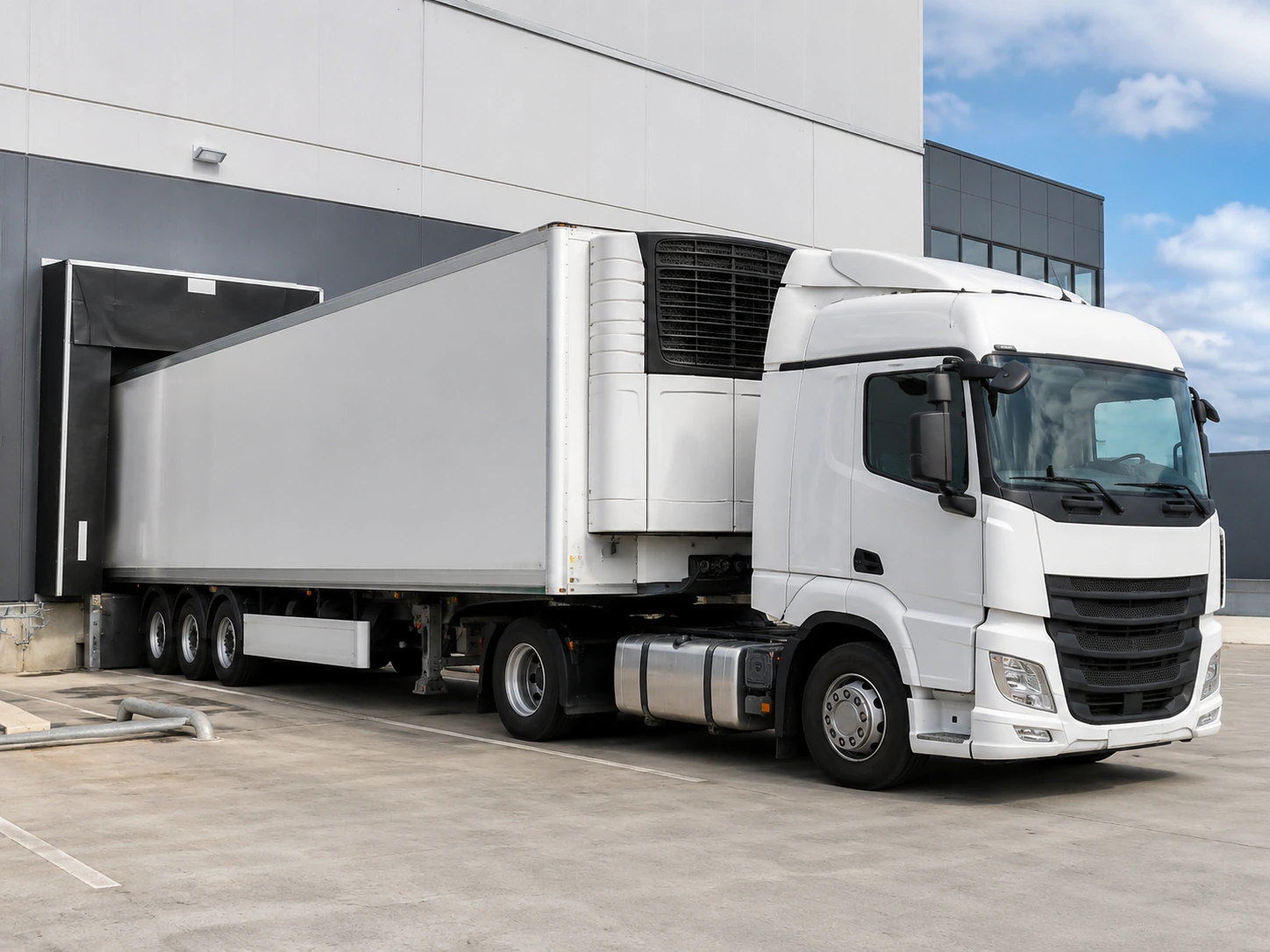
Temperature control
Solutions for goods that require a defined temperature range during transport.
Learn more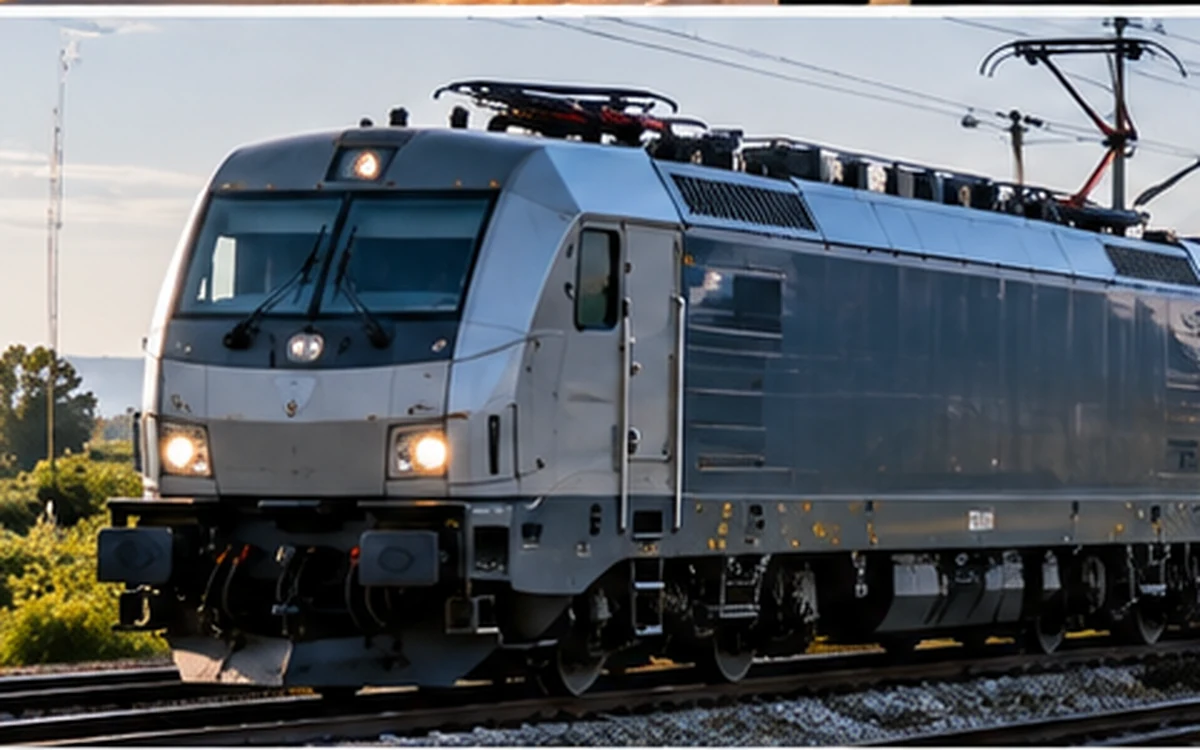
Intermodal
Rail and road-rail solutions for containers and long-distance freight flows.
Learn more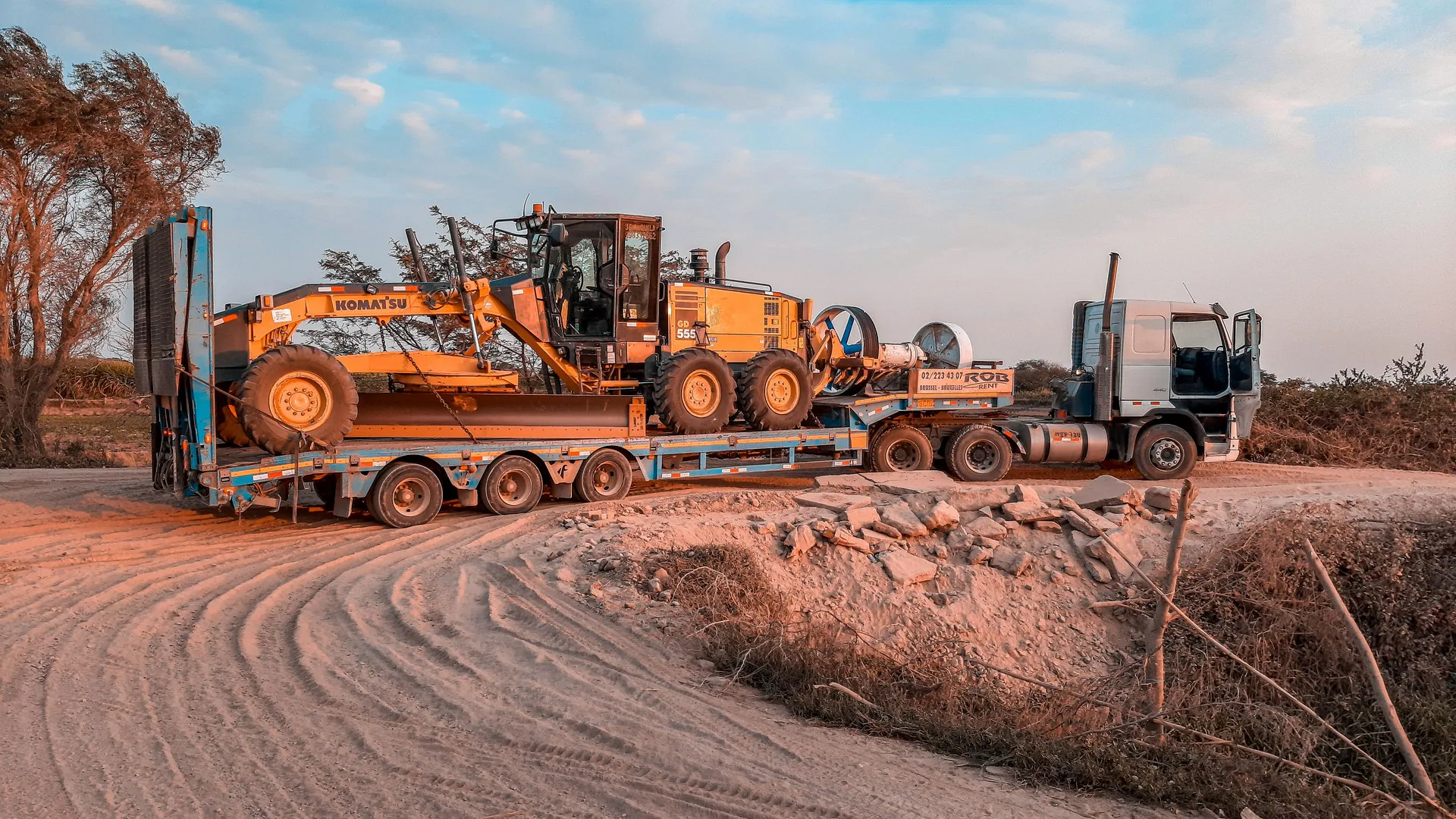
Oversized freight
Solutions for heavy, oversized and specific equipment requiring dedicated planning.
Learn more
Tailored organisation
A flexible solution for partial loads, full loads and specific international flows.
Learn moreTransport request
Send us the origin, destination, goods description, number of packages, dimensions, total weight and loading constraints. We can review the most suitable container and sea-freight organisation for your shipment.