Logo Drivet Transport International
Menu

International · Sea

International sea freight

Drivet Transport International organises sea-freight shipments for imports and exports. From collection and pre-carriage to the port of origin through to destination-port handling and final delivery, we coordinate the different stages according to volume, destination, lead time and documentary constraints.

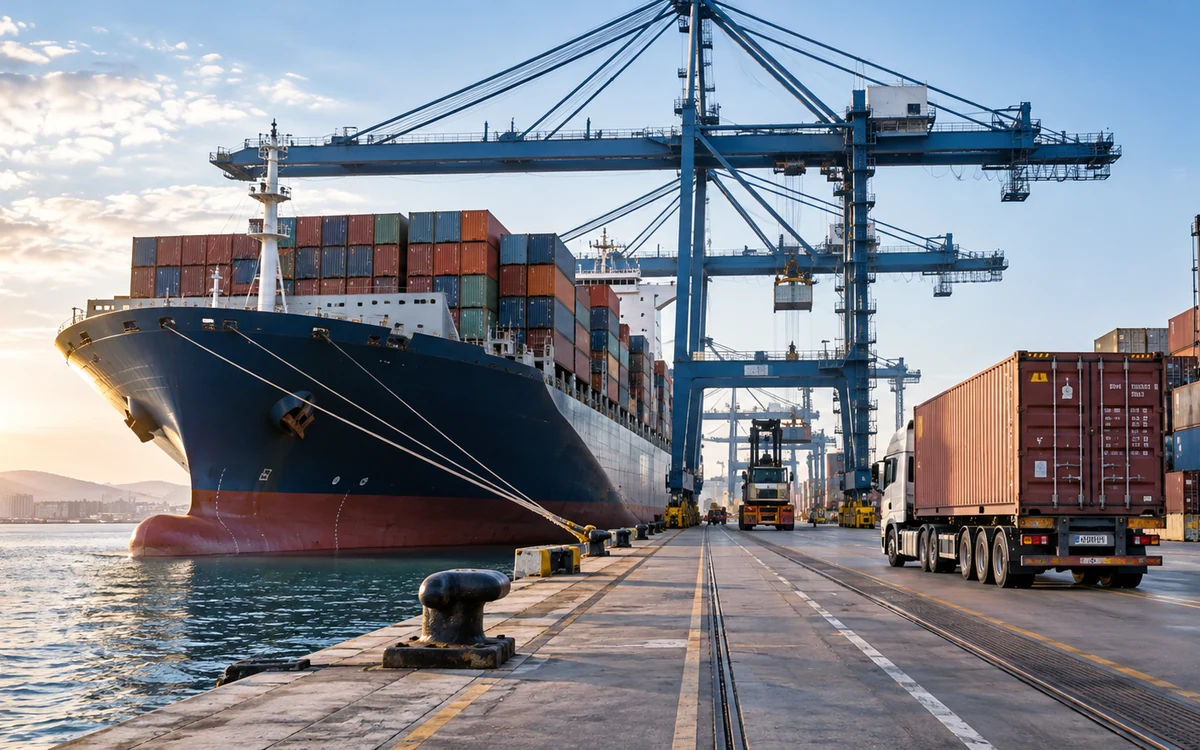
Container vessel and international sea-freight operations at a port terminal

FCL & LCL · Containerised sea freight

FCL or LCL: Drivet Transport International handles both shipping models

In containerised sea freight, choosing between FCL (Full Container Load) and LCL (Less than Container Load) is not only a question of volume. It also affects cost, handling, consolidation, transit time and shipment flexibility. Drivet Transport International reviews these factors to identify the most coherent sea-freight solution for each shipment.

Full container load

FCL: a container dedicated to your shipment

With FCL, the container is booked for one shipper’s cargo for the shipment concerned. It does not necessarily have to be physically filled to 100%: the key advantage is having dedicated container space without sharing it with other shippers’ cargo.

This model is particularly relevant for larger or regular volumes, cargo that should avoid intermediate handling, industrial equipment, or shipments where simpler loading and unloading is preferred. Depending on the requirement, Drivet Transport International reviews the suitable shipping container type, inland pre-carriage, port of loading, ocean carrier and final delivery.
Ocean groupage

LCL: sharing a container for smaller volumes

With LCL, several shippers share space in the same container. This consolidation service makes it possible to move a few pallets, cases or cubic metres without booking an entire container. Charges are generally based on the volume and characteristics of the cargo according to the ocean-freight provider’s rules.

LCL requires consolidation before departure and deconsolidation at destination. It can therefore involve more handling and slightly longer transit than FCL. Drivet Transport International reviews fragility, stackability, volume, weight, dates, origin, destination and customs requirements to confirm that LCL is genuinely suitable for the shipment.

Our role is not to favour FCL or LCL by default. We compare cargo volume in CBM, number of pallets or packages, weight, dimensions, sensitivity, shipping frequency, requested dates and inland pre- and post-carriage costs to build a reliable and understandable sea-freight solution aligned with the customer’s actual flow.

Decarbonising sea freight

Sea freight and sustainable marine fuels: reducing carbon impact where the option is available

Sea freight remains essential to international trade, but decarbonisation has become a major challenge. In Europe, the FuelEU Maritime Regulation, fully applicable since 2025, sets a progressive reduction pathway for the greenhouse-gas intensity of energy used on board covered ships.

Drivet Transport International takes this transition seriously. When the route, carrier and availability allow it, we can review sea-freight solutions associated with lower-GHG marine fuels, including sustainable biofuels, renewable or synthetic fuels, renewable methanol and other alternative solutions progressively introduced by ocean carriers.

Availability depends on the port, service, vessel and carrier programme. Depending on the ocean carrier’s offer, the reduction may be linked to physical use of alternative fuel or to a certified allocation mechanism such as mass balance or book-and-claim. We therefore review the conditions of each programme before presenting it to the customer, rather than making general emissions claims that cannot be evidenced.

Environmental performance is not only about fuel. Port choice, inland pre- and post-carriage, sensible use of container capacity, avoiding unnecessary road mileage and combining sea freight with rail where relevant can also help build a lower-carbon international supply chain.

Option subject to route availability

Lower-GHG marine fuels

Sustainable biofuels, synthetic or renewable fuels and renewable methanol are among the solutions being developed by the maritime sector. Their availability and environmental performance need to be reviewed case by case.

End-to-end planning

Decarbonising inland pre- and post-carriage too

International sea freight often includes several transport legs. Drivet Transport International can compare road, rail, departure port, arrival port and final-mile arrangements to identify a coherent solution across the entire journey.

Drivet Transport International

Frequently asked questions

What is the difference between FCL and LCL sea freight?+

FCL uses a full container for one shipment, while LCL consolidates several shipments in one container. The best option depends on volume, weight, destination, lead time and overall cost.

Can you organise door-to-door sea freight?+

Yes. Depending on the shipment, Drivet Transport International can coordinate collection, pre-carriage to the origin port, ocean freight, customs formalities with the appropriate specialists and final on-carriage to the delivery address.

What goods can be shipped by sea?+

Sea freight can be suitable for pallets, cases, industrial parts, machinery, equipment and many other packaged goods. Feasibility depends on packaging, dimensions, weight, destination and any product-specific rules.

Is sea freight suitable for high-volume shipments?+

Yes. It is particularly relevant to international flows involving large volumes and full containers where transit time allows an ocean solution. Smaller shipments may be reviewed as LCL groupage.

Can customs formalities be coordinated with sea freight?+

Yes. Drivet Transport International can coordinate the customs side of the shipment with the customs representatives and specialist partners involved. Classification, origin, value and the relevant customs procedure need to be confirmed.

Can dangerous goods be shipped by sea?+

Some dangerous goods may be accepted by sea subject to strict conditions. Packaged dangerous goods are covered in particular by the IMDG Code, so classification, packaging, documentation and carrier acceptance must be reviewed before booking.

What documents are needed for international sea freight?+

Requirements depend on the country, goods and customs procedure. Commercial invoices, packing lists, origin information, customs value and tariff classification are commonly required, together with any product- or destination-specific documentation.

Do you organise imports and exports to and from France?+

Yes. We can review sea-freight imports and exports involving France and a wide range of international destinations, coordinating the transport stages according to the ports, countries, cargo and feasibility of the shipment.

Transport request

Need a transport quote?

Need to organise sea freight? Send us the key shipment details so that our team can review the most suitable solution.

Request a transport quote