
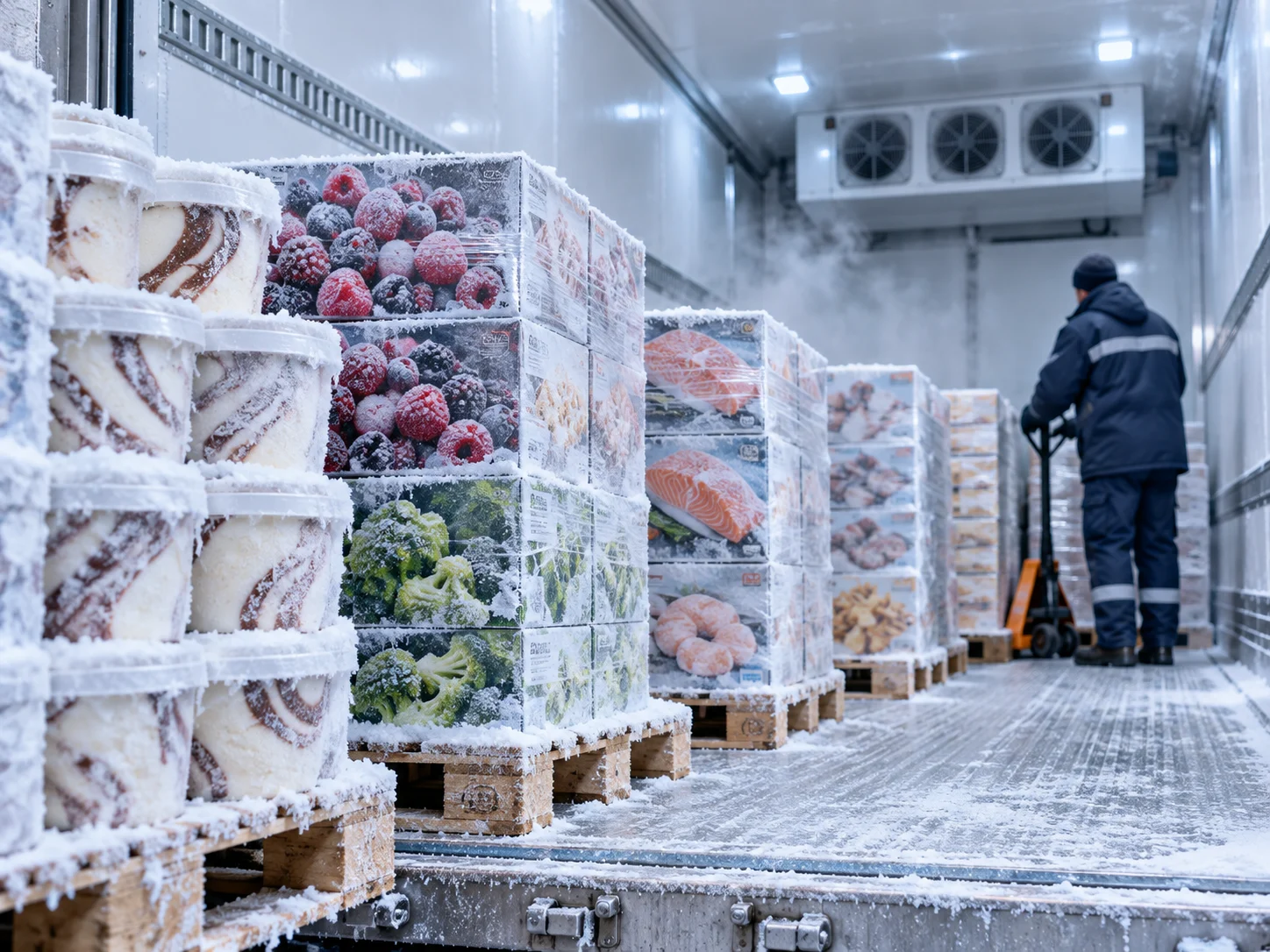
≤ -18 °C
Quick-frozen and deep-frozen goods
Quick-frozen foods, ice cream, frozen meat and fish. For regulated quick-frozen food, -18 °C or colder is the reference temperature.
Temperature controlled
Temperature-controlled transport for goods requiring specific conditions during collection, transit and delivery.
Definition
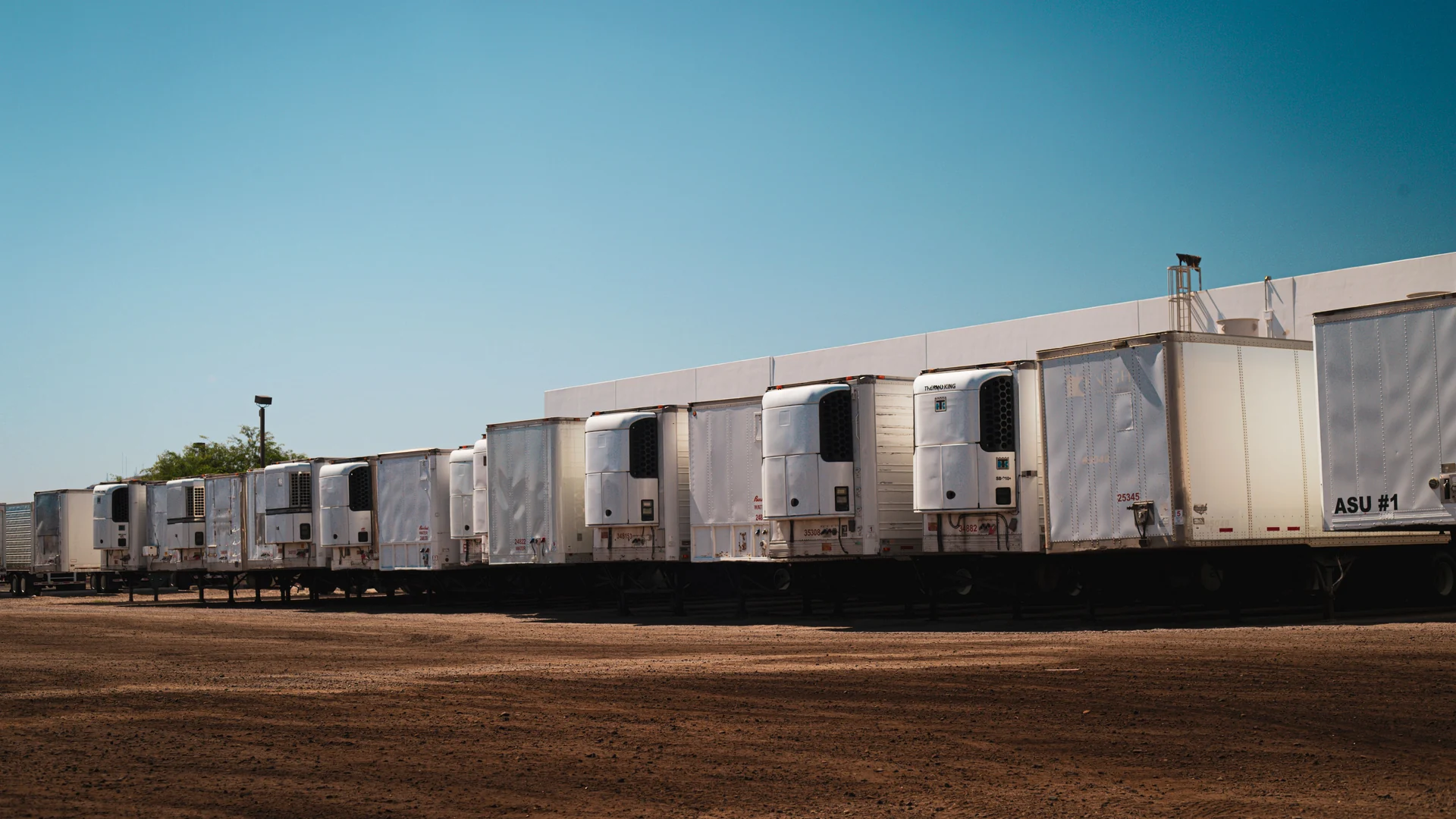
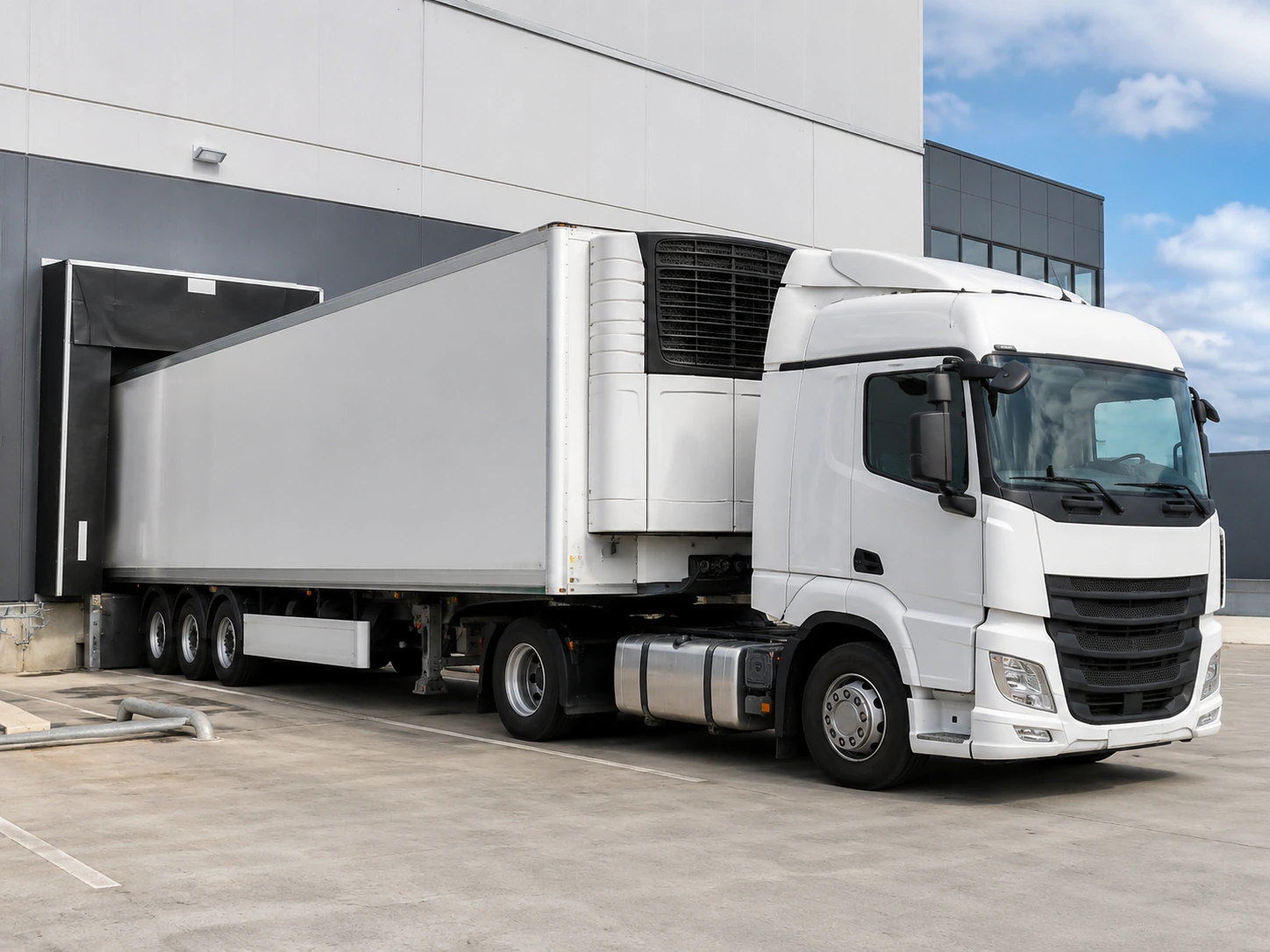
Refrigerated transport, also known as temperature-controlled transport, is used for goods whose quality, safety or stability depends on remaining within a defined temperature range from pickup through transit to delivery.
The refrigeration unit is primarily designed to maintain the required temperature. Planning therefore takes into account the nature of the goods, the set point and permitted tolerance, packaging, volume, journey time, loading schedule and delivery constraints.
Cold-chain control requires limiting temperature breaks: pre-conditioning the vehicle when necessary, checking conditions at loading, limiting door openings and monitoring the set point during transport. The exact temperature always depends on the product, its labelling, the manufacturer’s instructions and any applicable regulatory requirements.
Temperature ranges
There is no single refrigerated-transport temperature. The required set point depends on the product and must be confirmed before collection. The ranges below are common reference points and never replace product labelling, manufacturer instructions or applicable regulations.
Quick-frozen foods, ice cream, frozen meat and fish. For regulated quick-frozen food, -18 °C or colder is the reference temperature.
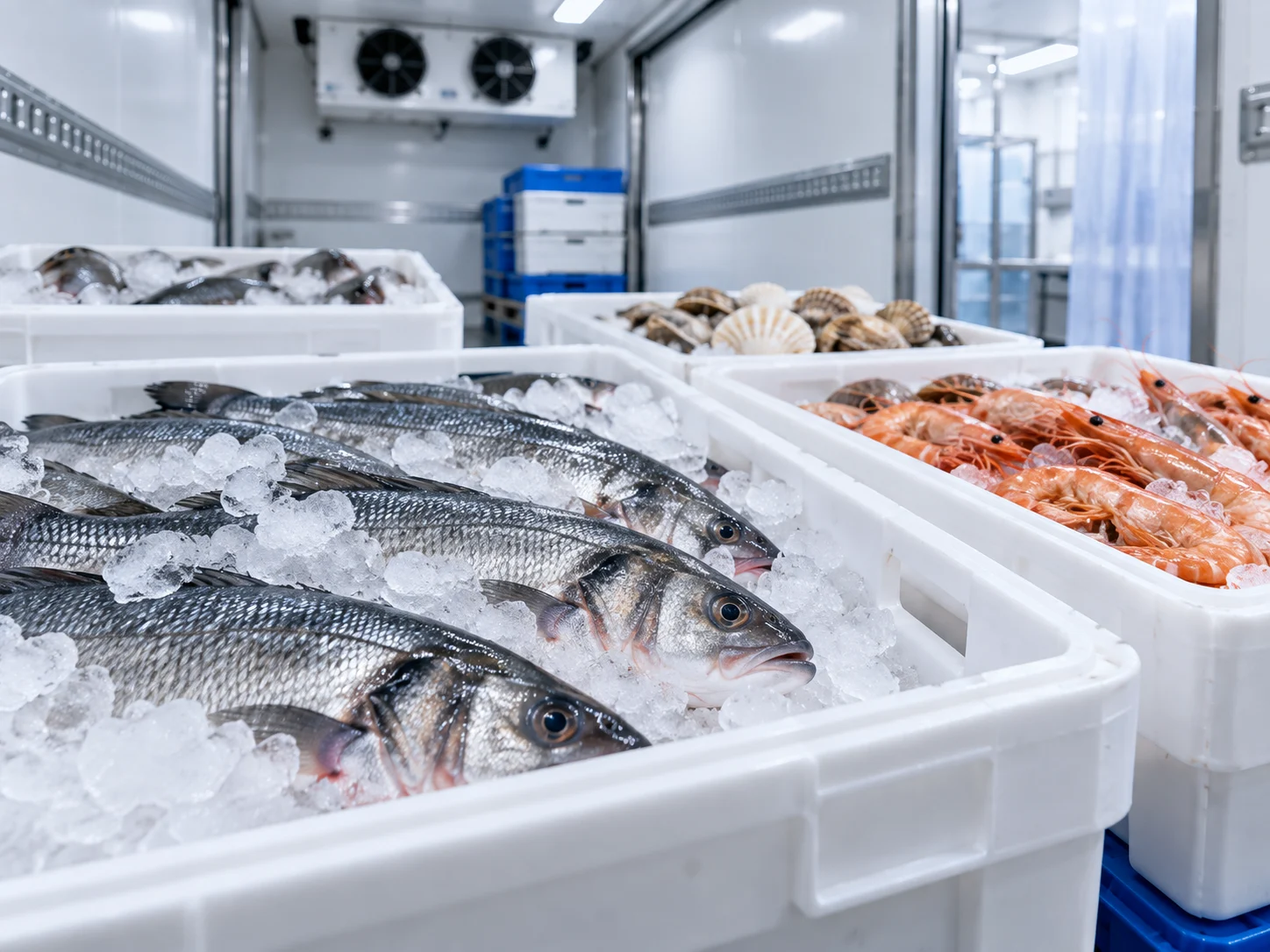
Fresh fish and certain seafood products, together with some highly temperature-sensitive meat products depending on the applicable requirement.
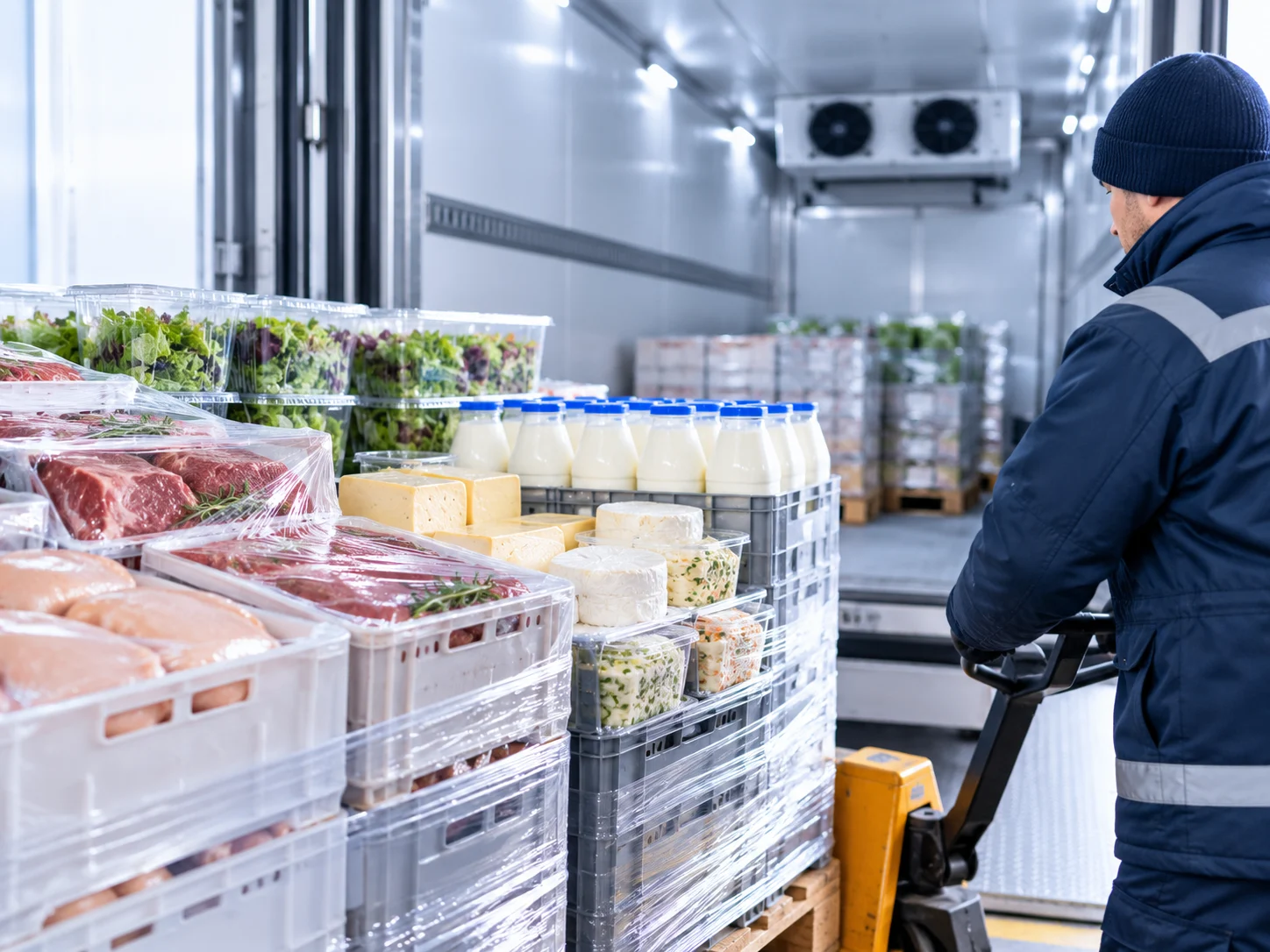
Meat preparations, poultry, raw milk, egg products, prepared meals and other highly perishable foods according to their specific requirements.
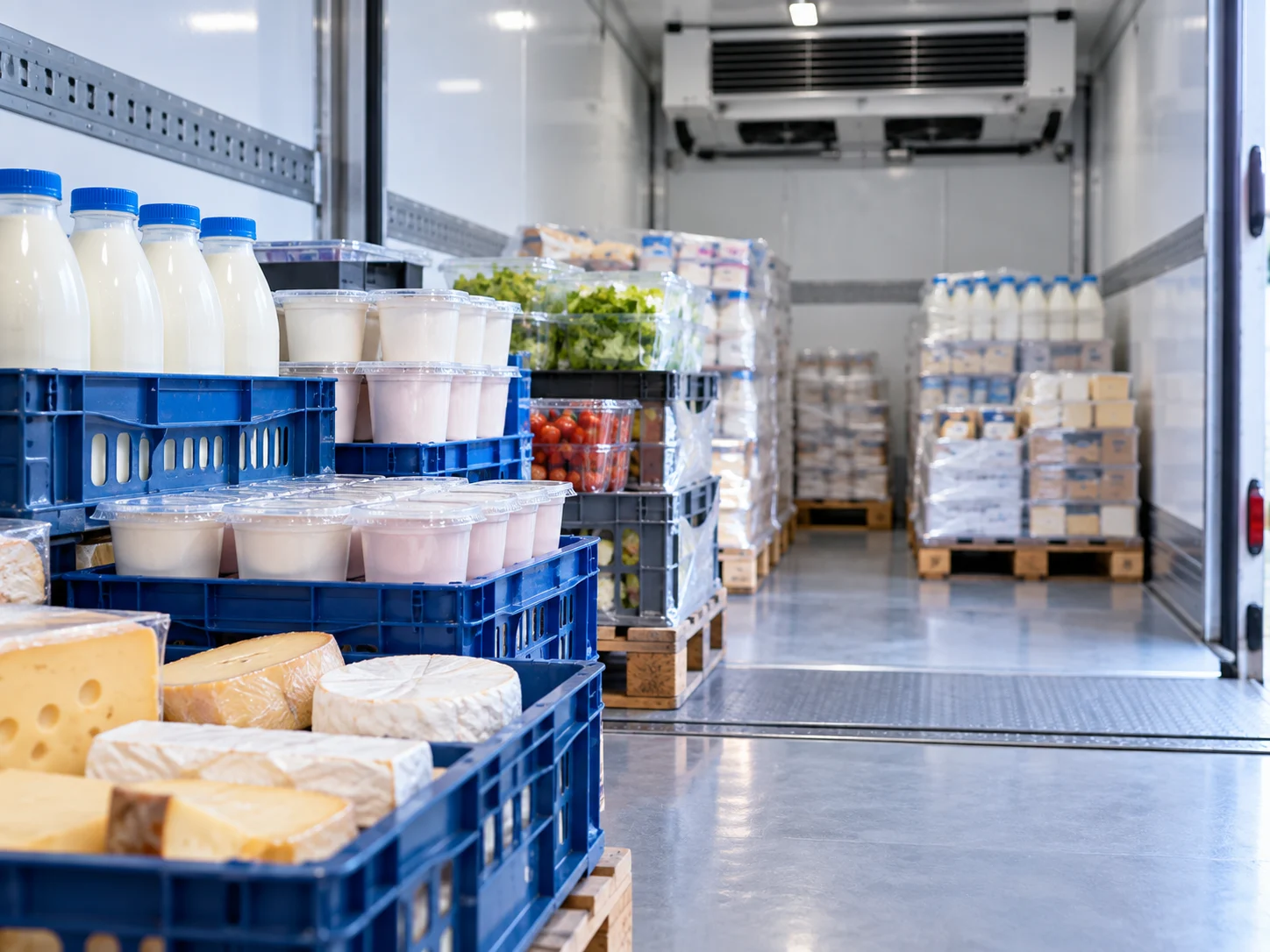
Certain perishable foods, dairy products, mature cheeses and packaged products where this range is specified by the producer or packer.

Certain medicines and healthcare products require strict cold-chain transport without freezing. The manufacturer’s storage conditions remain mandatory.

Fruit and vegetables, flowers, cosmetics and sensitive industrial products may require a dedicated set point depending on the product and specification.
Industries served
Refrigerated and temperature-controlled transport serves many professionals whose goods must remain within a defined temperature range in transit. The requirement always depends on the product, its storage conditions and manufacturer or packer instructions, so not every product in the same sector automatically requires refrigerated transport.
Supplies of meat, fish, dairy products, prepared food, fresh produce, desserts and frozen goods where a controlled temperature is required.
Movement of highly sensitive goods such as meat, meat preparations, fish and seafood under conditions consistent with their storage requirements.
Replenishment of supermarkets, hypermarkets, specialist stores and food retailers with fresh, chilled or frozen products from warehouses, platforms or suppliers.
Transport of pallets and larger consignments of fresh and frozen products for professional customers, from a few handling units to full truckloads.
Transport of raw materials, semi-finished goods and finished products including dairy, meat, seafood, sensitive fruit and vegetables, prepared food and frozen goods.
Certain medicines, healthcare products, cosmetics, flowers and technical goods may require a controlled set point specified by the manufacturer or product specification.
From small shipments to full loads
Refrigerated freight transport can cover very different shipment sizes. Parcel or pallet count alone does not determine the solution: required temperature, product type, weight, dimensions, distance, site access and delivery timing must also be assessed.
Small volume
For a few parcels or a small volume, a specialist solution may be reviewed where the set point, packaging, transit time and available service on the route are compatible with the goods.
Pallets
For one or several pallets, refrigerated groupage or shared transport may be considered when goods, temperatures and delivery constraints are compatible.
Intermediate volume
When several pallets use a significant share of vehicle capacity without requiring the entire vehicle, part-load transport may provide a solution better matched to the real shipment volume.
Dedicated capacity
For larger volumes, specific constraints or tighter control of collection and delivery times, freight forwarding with a dedicated refrigerated vehicle may be reviewed.
Drivet Transport International
Refrigerated transport, also known as temperature-controlled transport, is used for goods that must remain within a defined temperature range during transit. It can include fresh and frozen food, certain pharmaceutical products and other temperature-sensitive goods. The required temperature always depends on the product, its packaging and the applicable storage instructions.
Refrigerated trucks can carry many temperature-sensitive goods, including meat, fish, dairy products, fresh food, prepared food, frozen products, ice cream, certain fruit and vegetables, some flowers, pharmaceutical products and other thermosensitive goods. Product compatibility and temperature requirements must be checked before loading.
There is no single temperature for every refrigerated shipment. The set point depends on the goods and their storage requirements. Frozen products may require -18 °C or colder, while fresh food, dairy, pharmaceuticals and other sensitive goods may require different positive temperature ranges. The product specification remains the reference.
Chilled transport generally maintains goods at a controlled positive temperature suited to fresh or cold-sensitive products. Frozen transport is used for goods that must remain frozen at lower negative temperatures. The vehicle, loading preparation and temperature set point must match the type of goods being carried.
Yes. Depending on the required temperature, destination, volume and available lanes, refrigerated transport can cover a few parcels, one or several pallets, part loads or full truckloads. Refrigerated groupage may be considered for smaller volumes when the goods and temperature requirements are compatible.
A dedicated refrigerated vehicle can be appropriate for larger volumes, highly sensitive goods, specific temperature requirements, strict collection or delivery times, or when handling needs to be minimised. The choice between groupage, part load and full load depends on volume, transit time, temperature, destination and operational constraints.
Refrigerated transport is used by restaurants, hotels, caterers, butchers, delicatessens, fishmongers, supermarkets, food retailers, wholesalers, purchasing centres, producers, food manufacturers, farms and certain healthcare businesses. The need depends on the products being moved and their storage conditions.
Maintaining the cold chain requires suitable preparation of the vehicle and goods, compliance with the requested temperature, limited door openings and appropriate monitoring of transport conditions. The refrigeration unit is designed to maintain temperature, so the goods should be prepared in accordance with the required set point before loading.
Yes. Drivet Transport International can review refrigerated shipments within France and on European routes. Planning depends on origin, destination, number of pallets or parcels, required temperature, transit time, site access and any constraints specific to the international route.
Useful information includes collection and delivery addresses, required dates and times, exact description of the goods, required transport temperature, number of parcels or pallets, weight, dimensions, packaging type, site access constraints and any need for a tail lift, appointment or handling equipment.
Yes. Certain medicines and healthcare products must be transported within a defined temperature range. These shipments require an organisation suited to the product requirements, packaging and instructions supplied by the manufacturer or customer. The requested temperature and storage conditions should be clearly specified before transport is arranged.
Related services
Discover other Drivet Transport International solutions that can complement your temperature-controlled shipments.
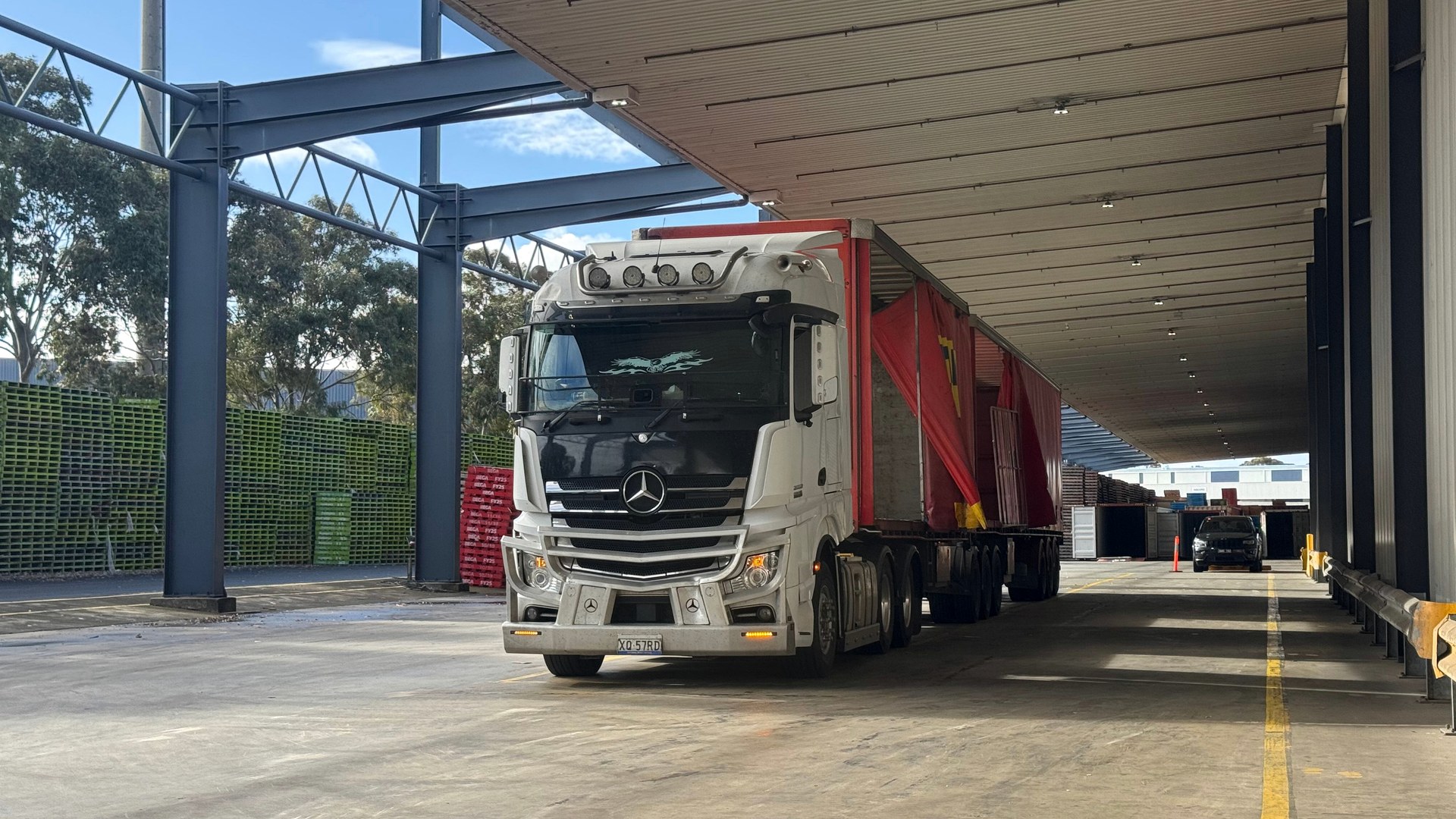
Core business
Road freight transport organised across France and Europe according to your deadlines, goods and site constraints.
Learn more
Tailored capacity
A freight-forwarding solution selected according to volume, destination, lead time and loading requirements.
Learn more
Flow coordination
Coordination of your transport flows, shipments and delivery requirements through an organisation adapted to your operation.
Learn more
Short lead times
Fast transport solutions for urgent, sensitive or time-critical deliveries.
Learn more
Consolidated distribution
Consolidated transport for parcels, pallets and smaller consignments, organised around routes and delivery requirements.
Learn more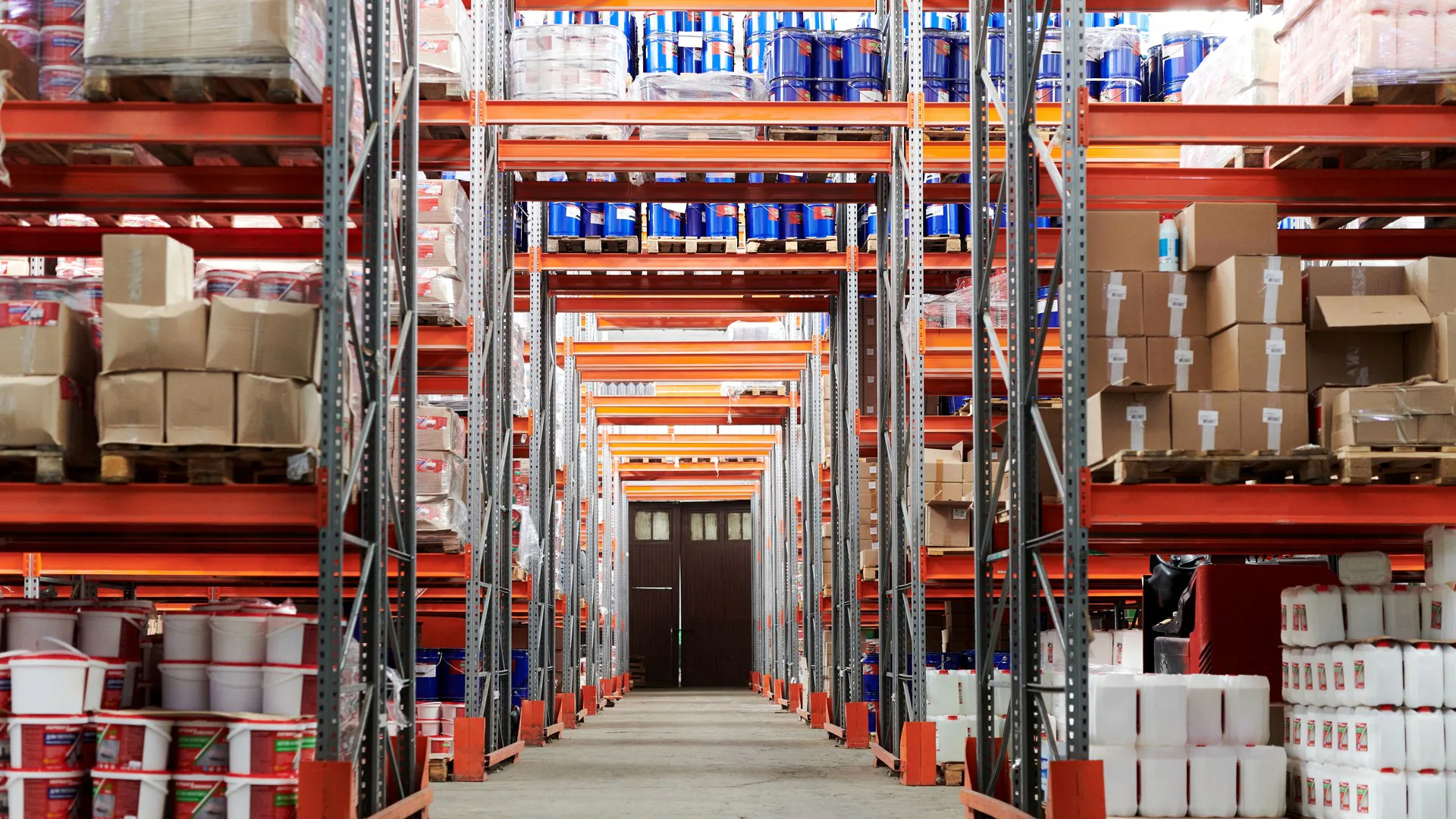
Logistics support
Storage and warehousing solutions organised around your volumes, flows, lead times and preparation requirements.
Learn moreTransport request
Need to organise refrigerated transport? Send us the key shipment details so that our team can review the most suitable solution.