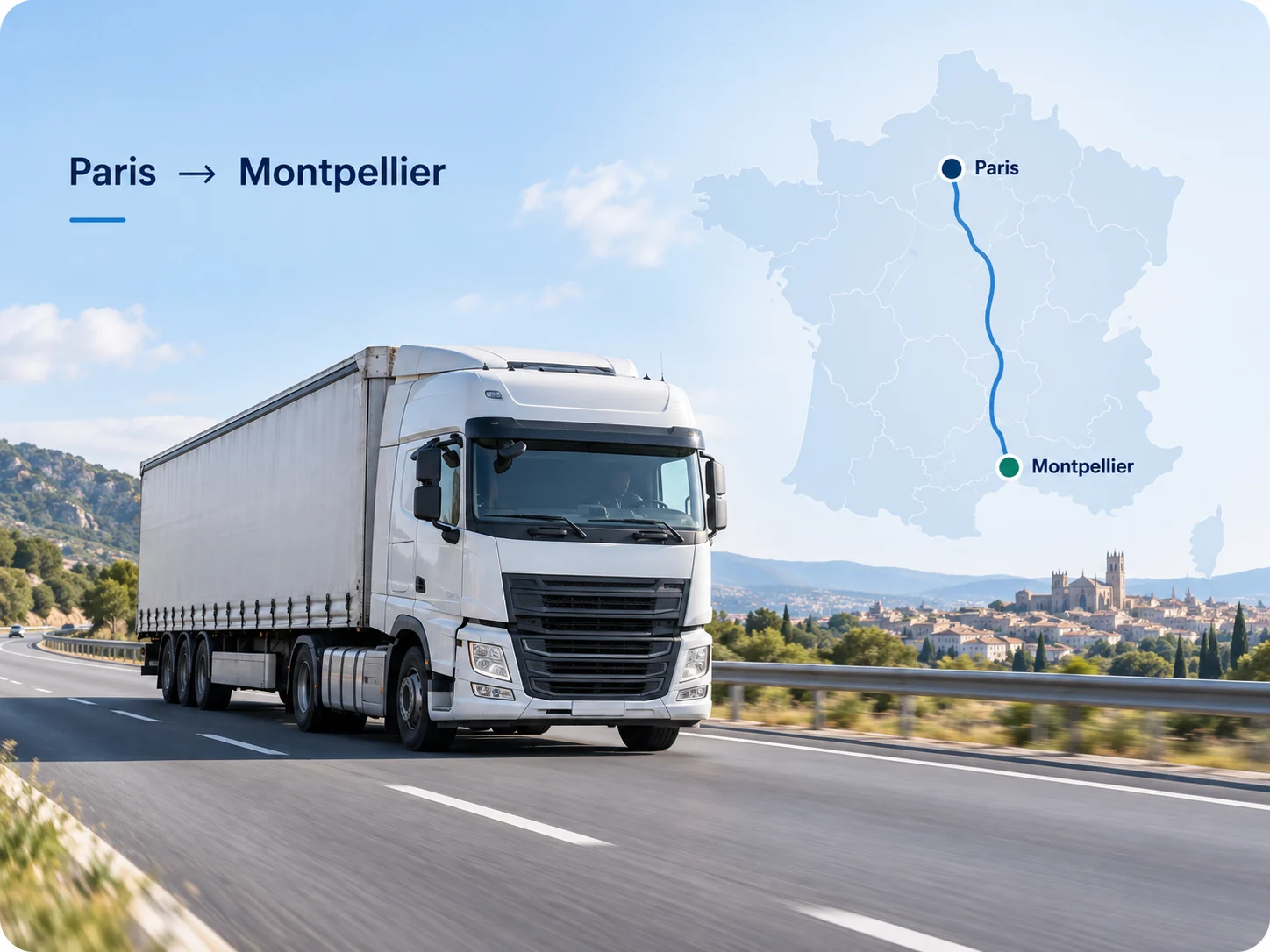
Road freight
≈ 78.5 kg CO₂e
1 tonne · 750 km · main leg
Using a reference factor of 104.67 gCO₂e per tonne-kilometre, this scenario represents around 78.5 kg of CO₂e for the main road leg.
International · Rail
Drivet Transport International organises rail and intermodal freight for companies seeking to combine road and rail on national, European or international flows. Each shipment is reviewed against the goods, volume, terminals, frequency, destination and the inland road legs required at each end.
Rail freight · Decarbonisation · Combined transport
Rail freight transport makes it possible to consolidate large volumes over long distances while significantly reducing greenhouse-gas emissions per tonne carried. In France, the high level of rail electrification makes it a particularly relevant alternative to road freight when the route, volumes, lead times and available terminals support an efficient operating plan.
Every year, hundreds of customers choose rail freight with Drivet Transport International. We review each flow individually to build a coherent solution: rail for the main leg, road pre-carriage and final delivery where required, terminal coordination and management of the relevant intermodal transport units.
The French transport ministry’s combined-transport master plan uses reference emission factors of approximately 2.88 gCO₂e/t.km for rail freight compared with 104.67 gCO₂e/t.km for road freight. These figures illustrate the potential benefit of modal shift to rail, while the actual footprint of a shipment also depends on first- and last-mile road legs.
Illustrative carbon-footprint example
To illustrate the difference between the two modes, the example below uses a comparative basis of 750 km for the main leg and 1 tonne of freight. It is an educational order of magnitude and excludes local first- and last-mile movements.
Road freight
1 tonne · 750 km · main leg
Using a reference factor of 104.67 gCO₂e per tonne-kilometre, this scenario represents around 78.5 kg of CO₂e for the main road leg.
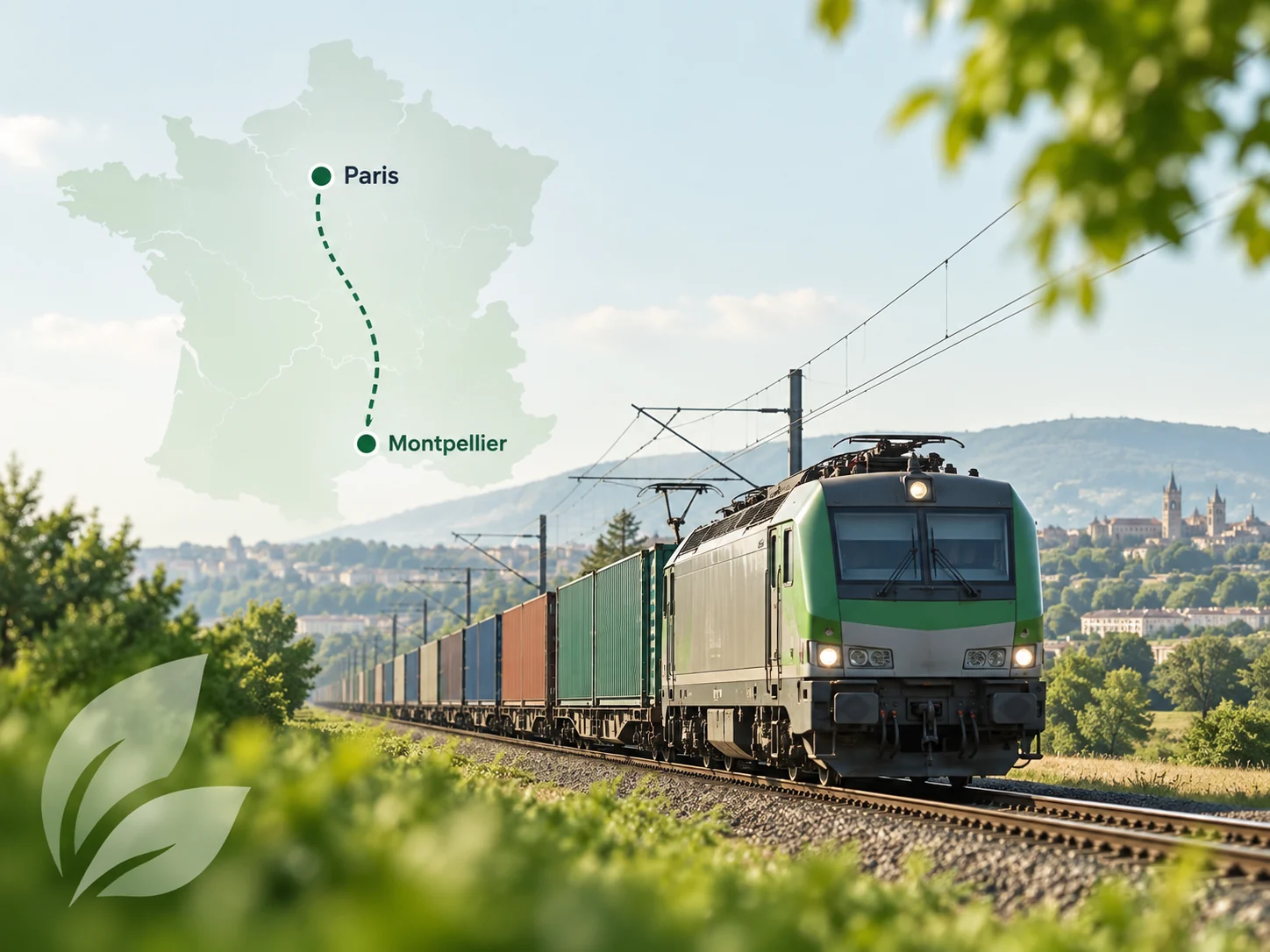
Rail freight
1 tonne · 750 km · main leg
Using a reference factor of 2.88 gCO₂e per tonne-kilometre, the same order of distance represents around 2.16 kg of CO₂e for the main rail leg.
Road
≈ 78.5 kg CO₂e
Rail
≈ 2.16 kg CO₂e
Indicative reduction
≈ 97%
Illustrative example calculated from the reference emission factors used by the French transport ministry to compare road and rail freight. Actual emissions depend on the logistics scheme, train type, load factor, energy source, distance actually travelled and any road pre- and post-carriage.
Rail containers · FCL & LCL · Intermodal freight
Containerised rail freight allows rail to be integrated into a domestic or international logistics chain without directly handling the goods each time the transport mode changes. A container can be moved by road to the terminal, loaded onto a freight train for the main leg and collected by truck for final delivery.
These intermodal flows commonly use FCL (Full Container Load) and LCL (Less than Container Load) arrangements. These terms do not describe two physical container models; they describe how container capacity is allocated. Drivet Transport International reviews volume, weight, frequency, cargo sensitivity and timing in order to identify the most appropriate organisation.
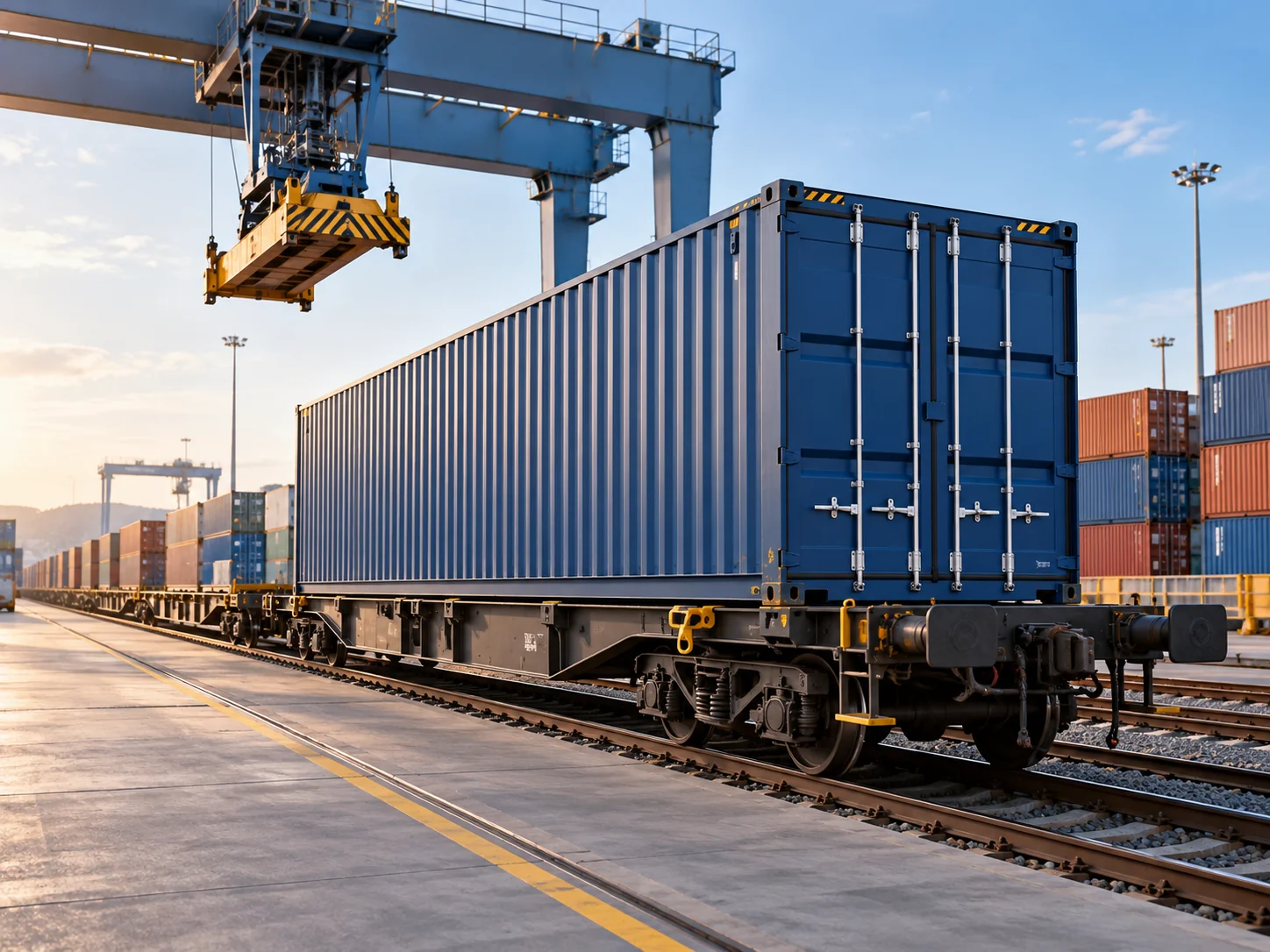
Full container load
With FCL, the container is reserved for one shipper's goods for the shipment concerned. It does not need to be filled to 100%; the key benefit is a dedicated unit that can move between truck, terminal and train without sharing space with other shippers' cargo.
This arrangement is particularly suitable for larger or regular volumes, industrial goods, numerous pallets, equipment sensitive to intermediate handling or flows where control of the loading unit is a priority. Depending on the project, Drivet Transport International can review 20-foot, 40-foot or High Cube shipping containers as part of a rail or combined rail-road solution.
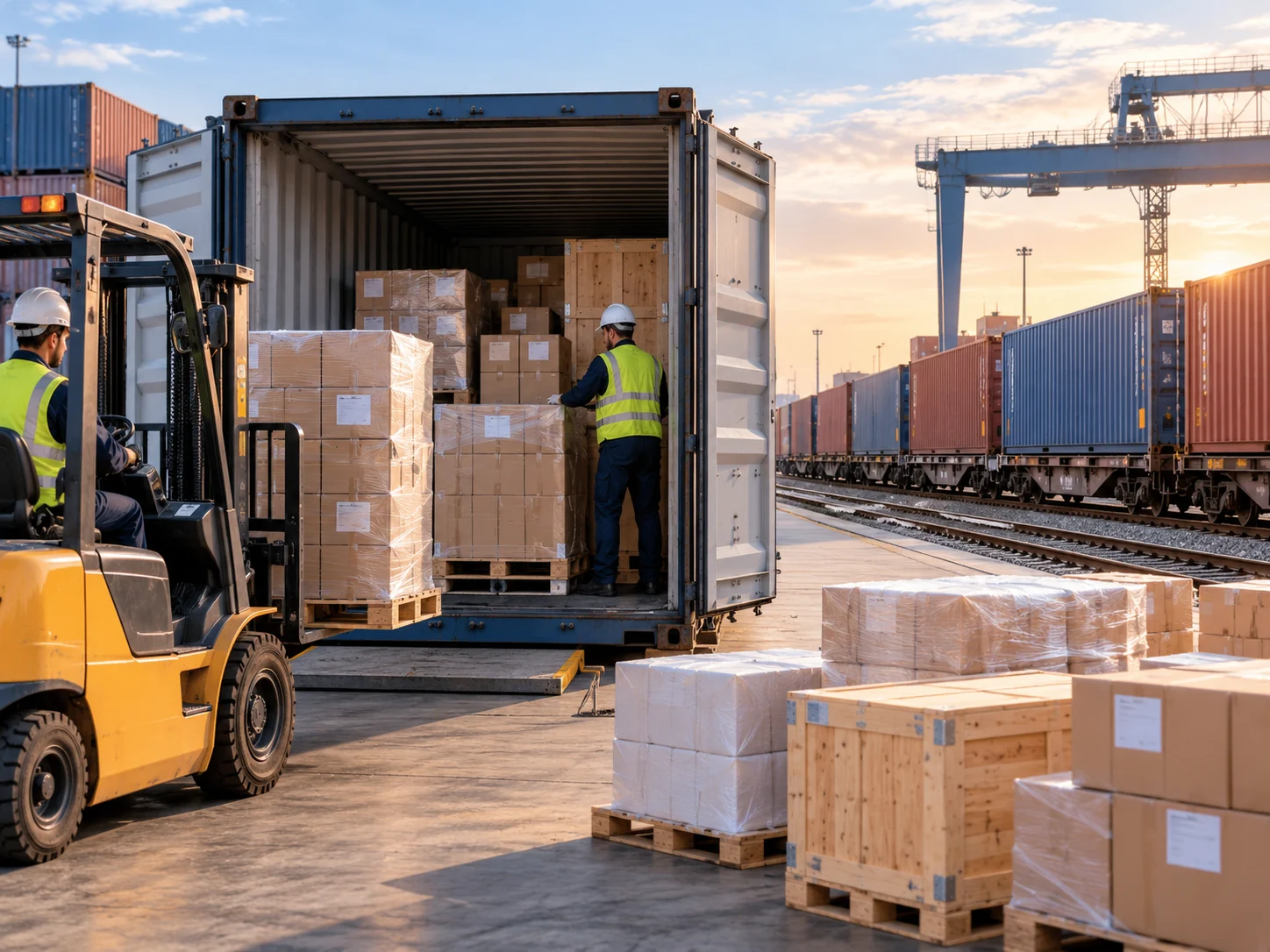
Container groupage
With LCL, one customer's goods share container capacity with other compatible shipments. This consolidation model makes it possible to use a containerised logistics chain when a few pallets, cases or cubic metres do not justify booking an entire container.
LCL requires consolidation before departure and deconsolidation at destination. It therefore usually involves more handling and may require additional transit time compared with FCL. Drivet Transport International considers volume, stackability, fragility, dates and available terminals to determine whether rail groupage is genuinely suitable for the flow concerned.
Larger, regular flows or shipments requiring a dedicated unit will generally be better suited to FCL. For smaller volumes, LCL can make it possible to share available capacity and access rail freight without booking a full container. Drivet Transport International compares both options together with pre-carriage, terminal, transit and final-delivery constraints in order to build a coherent intermodal solution.
Drivet Transport International
Intermodal rail freight combines several transport modes within the same logistics chain, most commonly road and rail, without unpacking the goods from their loading unit. A container, swap body or other intermodal transport unit is collected by truck, transferred at a terminal for the main rail leg, then collected again by road for final delivery.
Rail can suit many types of freight, including palletised goods, industrial products, mechanical parts, materials, containers, swap bodies, manufactured goods and certain heavy or regular flows. Feasibility depends on packaging, weight, volume, available terminals, rolling stock and any constraints specific to the goods.
FCL means Full Container Load: the container is reserved for one shipper’s goods. LCL means Less than Container Load: compatible shipments from several customers share one container through a consolidation service. These terms describe how the container is filled rather than two physical container types. Availability depends on the route, operator and consolidation services offered.
Yes. Many intermodal rail services accept standard 20-foot, 40-foot and 40-foot High Cube containers. Compatibility must still be checked against the route, wagon type, terminal, gross weight, rail loading gauge and operating constraints. Drivet Transport International reviews these points before confirming a solution.
Yes. Rail freight is particularly relevant for recurring shipments, larger volumes and long-distance flows that can be consolidated. Scheduled departures can help structure supplies or outbound shipments between factories, logistics platforms and terminals.
Yes. In a rail-road chain, Drivet Transport International can coordinate truck collection to the departure terminal, the main rail leg, collection from the destination terminal and final road delivery. This provides a coherent door-to-door organisation even when the customer’s site is not directly rail-connected.
Yes. Rail and intermodal services connect many terminals in France and across Europe. Depending on origin, destination, available frequencies and connections, Drivet Transport International can review a domestic or international solution combining rail and road.
Yes, certain dangerous goods may travel by rail subject to the RID rules and any requirements applying to the goods, packaging, wagon, documentation and route. Each shipment must be reviewed individually before confirmation to check feasibility and any restrictions.
No. Transit time depends on the route, departure frequency, terminals, handling operations and the road legs at each end. On well-served regular corridors, rail can be highly competitive. For other shipments, road may remain more direct. The appropriate mode therefore depends on the actual delivery requirement.
For an equivalent quantity of freight, rail generally has a much lower carbon footprint than road transport, particularly in France where the rail network is highly electrified. The real difference nevertheless depends on the complete logistics chain, including the rail distance, road pre- and post-carriage, load factor and traction type.
Rail becomes especially relevant for longer distances, regular or consolidatable volumes, routes served by suitable terminals, and projects where reducing transport emissions is an objective. Road transport often remains complementary for the first and last miles.
There is no single rail-freight tariff. Pricing depends on the route, loading unit, weight, volume, terminal and handling charges, road pre- and post-carriage, required frequency and any special constraints. A quotation therefore needs to be built around the actual flow.
Yes. Where required, Drivet Transport International can coordinate rail freight with the import, export or transit customs operations associated with the shipment so that formalities are aligned with terminal handling, train departures and final delivery.
Tracking depends on the systems and information provided by rail operators and terminals. Drivet Transport International centralises the main operational milestones, such as collection, terminal arrival, train departure, destination-terminal arrival and final-delivery planning, to maintain visibility over the shipment.
Gate opening times, cut-off times, accepted loading units, weight, dimensions, handling equipment, access rules and terminal capacity can all affect the transport plan. These points are reviewed before booking so that the proposed solution is compatible with actual terminal operating conditions.
Useful information includes collection and delivery addresses, requested dates, type of goods, number of pallets or packages, weight, dimensions, container or intermodal unit type where known, shipment frequency and any loading, terminal, customs or delivery constraints.
Related services
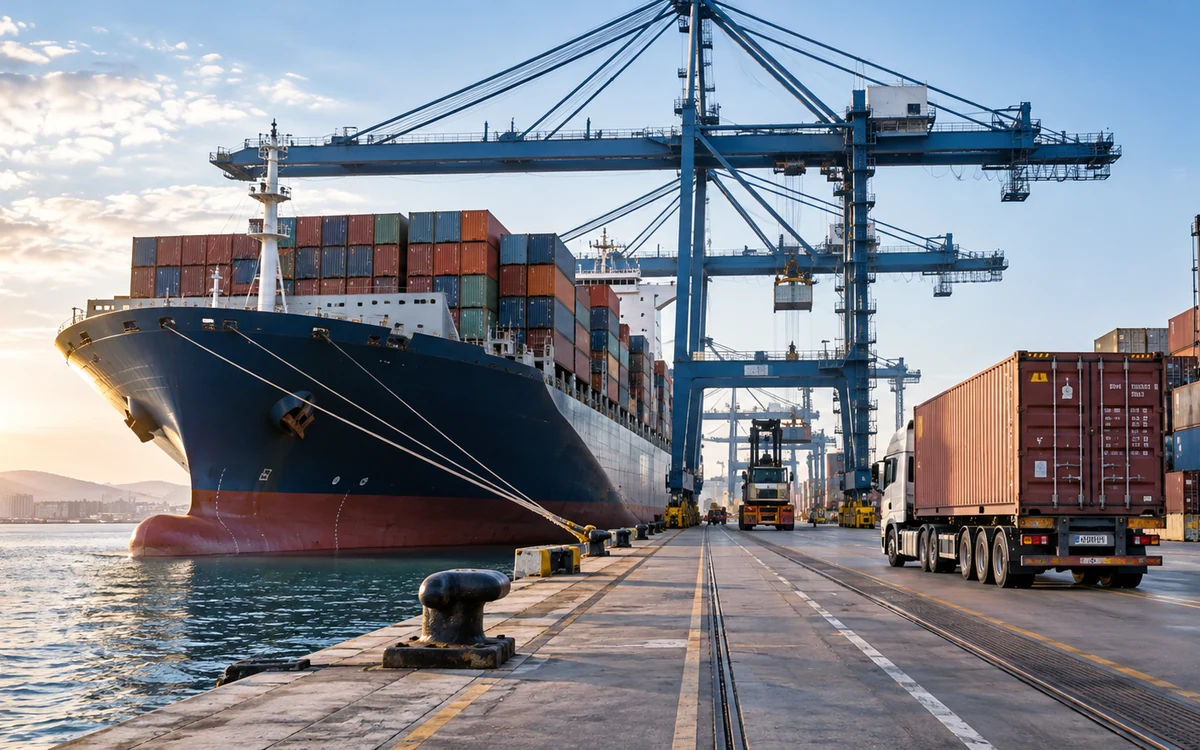
International · Sea
International sea freight in FCL, LCL and door-to-door configurations, including coordination of pre-carriage, on-carriage and associated customs formalities.
Learn more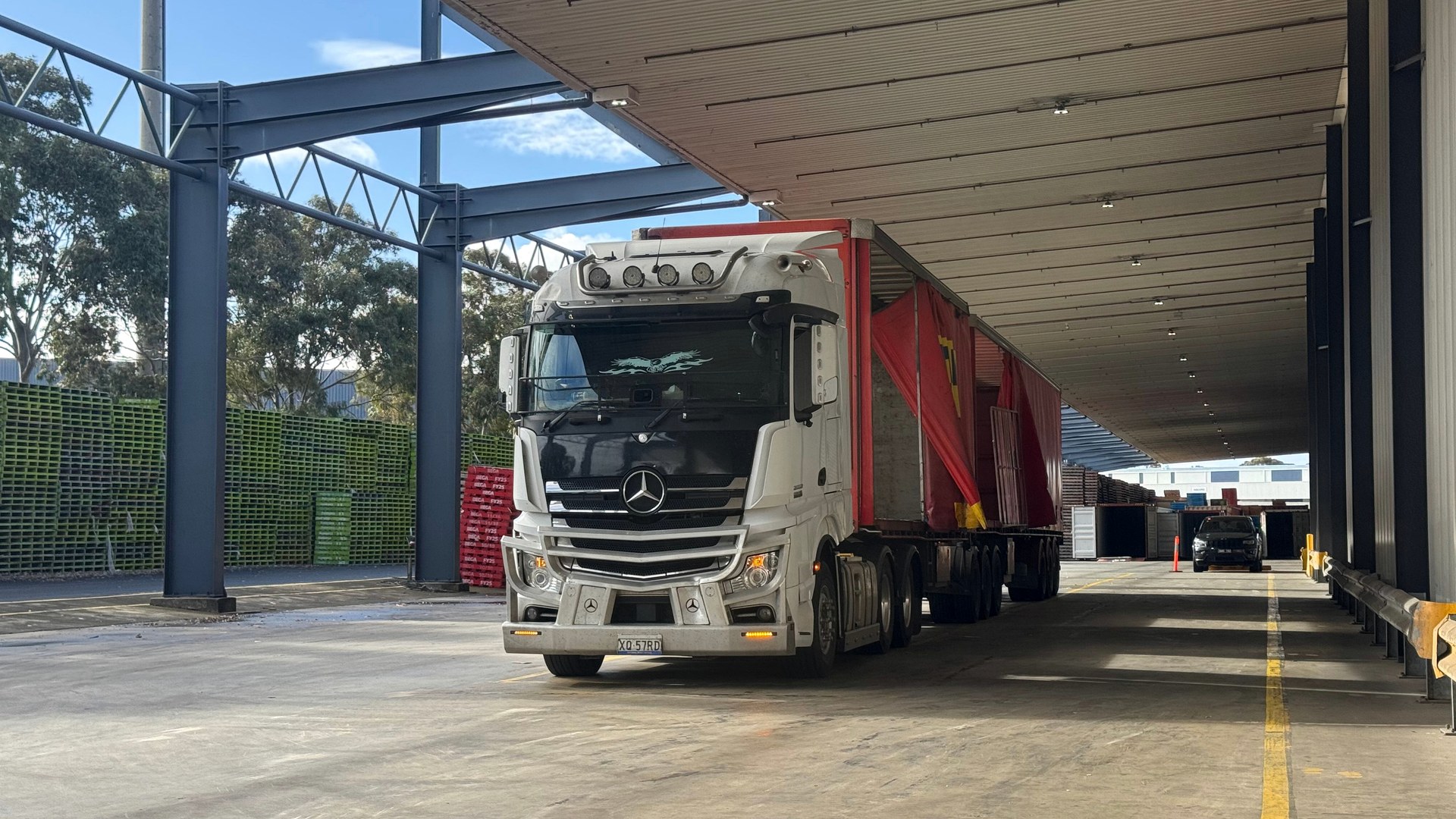
Core business
Road freight transport organised across France and Europe according to your deadlines, goods and site constraints.
Learn more
International formalities
Coordination of import-export customs operations with the customs representatives and specialist partners required for the shipment, from document preparation through to release.
Learn moreTransport request
Need to organise rail freight? Send us the key shipment details so that our team can review the most suitable solution.