Across France
Operations reviewed throughout the country
The load, destination, convoy dimensions, site access and road constraints are reviewed to determine the vehicle, route, possible permits and escort or protection measures required.
Special movements
Drivet Transport International reviews and arranges abnormal-load transport across France and Europe for machinery, equipment, structures and other loads whose mass or dimensions fall outside standard road-transport conditions. Each operation is prepared according to the load, required vehicle, site access, route and applicable regulatory constraints.
Abnormal loads
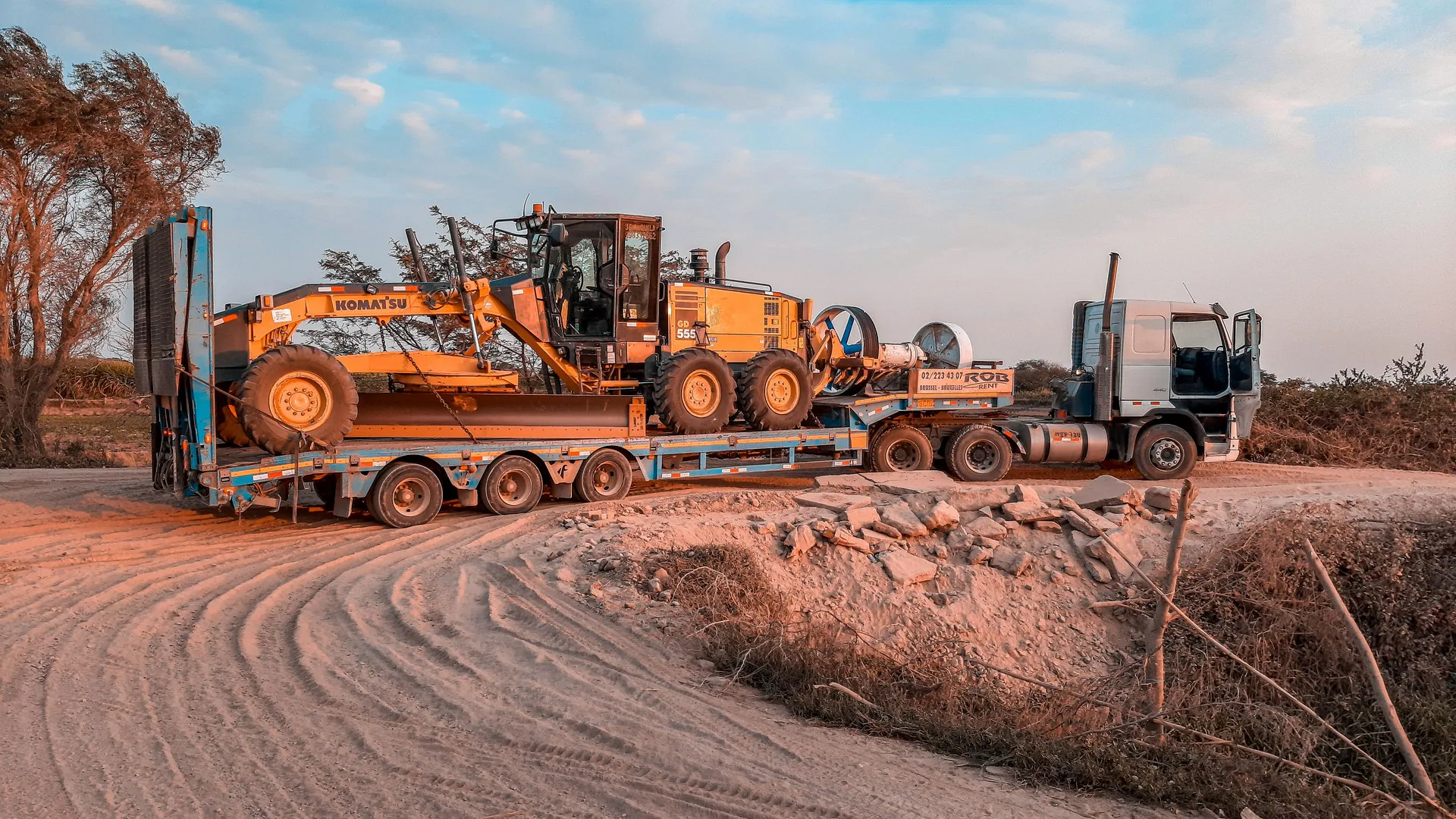
Abnormal load transport concerns goods that cannot be moved under standard road-transport conditions because of their weight, dimensions, shape, overall size or specific handling requirements. Examples include industrial equipment, professional machinery, large components, steel structures, construction-site items or loads requiring a particular vehicle, trailer or operating method.
This type of shipment requires a more detailed feasibility review than a standard movement. Before proposing a solution, the exact characteristics of the goods must be understood: overall dimensions, weight, lifting points, possible centre of gravity, loading method, equipment available on site and delivery constraints. These details determine whether the operation is feasible and under what conditions.
The route can also be critical. Height, width, length, permitted weight, site access, manoeuvring space, traffic restrictions and specific operating hours may all need to be considered. The objective is to identify sensitive points before departure and avoid problems during loading, on the road or at final delivery.
The operation relies on accurate coordination between the customer, collection site, delivery site, carrier, any lifting providers and the teams involved on site. The more specific the movement, the more complete the information should be: exact dimensions, weight, photographs, plans, technical data sheets, full addresses, access details, handling requirements and requested date.
Abnormal load transport is therefore a bespoke solution for out-of-gauge or difficult-to-move goods. It is designed to create a realistic and controlled organisation adapted to the technical constraints of the project, from feasibility review through to final delivery.
France & Europe
Drivet Transport International can review and arrange abnormal-load movements throughout France and operations involving European countries. Each project is assessed according to the load dimensions and mass, required equipment, site access, route and the regulations applying along the journey.
Across France
The load, destination, convoy dimensions, site access and road constraints are reviewed to determine the vehicle, route, possible permits and escort or protection measures required.
Europe
An abnormal load crossing several countries cannot be planned like a standard road shipment. Rules, permits, approved routes and escort requirements may differ between countries, so each international operation requires a dedicated review.
Suitable equipment
Construction machinery, industrial equipment, steel structures, heavy assets and out-of-gauge loads may require a flatbed, machinery carrier, low-loader or another specialist configuration depending on the characteristics of the movement.
Convoy organisation
In France, an abnormal load operation is prepared well before the truck departs. The route study, permits and escort requirements depend on the load dimensions, total mass and the difficulties encountered along the route.
French abnormal-load convoys are divided into three categories according to overall length, width and mass, with the most restrictive characteristic determining the category. As a reference, category 1 extends up to 20 m in length, 3 m in width and 48 tonnes; category 2 up to 25 m, 4 m and 72 tonnes; beyond those thresholds the convoy falls into category 3.
Not every abnormal load automatically requires a pilot vehicle. Some comparatively contained abnormal-load movements may operate without an escort vehicle when the applicable rules, route and permit allow it. These are often the more straightforward operations: the load exceeds standard road limits, but the convoy can still use a controlled route without additional protection measures.
When the convoy size or the route requires it, protection vehicles may be imposed: a pilot vehicle in front, rear protection and, in certain cases, a professional guidance team. Their purpose is to warn other road users, protect the convoy and help it negotiate difficult junctions, narrow roads, bridges, roundabouts and other critical points.
Route engineering is therefore essential. Available width and height, turning radii, bridges and structures, road restrictions, roadworks, loading and delivery access and manoeuvring areas may all need to be checked. With extremely large or heavy loads, a few centimetres can determine whether a route is usable.
In exceptional circumstances, the prefect may impose stronger measures, including an escort by police or gendarmerie. Local traffic measures may also be required at particularly difficult points. The operation can therefore involve coordination with permitting authorities, road managers, the prefecture and law-enforcement services when prescribed.
Drivet Transport International approaches these movements by anticipating the complete operation: exact load characteristics, suitable tractor and trailer, loading conditions, permits, route, possible escort and delivery constraints. The larger or heavier the convoy, the more detailed the preparation must be to protect the load, the convoy and other road users.
Straightforward convoy
Possible for some abnormal loads when convoy size, route and permit conditions do not require additional protection.
Convoy protection
A pilot vehicle and, where necessary, rear protection warn traffic and secure convoy progress when size or route constraints require it.
Highly constrained moves
Complex routes may require professional guidance, local traffic measures or, in exceptional circumstances, an escort by law-enforcement services.
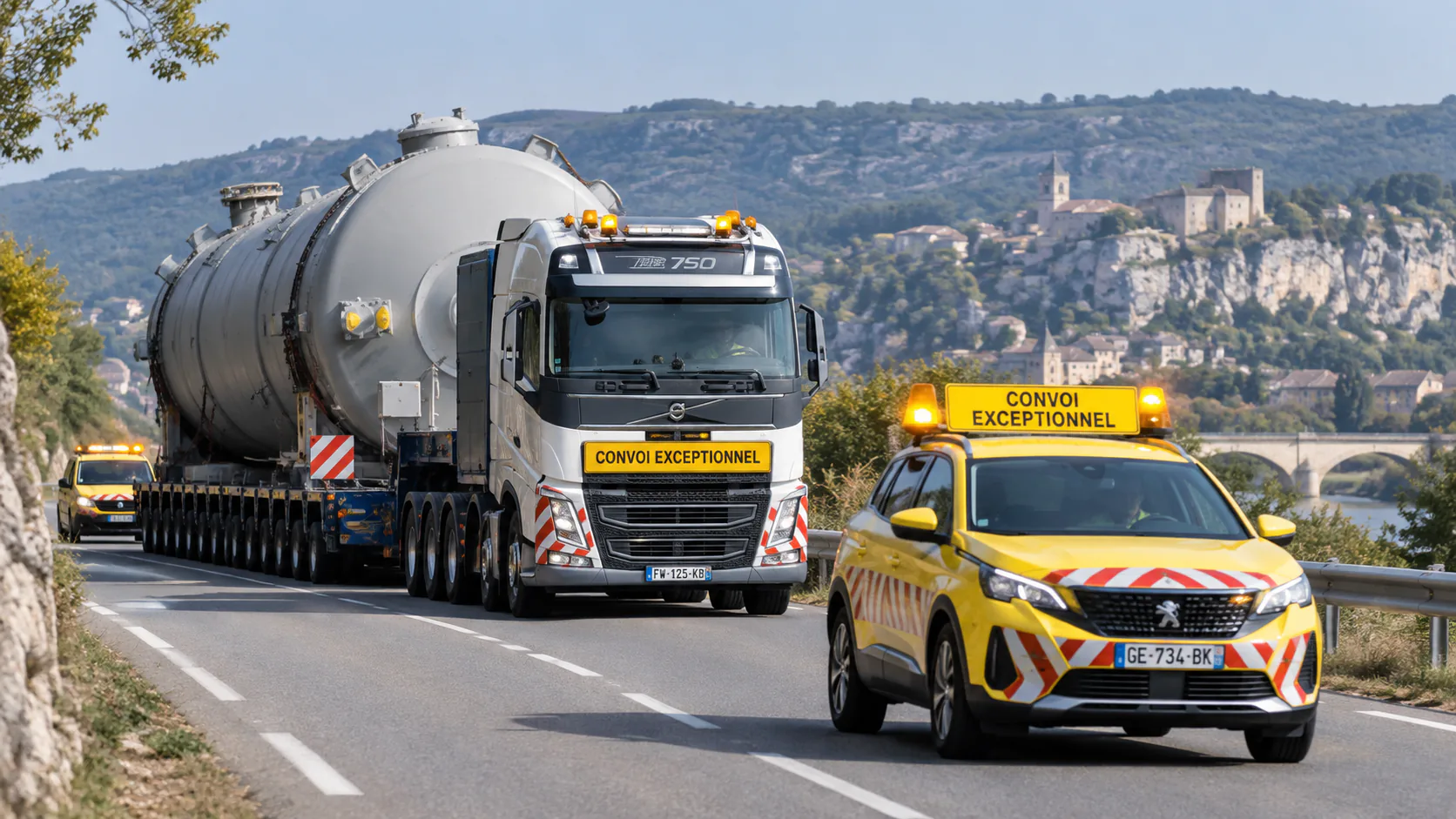
Secured convoy
Abnormal-load transport with pilot vehicle
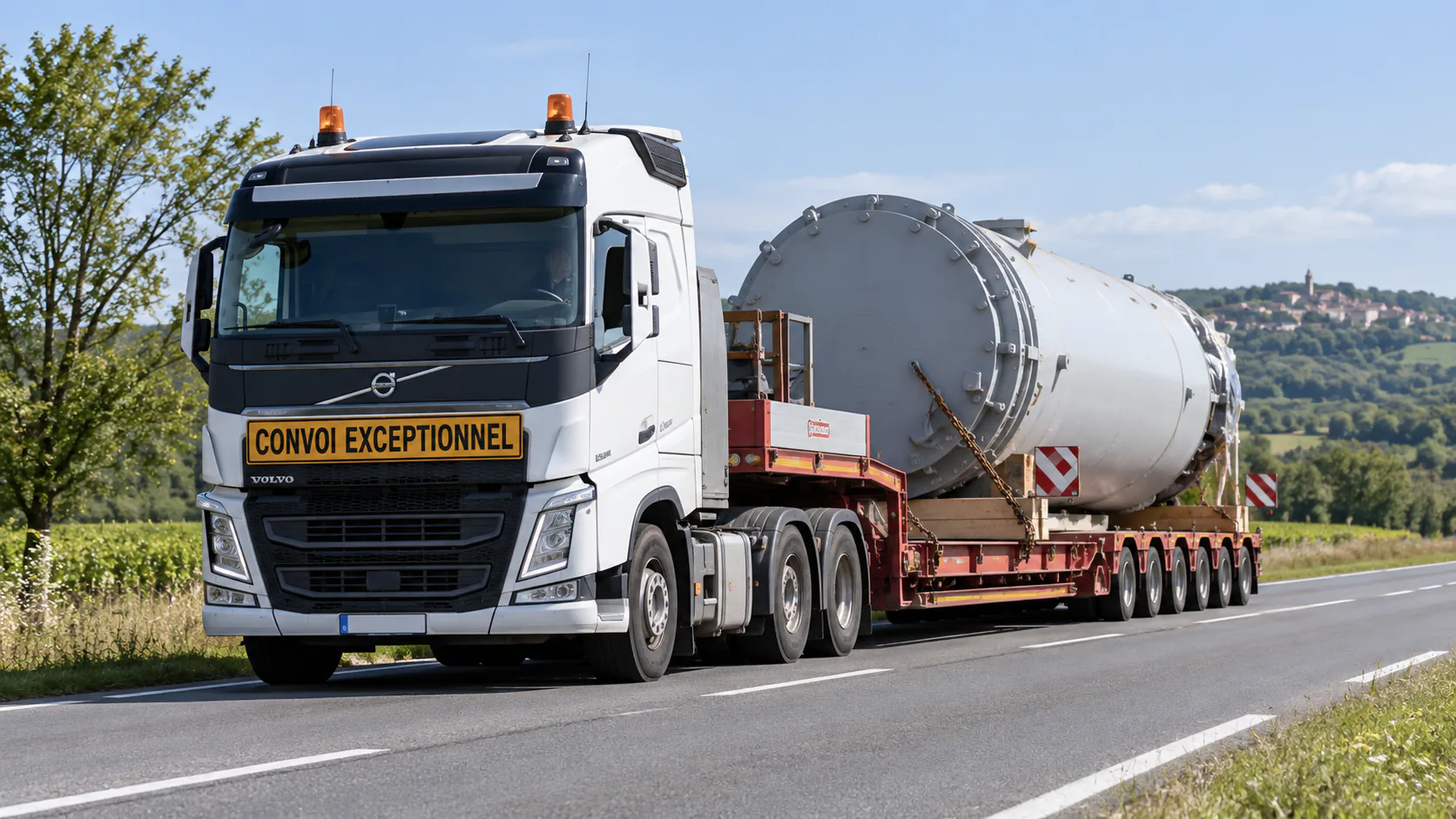
Standard abnormal load
Abnormal-load transport without a pilot vehicle
Drivet Transport International
Abnormal load transport concerns a vehicle, road combination or load whose dimensions or mass exceed the general limits applying to standard road transport. It can include machinery, construction equipment, tanks, industrial components, long structures or indivisible loads requiring a specific transport organisation.
In France, Category 1 applies where the convoy is no more than 20 metres long, no more than 3 metres wide and has a total mass of no more than 48 tonnes. The most restrictive characteristic of the convoy determines its category.
Category 2 applies where the convoy is over 20 metres and up to 25 metres long, and/or over 3 metres and up to 4 metres wide, and/or has a total mass above 48 tonnes and up to 72 tonnes.
A convoy falls into Category 3 as soon as one characteristic exceeds the Category 2 limits: length above 25 metres, width above 4 metres or total mass above 72 tonnes. Exceeding only one of these limits is enough to place the movement in Category 3.
No. A pilot vehicle is not automatically required for every abnormal load. Escort requirements depend on convoy size, mass, category, route and the applicable operating conditions. Some movements can proceed without an escort vehicle, while others require a pilot vehicle, rear protection or professional guidance.
A route survey checks whether the convoy can physically and safely use the proposed route. It may assess available width, overhead clearance, turning radii, bridges and structures, road restrictions, roadworks, access to collection and delivery sites and the space available for manoeuvring.
The formalities depend on the category and type of movement. Some Category 1 operations can fall under a prior declaration procedure provided by French regulations, while Category 2 and Category 3 movements generally require a circulation authorisation, which may apply to a specific journey, route or authorised network depending on the case.
Typical abnormal loads include construction machinery, industrial equipment, tanks, transformers, steel structures, long beams, prefabricated components, boats and other indivisible or oversized goods whose dimensions or mass prevent standard road transport.
Yes. For particularly complex movements, reinforced traffic-management measures may be prescribed. Depending on the convoy and route, coordination with road authorities and, in exceptional situations, police or gendarmerie support may be required to secure difficult passages or temporarily manage traffic.
Yes. Drivet Transport International can review abnormal-load movements throughout France. Feasibility depends on the load dimensions and mass, the goods, required vehicle, site access, route and any permits or operating conditions that apply.
Yes. International abnormal-load operations can be reviewed between France and European destinations and, where feasible, between European countries. Regulations are not identical across Europe, so permits, approved routes, operating times, escort vehicles and other requirements must be assessed for every country crossed.
Useful information includes the exact dimensions and weight of the load, photographs or drawings, any lifting points, loading and unloading conditions, complete addresses, site access details and the requested date. These details help determine the vehicle, convoy dimensions and route constraints.
Vehicle selection depends on the load mass, length, width, height and loading method. A flatbed, machinery carrier, low-loader or another specialist configuration may be required to control the overall convoy dimensions and provide suitable loading conditions.
No. Procedures and operating requirements can differ between European countries. Permits, authorised routes, circulation periods, marking and escort or guidance requirements should therefore be checked for every territory involved in the movement.
Related services
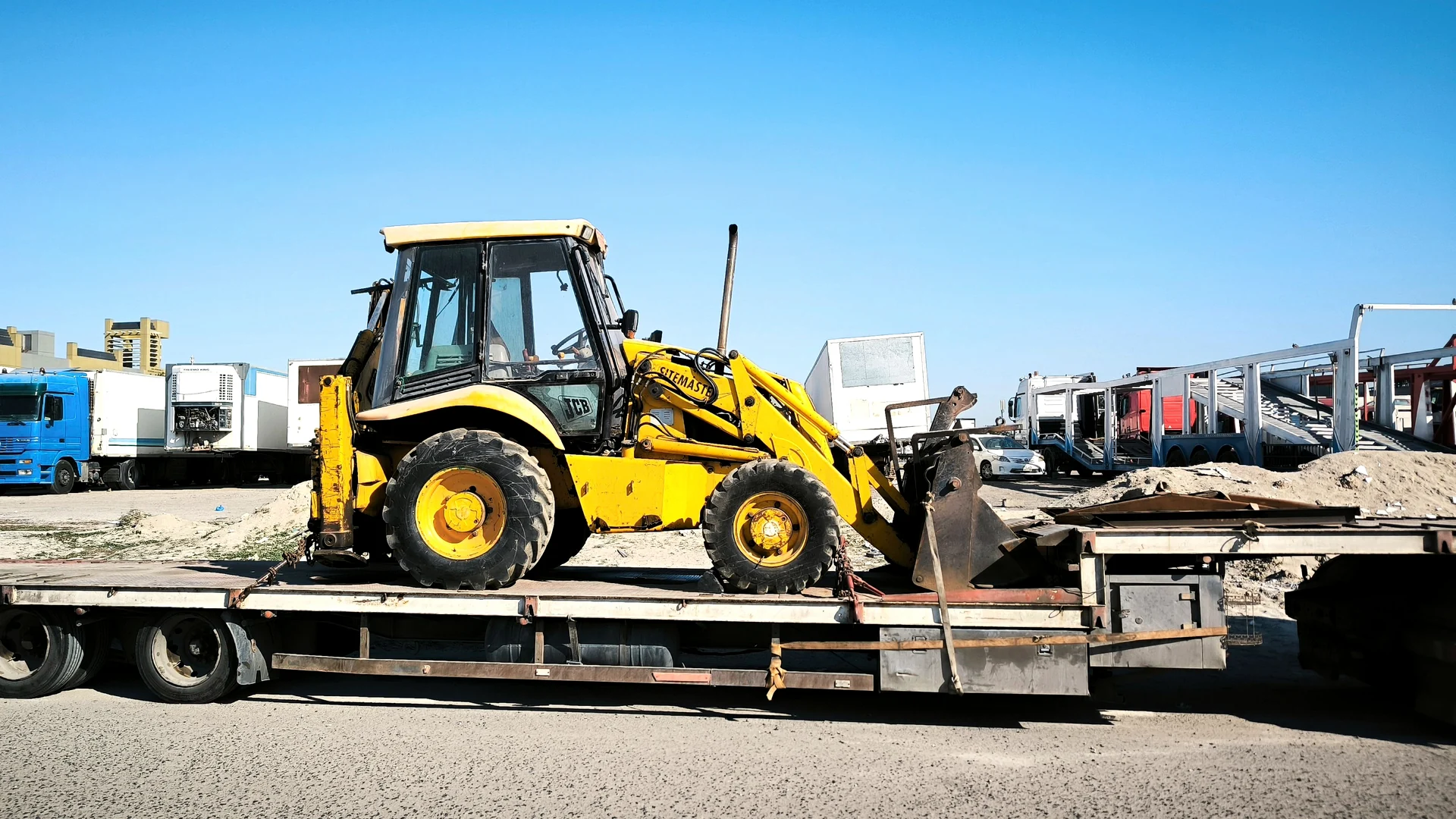
Specialist equipment
Transport of construction machinery, professional equipment and technical assets requiring suitable loading and securing arrangements.
Learn more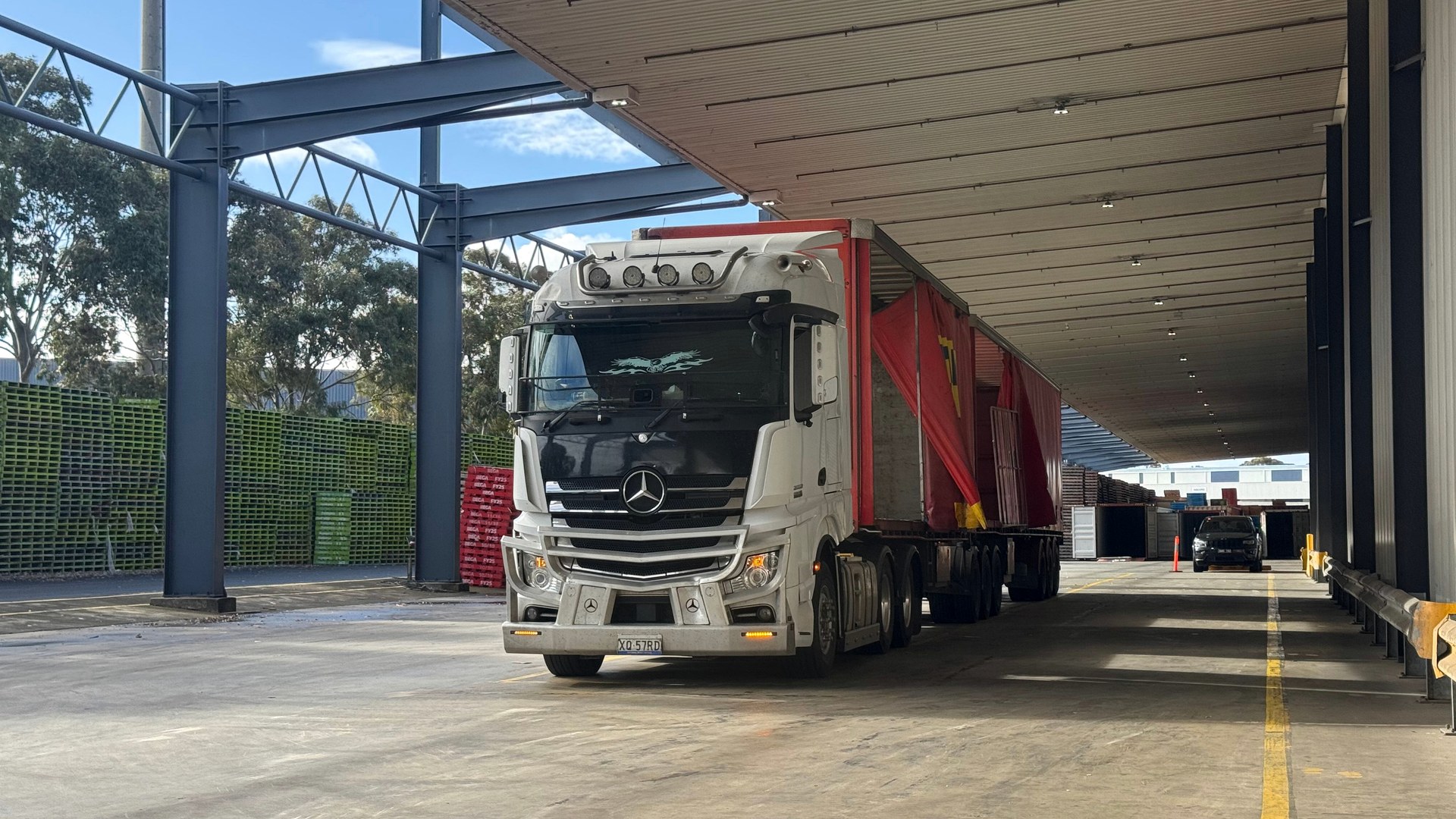
Core business
Road freight transport organised across France and Europe according to your deadlines, goods and site constraints.
Learn more
Tailored capacity
A freight-forwarding solution selected according to volume, destination, lead time and loading requirements.
Learn moreTransport request
Need to organise abnormal loads? Send us the key shipment details so that our team can review the most suitable solution.