Logo Drivet Transport International
Menu

ADR subject to conditions

ADR dangerous goods transport

ADR requests reviewed according to the goods, classification, packaging, available documentation and destination.

ADR dangerous goods transport

ADR transport

Understanding ADR dangerous goods transport

ADR dangerous goods transport concerns the road movement of goods that may present a risk to people, property, infrastructure or the environment. These goods cannot be handled as standard freight because their nature requires a more rigorous review before any transport is arranged.

ADR is the reference framework for the international carriage of dangerous goods by road. It helps determine the conditions under which specific products may be transported, according to their classification, hazards, packaging, quantities, available documents and shipment obligations. The first step is therefore to confirm whether the movement is feasible and under what conditions.

Dangerous goods can include chemicals, flammable liquids, gases, aerosols, paints, solvents, batteries, corrosive products, toxic substances, oxidising materials and other regulated goods. Accurate identification is essential because products that appear similar may be subject to very different requirements.

To review an ADR request, provide as much information as possible from the outset: exact product description, UN number if known, ADR class, packing group, quantity, weight, volume, packaging type, number of parcels or pallets, safety data sheet, transport documents, collection and delivery addresses, requested dates and site-specific constraints.

Packaging is a key part of ADR transport. Goods must be prepared, packed, identified and presented appropriately for their nature. Incomplete identification, unsuitable packaging or missing documentation may prevent acceptance or require further review.

Loading and delivery conditions must also be checked: site access, opening hours, contacts, safety instructions, handling equipment, documents to be handed over and any route or traffic constraints. These details help create a practical and compliant operating plan.

Every ADR request is assessed individually. Some goods may be accepted subject to specific conditions, others may require additional information or a dedicated organisation, and some may not be transportable depending on their nature, quantity, destination or applicable restrictions.

In short, ADR transport is a regulated and technical service. It relies on accurate information, correct identification of the goods, feasibility checks and coordination between shipper, carrier, collection site and delivery site.
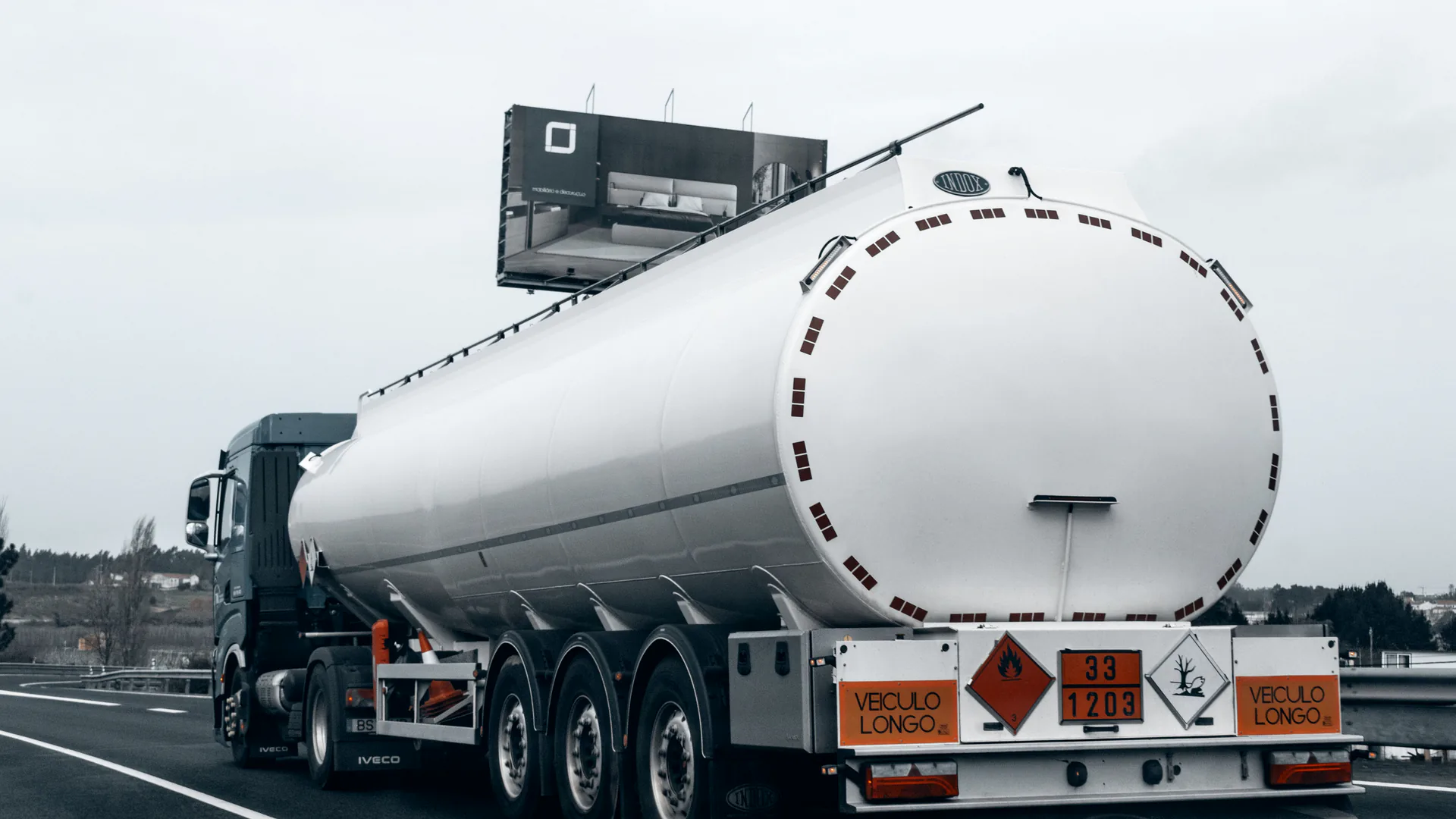
ADR classification

What are the different ADR types? The 9 dangerous goods classes

ADR divides dangerous goods into 9 main classes according to the type of hazard they present during road transport: explosion, flammability, toxicity, radioactivity, corrosivity or environmental danger. Several classes are subdivided to describe the hazard more precisely.

The ADR class helps determine transport conditions, packaging, marks and danger labels, documentation, compatibility rules and requirements applying to the vehicle, driver and loading operations. The class alone is not sufficient: the UN number, proper shipping name, subsidiary hazards, packing group where applicable and quantity carried must also be reviewed.

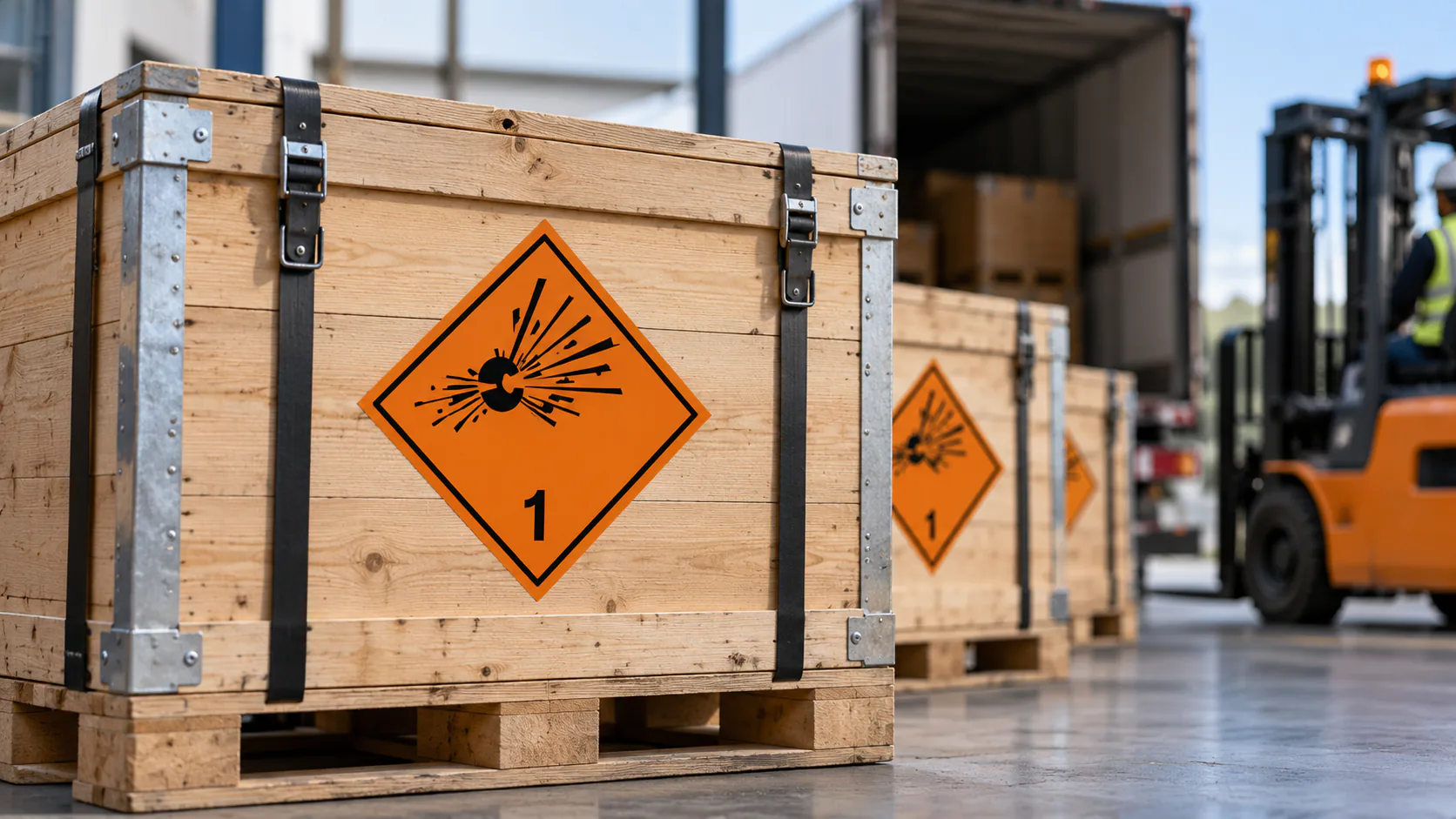
Logistics crates with ADR Class 1 explosives label on pallets

Class 1

Explosives

Divisions 1.1 to 1.6

Class 1 covers substances and articles presenting an explosion or pyrotechnic hazard. Depending on the product, this may include industrial explosives, ammunition or fireworks. Divisions 1.1 to 1.6 distinguish mass explosion, projection, fire and other specific hazards. These movements are highly regulated and may require specific vehicle, driver, loading and routing conditions.

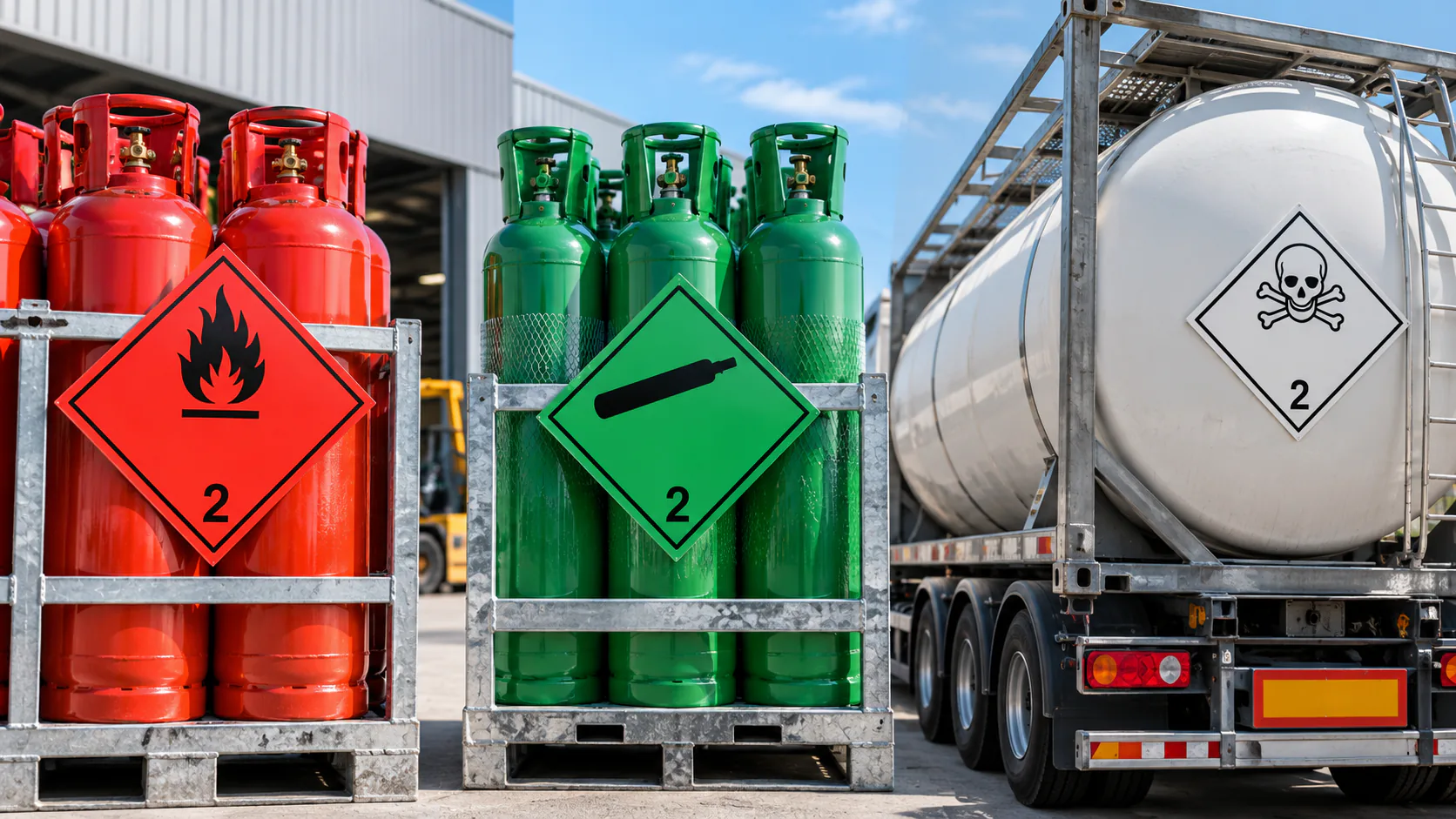
Gas cylinders and tank with ADR Class 2 gas labels

Class 2

Gases

2.1 flammable · 2.2 non-flammable/non-toxic · 2.3 toxic

Class 2 covers compressed, liquefied, dissolved and refrigerated gases. It includes flammable gases in division 2.1, non-flammable non-toxic gases in division 2.2 and toxic gases in division 2.3. Propane, butane, acetylene, oxygen, certain aerosols and industrial gases may fall into this class depending on their exact classification.

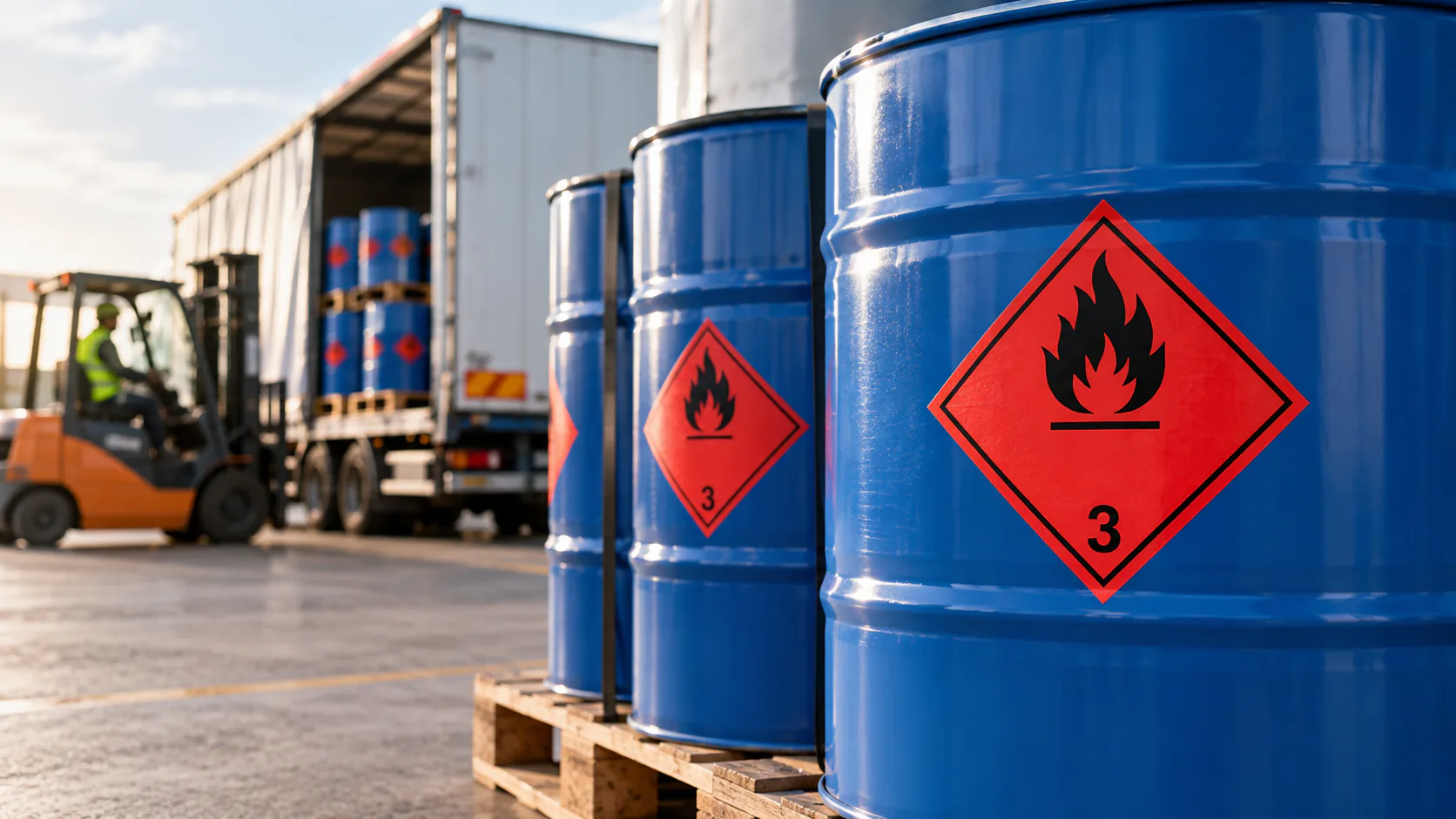
Drums with ADR Class 3 flammable liquid labels in a logistics loading area

Class 3

Flammable liquids

Fuels, solvents, alcohols, paints…

Class 3 covers liquids meeting ADR flammability criteria. It can include fuels, solvents, alcohols, paints, inks and certain chemical products. Flash point, composition, packaging and UN number are key factors when confirming the classification and transport conditions.

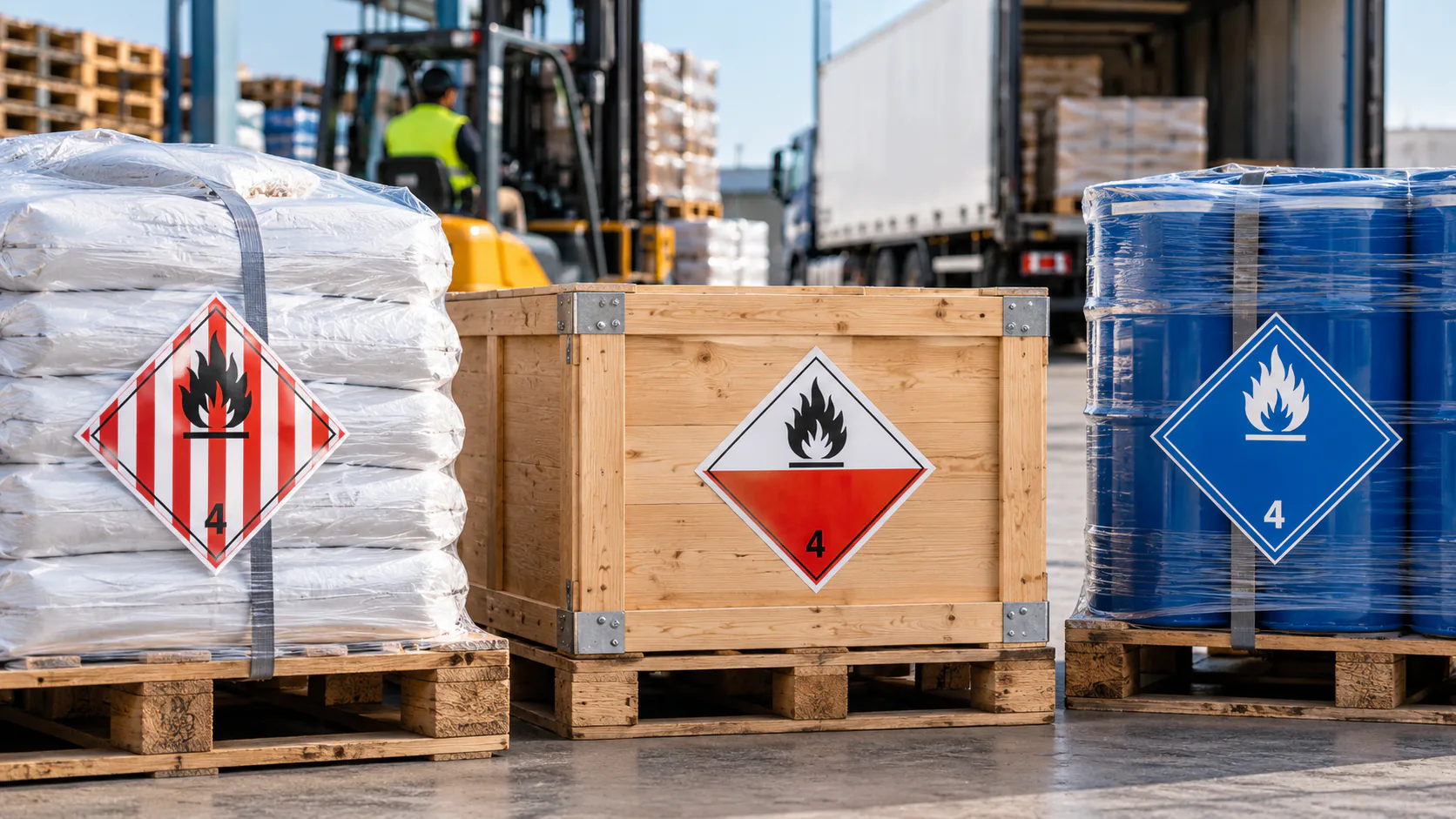
ADR Class 4 pallets with flammable solids and related hazard labels

Class 4

Flammable solids and related hazards

4.1 · 4.2 · 4.3

Class 4 is divided into three groups: 4.1 for flammable solids, self-reactive substances and related materials; 4.2 for substances liable to spontaneous combustion; and 4.3 for substances that emit flammable gases when in contact with water. Packaging, moisture control, segregation and handling requirements may differ significantly between these divisions.

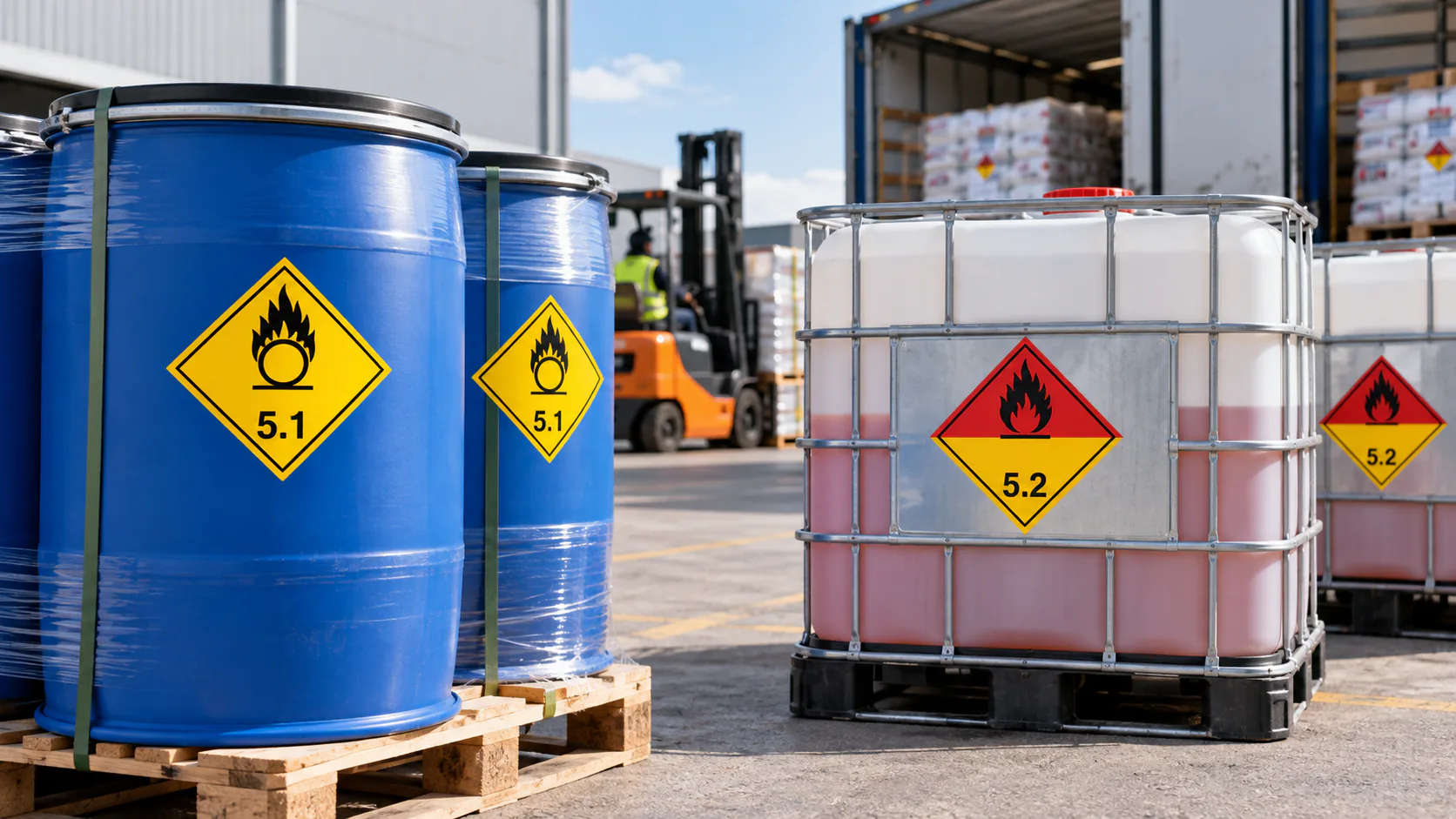
ADR containers with Class 5.1 and 5.2 labels

Class 5

Oxidising substances and organic peroxides

5.1 oxidising · 5.2 organic peroxides

Class 5.1 covers oxidising substances that may cause or intensify combustion. Class 5.2 covers organic peroxides, some of which require strict handling, segregation or temperature-control conditions. Safety data and regulatory information are essential before any transport is arranged.

Packages and insulated container with ADR Class 6 toxic and infectious labels

Class 6

Toxic and infectious substances

6.1 toxic · 6.2 infectious

Class 6.1 covers toxic substances presenting hazards through ingestion, inhalation or contact depending on their properties. Class 6.2 covers infectious substances, including certain biological samples, medical products or wastes when they meet the relevant criteria. Packaging, documents and handling arrangements require particular attention.

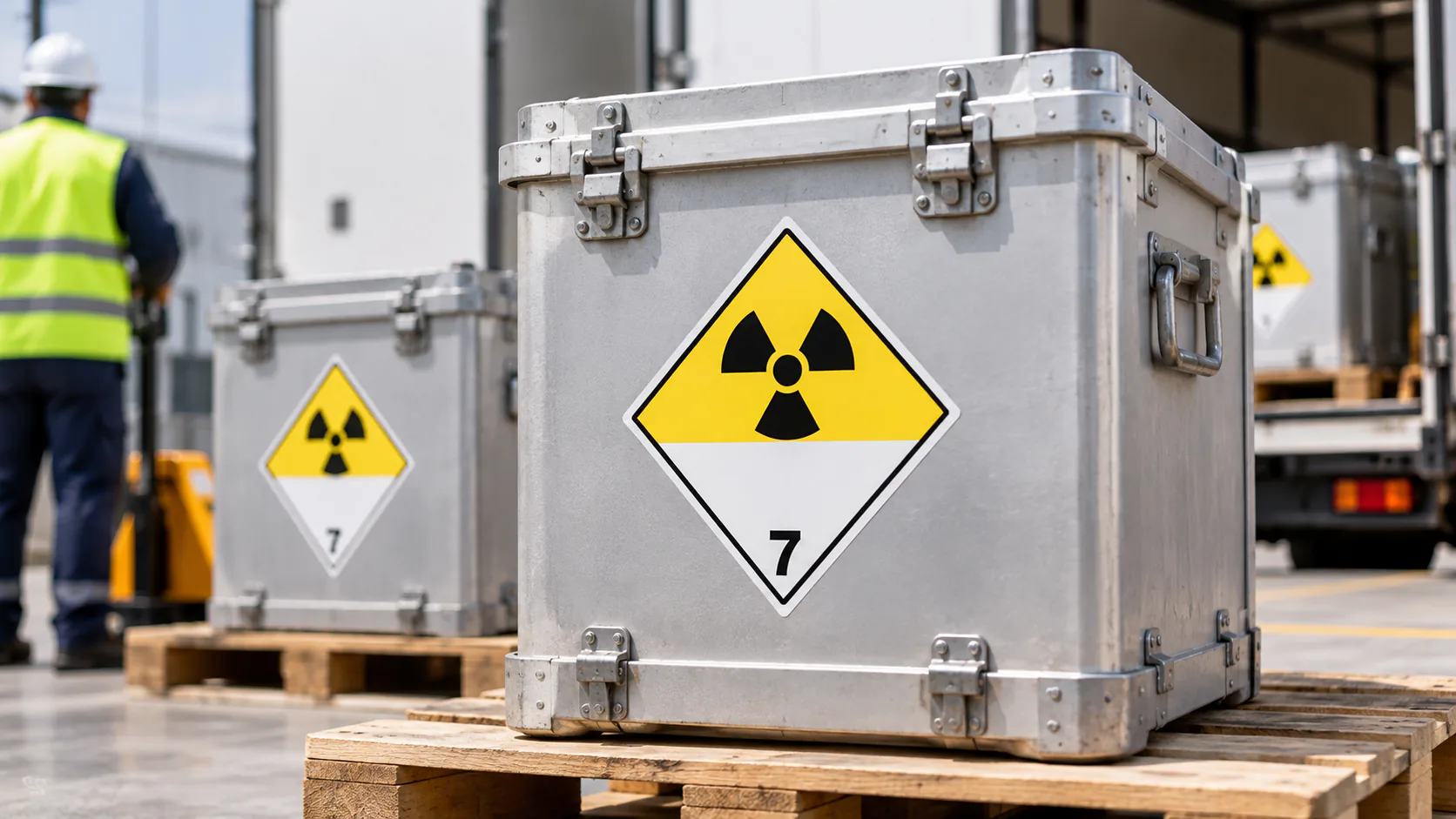
Transport containers with ADR Class 7 radioactive labels

Class 7

Radioactive material

Radiological hazard

Class 7 covers radioactive material. Transport requirements include specific provisions for packages, marking, labelling, documentation, radiation levels and operating conditions. The existence of this class within ADR does not mean that radioactive goods can be carried by any transport operator or on a standard vehicle.

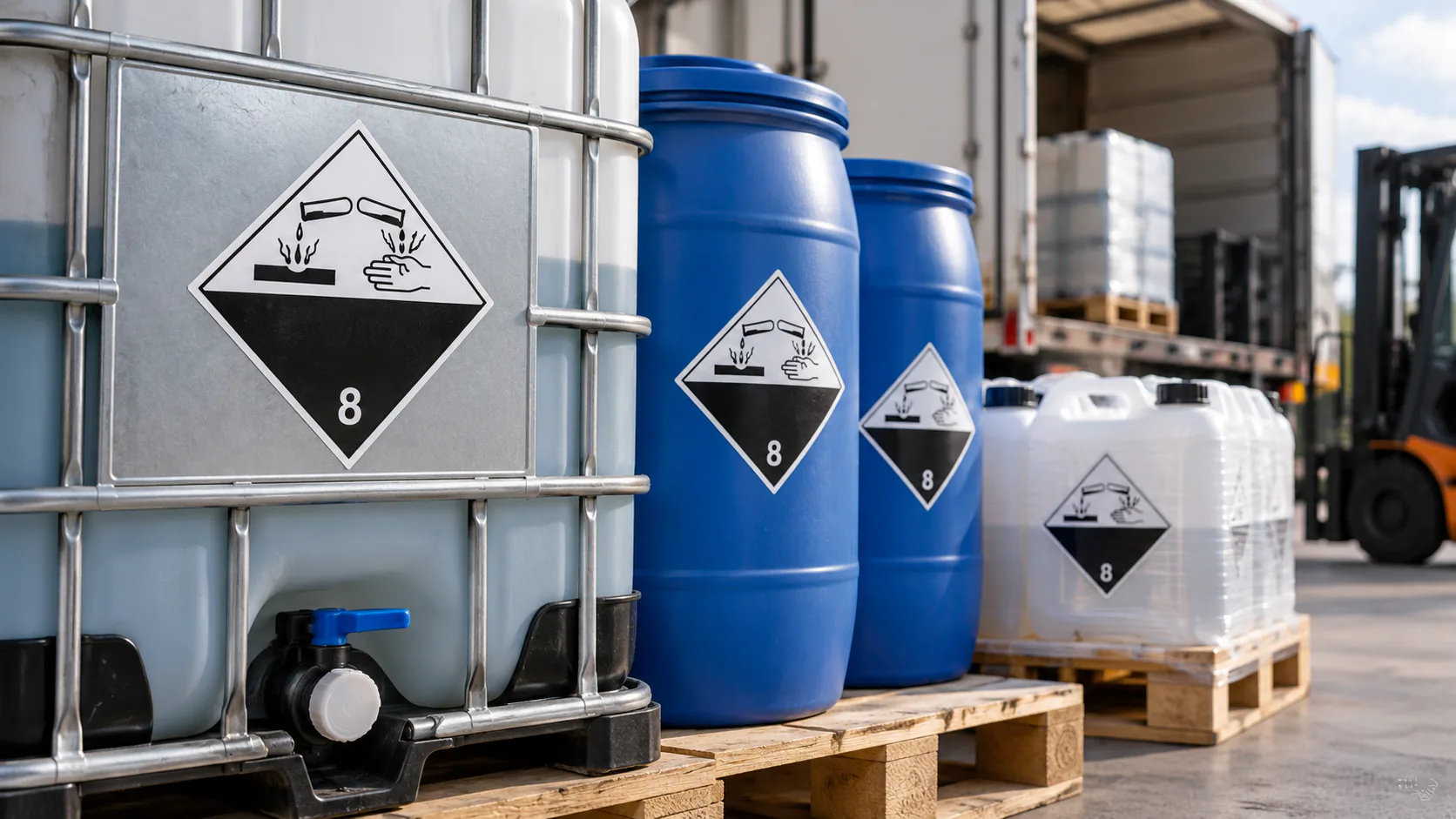
Totes and drums with ADR Class 8 corrosive labels on pallets

Class 8

Corrosive substances

Acids, bases and corrosive chemicals

Class 8 covers corrosive substances capable of damaging living tissue or certain materials. Acids, strong bases and various chemicals may fall within this class depending on composition. Suitable packaging, material compatibility, securing and handling precautions are especially important to reduce leakage or contact risks.

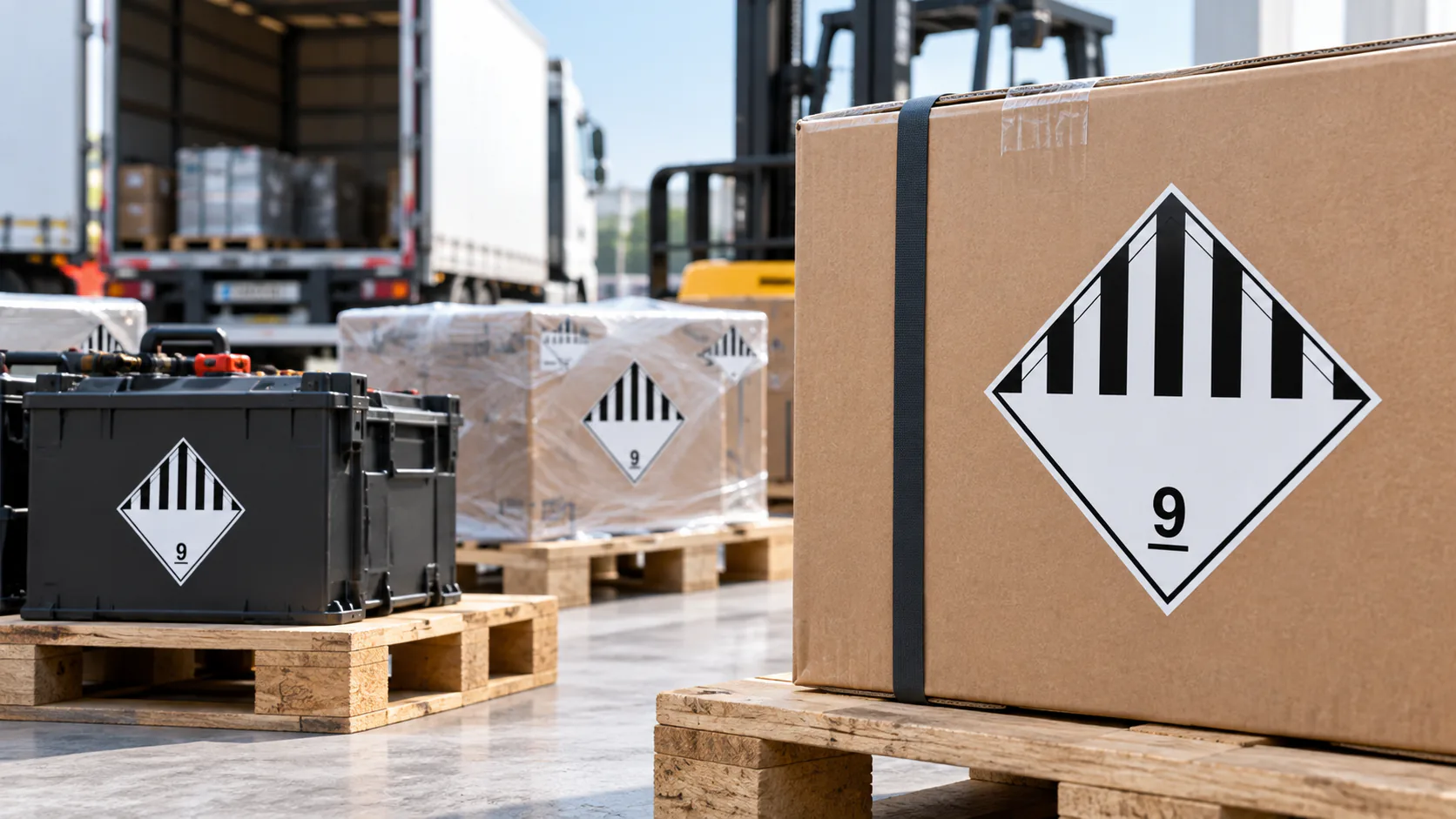
Logistics boxes and cases with ADR Class 9 miscellaneous dangerous goods labels

Class 9

Miscellaneous dangerous substances and articles

Lithium batteries and other hazards

Class 9 includes dangerous substances and articles presenting transport hazards that do not fall directly within the first eight classes. It includes certain lithium batteries, environmentally hazardous substances, regulated articles and some substances transported at elevated temperature. Exact classification always depends on the product and UN number.

Regulatory identification

UN number and proper shipping name

Knowing the ADR class is not enough. Dangerous goods must be identified by their regulatory shipping name and, in most cases, by a four-digit UN number. ADR Table A in Chapter 3.2 lists dangerous goods and the associated provisions, including class, packing group where applicable, labels and transport conditions.

Degree of danger

ADR packing groups I, II and III

For many substances, the packing group indicates the degree of danger: Group I for high danger, Group II for medium danger and Group III for lower danger. This system does not apply uniformly to every ADR class, so the exact product classification and shipper information must always be checked.

Special regimes

Limited quantities, exemptions and the 1,000-point rule

Dangerous-goods classification does not create identical obligations for every shipment. ADR contains regimes for limited quantities, excepted quantities and partial exemptions linked to the quantity carried. The calculation commonly referred to as the “1,000-point rule” depends on the transport category of the goods. Being below that threshold does not mean ADR no longer applies; some requirements remain in force.

Important: every ADR shipment must be reviewed individually. Before transport is arranged, the product description, UN number where applicable, ADR class, subsidiary hazards, packing group where relevant, quantities, packaging and shipper regulatory information should be known. Showing a class on this page does not mean that every product or quantity within that class can be handled by the same carrier or vehicle.

Partial ADR exemption

How does the ADR 1,000-point rule work?

ADR provides, under certain conditions, a partial exemption linked to the quantity of dangerous goods carried per transport unit. Commonly referred to as the ADR “1,000-point calculation”, this rule does not remove the ADR classification of the goods; it only relaxes certain requirements when the relevant conditions are met.

1. Transport category

The calculation depends on the dangerous goods carried

Dangerous goods covered by this regime are assigned to an ADR transport category. Together with the UN number and exact classification, that category determines how the quantity contributes to the calculation. When several dangerous goods are carried in the same vehicle, the relevant quantities are weighted and added according to the ADR rules.

2. Whole transport unit

The points are assessed across the full vehicle load

The threshold is not assessed only pallet by pallet or customer by customer. All ADR goods present in the transport unit must be considered. A shipment representing only a small number of points on its own may therefore contribute to the threshold being exceeded when other dangerous goods are loaded with it.

3. Groupage & distribution

Why is the 1,000-point rule especially important in groupage?

In groupage and distribution, freight from several shippers may share the same vehicle. One ADR pallet may individually fall within the partial-exemption calculation while the truck is simultaneously carrying other dangerous goods belonging to other customers.

The relevant figure is therefore the combined ADR load present in the transport unit. Several consignments together can push the calculation above the 1,000-point threshold. A shipment described as “below 1,000 points” cannot automatically be assumed to remain under that regime once it enters a groupage network; the carrier must know the total vehicle load and apply the corresponding requirements.

4. Requirements that still apply

Below 1,000 points does not mean “outside ADR”

The 1,000-point rule is a partial exemption, not a removal of ADR requirements. Depending on the goods concerned, requirements can still apply to compliant packaging, package marking and labelling, transport documentation, staff training, safety equipment and other ADR provisions. The UN number, transport category, actual quantity and complete vehicle load should therefore be checked before departure.

Key point: in groupage and distribution, the points associated with one pallet or one customer are not sufficient on their own to confirm that the partial exemption applies. The calculation must be assessed across the complete transport unit.

Drivet Transport International

Frequently asked questions

What is ADR and what does it regulate?+

ADR is the international agreement governing the carriage of dangerous goods by road. It covers classification, packaging, marking and labelling, documentation, loading and handling, vehicle equipment and the training and safety obligations of the parties involved.

What are the 9 ADR dangerous-goods classes?+

ADR divides dangerous goods into 9 main classes: explosives, gases, flammable liquids, flammable solids and related hazards, oxidising substances and organic peroxides, toxic and infectious substances, radioactive material, corrosive substances, and miscellaneous dangerous substances and articles. Several classes are further divided into specific divisions.

What is a UN number in ADR transport?+

A UN number is a four-digit identifier assigned to a dangerous substance, article or group of goods with similar transport characteristics. Together with the proper shipping name, ADR class, subsidiary hazards and packing group where applicable, it helps determine the transport provisions that apply.

What information is required for an ADR transport quote?+

Useful information includes the exact product description, UN number, ADR class, subsidiary hazards, packing group where applicable, quantity, weight, packaging, number of parcels or pallets, safety data sheet if available, collection and delivery addresses, required dates and any loading or delivery constraints.

How does the ADR 1,000-point rule work?+

ADR 1.1.3.6 provides a partial exemption linked to the quantity of dangerous goods carried per transport unit. Relevant goods are assigned to a transport category and, when different dangerous goods are carried together, the quantities are weighted and added according to ADR rules. The total must remain within the applicable threshold for the partial exemption to apply.

Can ADR dangerous goods be carried by groupage or distribution networks?+

Yes, some ADR goods may be accepted in groupage when the network and carrier permit them and the relevant requirements are met. However, the quantity calculation is made for the entire transport unit, so dangerous goods belonging to several customers can accumulate and cause the 1,000-point threshold to be exceeded.

Does being below 1,000 points mean ADR no longer applies?+

No. The 1,000-point rule is a partial exemption, not an exclusion from ADR. Requirements can still apply to compliant packaging, package marking and labelling, transport documentation, safety measures and the Chapter 1.3 training of personnel involved in dangerous-goods operations.

What is the difference between ADR limited quantities and the 1,000-point rule?+

Limited quantities and the exemption under ADR 1.1.3.6 are separate regimes. Limited quantities are linked in particular to the permitted quantities per inner packaging and specific packaging and marking conditions. The 1,000-point calculation is based on dangerous goods carried in the transport unit and their transport categories.

Does the driver always need an ADR training certificate?+

It depends on the regime applying to the shipment. Fully regulated ADR movements may require the appropriate ADR driver training certificate. Under certain movements benefiting from the partial exemption in 1.1.3.6, the driver's basic ADR certificate may not be mandatory, while Chapter 1.3 training for personnel involved in dangerous-goods activities still applies.

Is a safety data sheet enough to arrange ADR transport?+

A safety data sheet can provide useful classification and transport information, but it does not replace all transport checks or documents. The UN number, proper shipping name, class, packing group where applicable, quantities and actual packaging should still be confirmed before the shipment is arranged.

Are lithium batteries subject to ADR?+

Certain lithium batteries are classified in ADR Class 9 and have specific UN numbers depending on their type and configuration. The applicable requirements vary according to the battery, capacity, packaging, condition and whether it is shipped alone, packed with equipment or contained in equipment.

Can ADR dangerous-goods transport be arranged across France and Europe?+

Yes. Drivet Transport International can review dangerous-goods movements within France and on European routes. Feasibility depends on the product classification, quantity, packaging, vehicle requirements, documentation, route and any restrictions applying to the journey or countries involved.

Transport request

Need a transport quote?

Need to organise adr transport? Send us the key shipment details so that our team can review the most suitable solution.

Request a transport quote