
Logo Drivet Transport International
Menu

Tail lift: definition, operation and capacities

Understand how a hydraulic tail lift works, its usual capacities and dimensions, which vehicles can be equipped with one and why it is often used with a pallet truck.

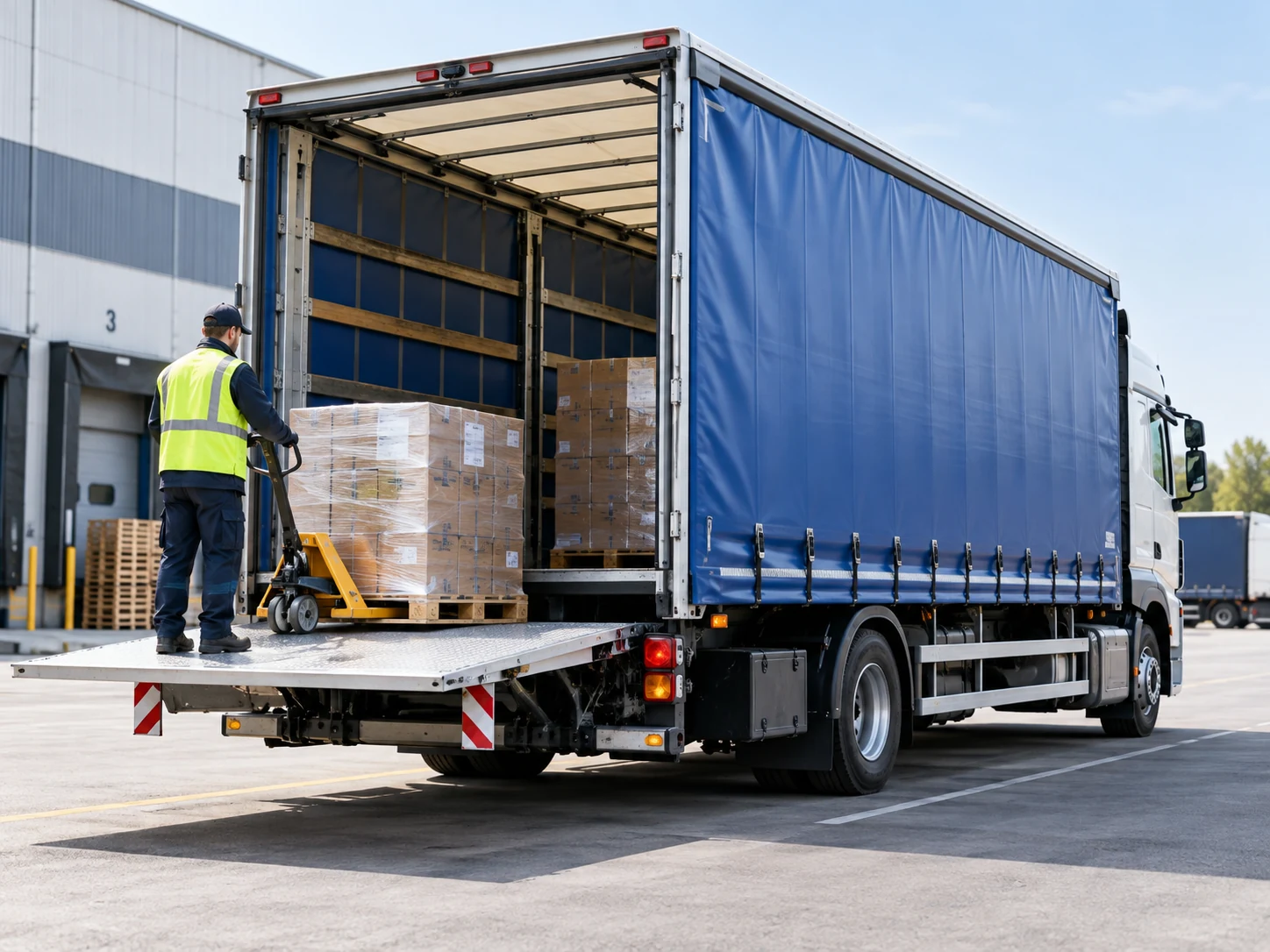
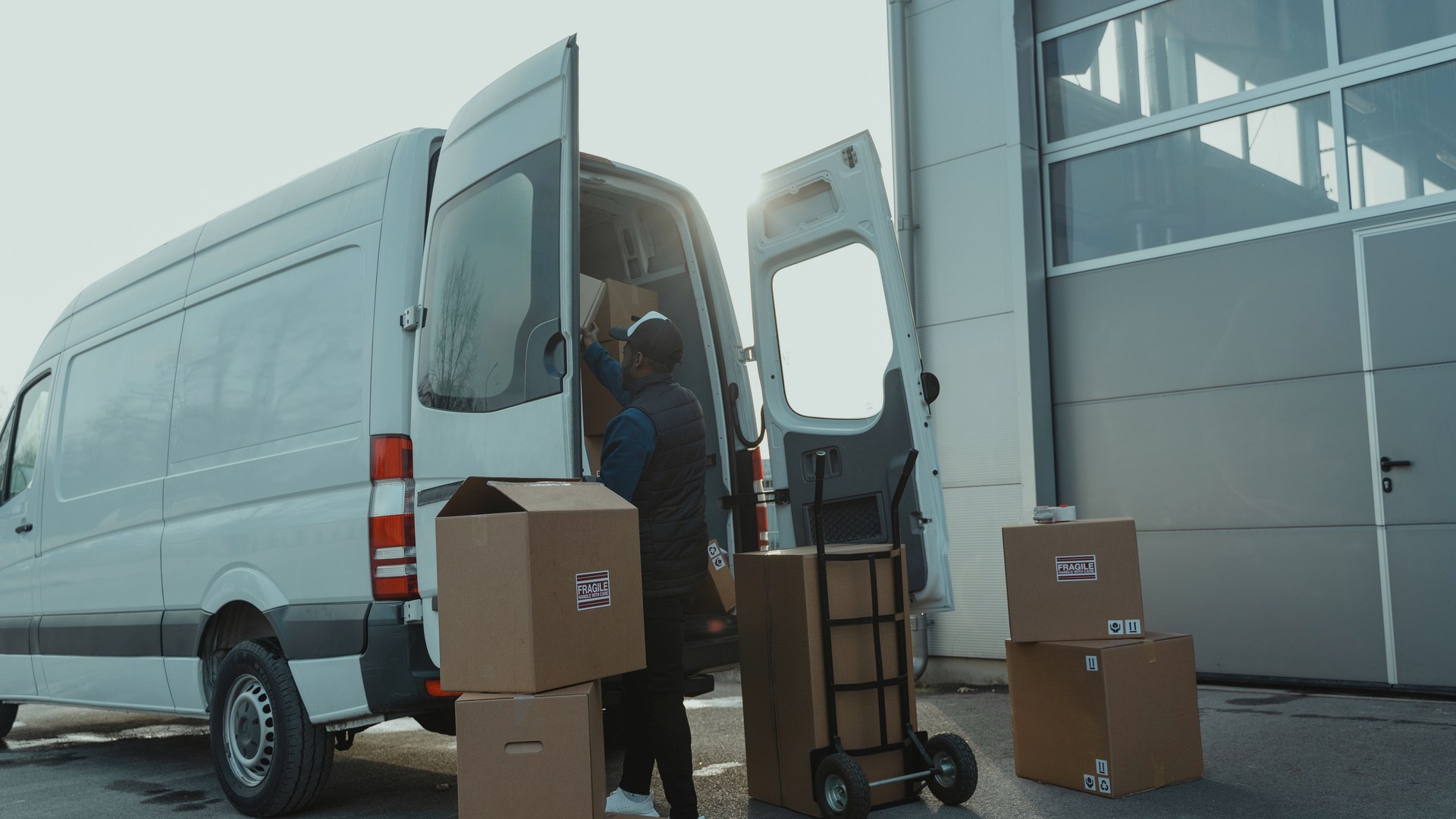
Tail lift being used with a pallet truck for a delivery without a loading dock

Definition

What is a tail lift?

A tail lift is a lifting platform fitted to the rear of a commercial vehicle. It creates a mobile bridge between ground level and the vehicle floor, allowing pallets, roll cages, equipment or other loads to be raised and lowered when no loading dock or forklift is available at the delivery site.

There is no single universal tail lift. Capacity, platform dimensions, hydraulic layout and installation geometry vary according to the vehicle, the body and the intended work. Current manufacturer ranges cover factory-built vans, box bodies, curtainsiders, rigid trucks, trailers and semi-trailers, with standard capacities ranging from a few hundred kilograms to several tonnes.

Hydraulic operation

How does a tail lift work?

Hydraulic power and cylinders

The lift is generally powered by an electro-hydraulic unit supplied by the vehicle’s 12 V or 24 V electrical system. The pump pressurises hydraulic oil and feeds the cylinders. Depending on the design, a light-duty model may use one lifting cylinder and one tilt cylinder, while more powerful four-cylinder systems use two lifting cylinders and two tilt cylinders.
Capacity and load centre

The number shown on the tail lift is not a capacity that applies everywhere on the platform. Manufacturers define the nominal load at a specific load distance, commonly around 600 to 1,000 mm depending on the model. If the centre of gravity moves further away from the vehicle, the permitted load decreases according to the load diagram supplied with the lift.

Technical guide

Typical capacities and dimensions

There is no universal dimension. The figures below are representative examples from current specialist-manufacturer ranges and must always be checked against the actual lift and vehicle.

500–750 kg

Vans and light vehicles

Common light-duty ranges include 600 and 750 kg lifts. Platform dimensions around 1.45 to 1.80 m are found depending on model and vehicle.

1 000 kg

Medium distribution

1,000 kg models are common on medium vehicles. Current examples use load distances of 600 or 800 mm and platforms around 1.80 m.

1 500 kg

Heavy distribution

Four-cylinder 1,500 kg lifts are widely available for rigid trucks and heavier configurations, with load distances typically around 750 to 1,000 mm.

2,000 kg +

Heavy-duty applications

2,000 kg units are available for heavy trucks, trailers and semi-trailers. Specialist ranges go beyond this for specific applications.

Platform size: on truck tail lifts, platform depths around 1.6 to 2.0 m are common, with specialist manufacturer variants reaching about 2.25 m; full-width platforms can approach the vehicle width, up to around 2.55 m on some heavy-duty models.

Vehicle compatibility

Which vehicles can be fitted with a tail lift?

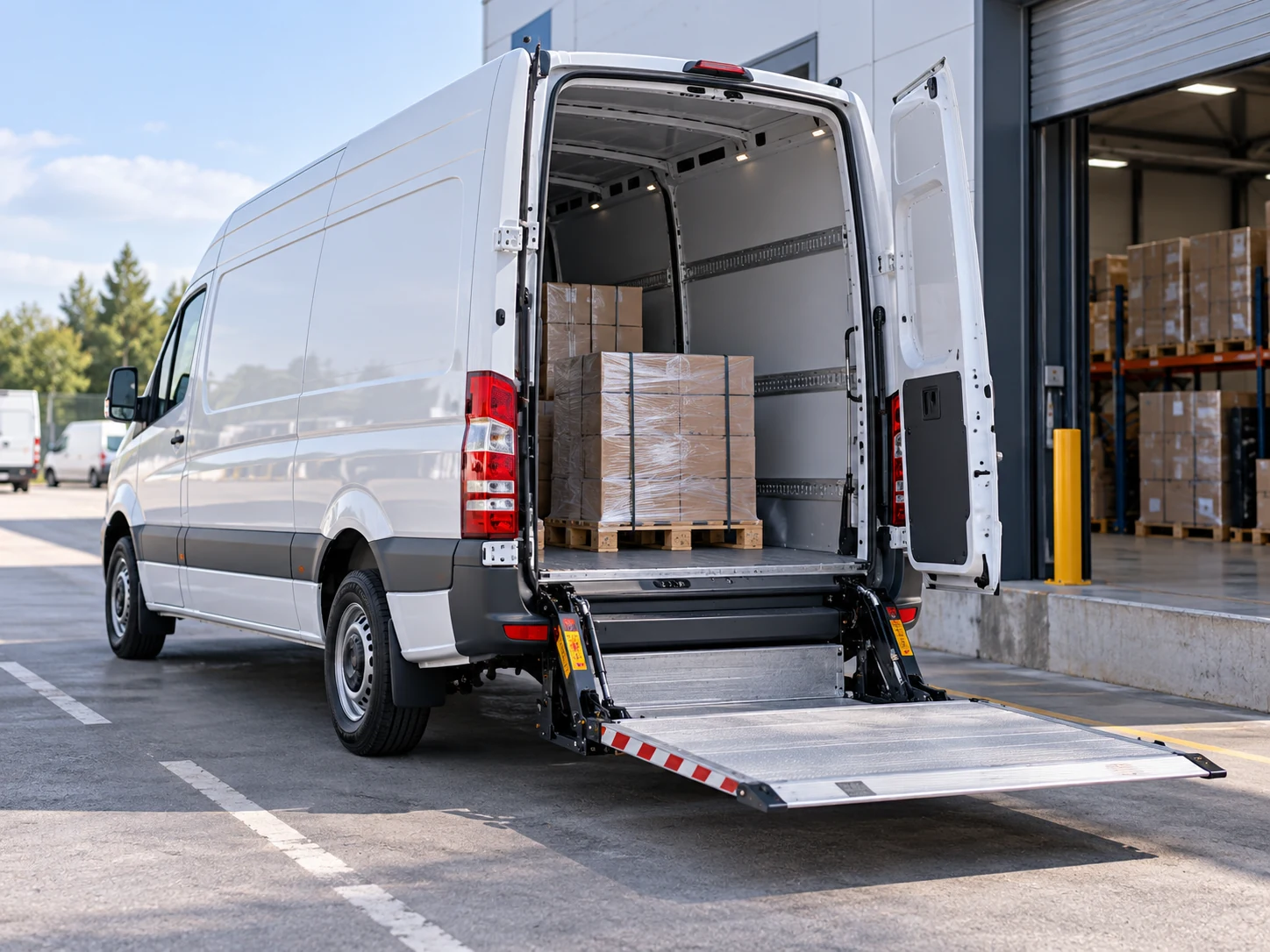
Large panel van equipped with a tail lift for pallet deliveries
Factory-built vans and large panel vans
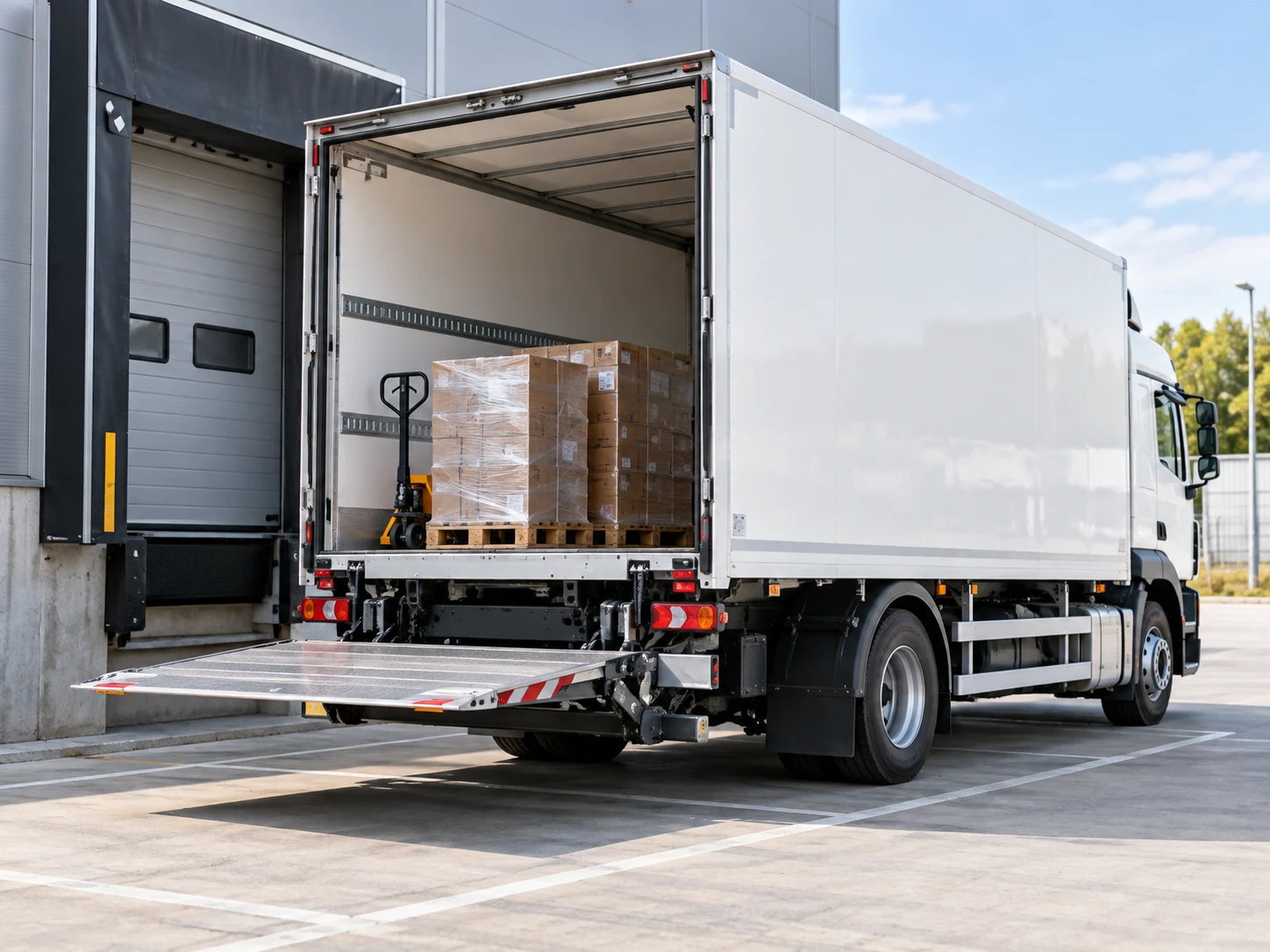
Box truck equipped with a rear tail lift
Box trucks
Curtainsider truck fitted with a tail lift and pallet truck
Curtainsiders and Tautliner-type bodies
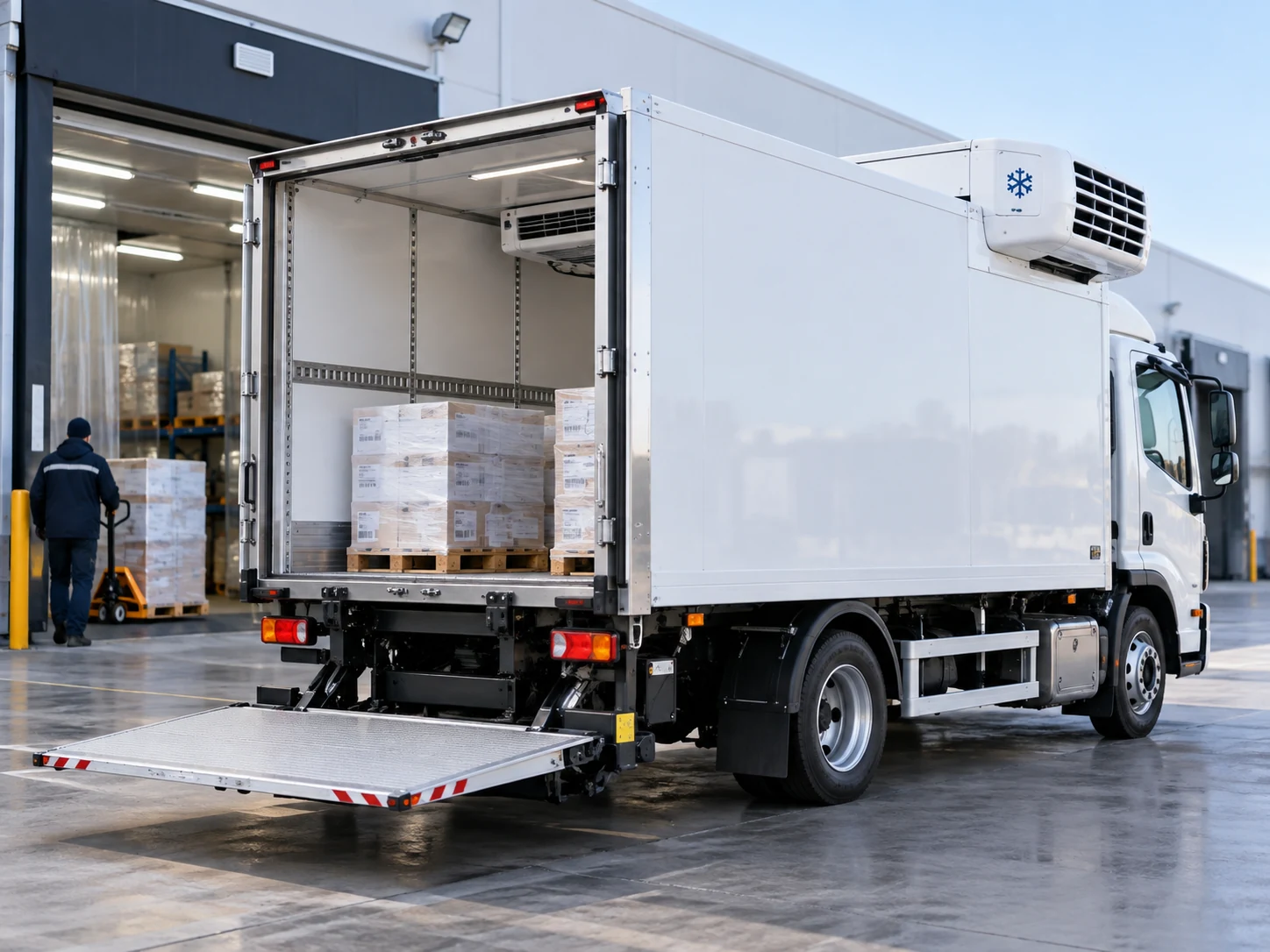
Refrigerated truck fitted with a rear tail lift
Refrigerated bodies, depending on configuration
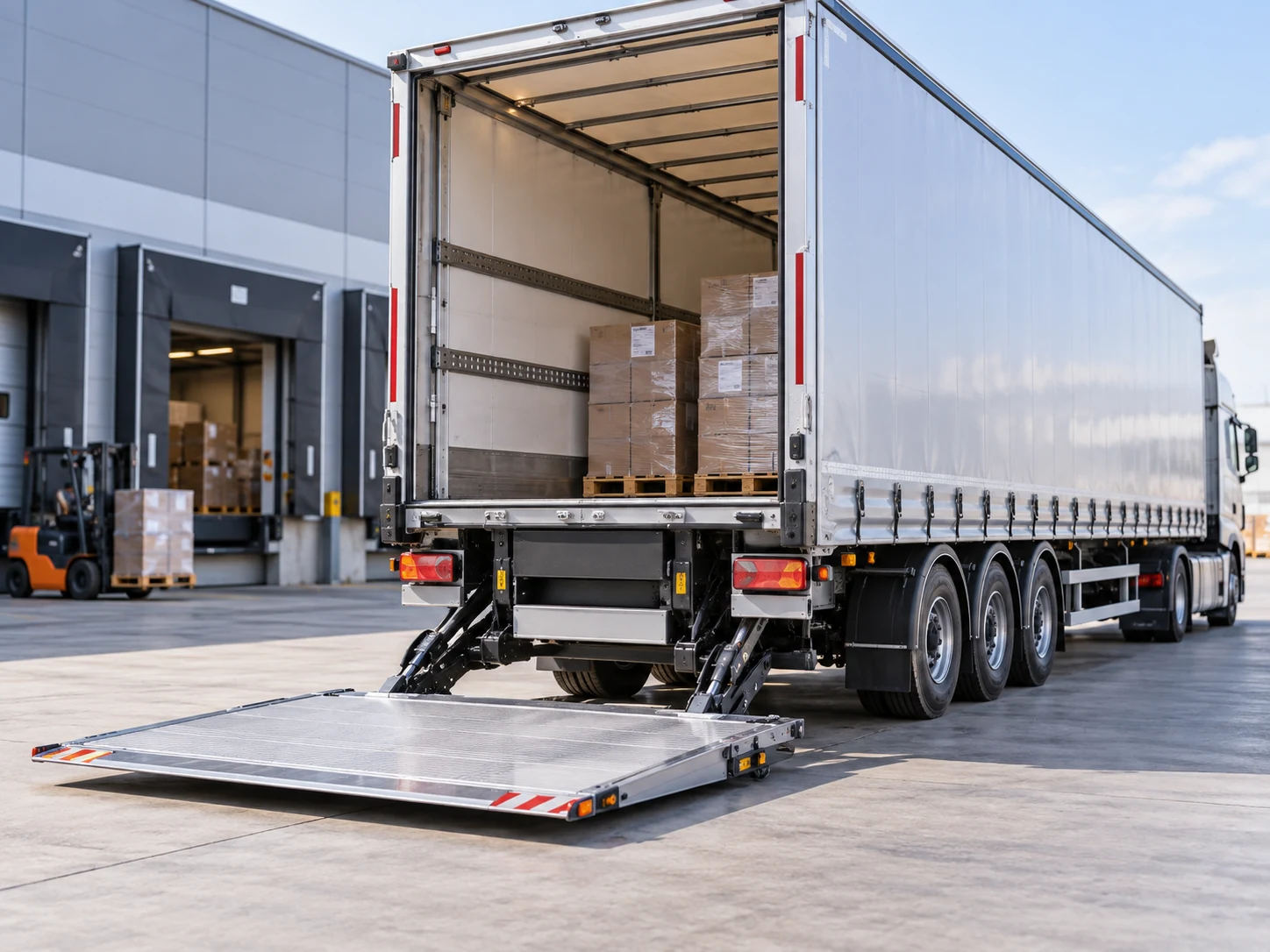
Semi-trailer equipped with a heavy-duty tail lift
Trailers and semi-trailers

Installation is never determined by body type alone. Rear overhang, chassis geometry, ground clearance, tow coupling, body height, electrical system and the remaining payload must all be checked before selecting a lift.

Tail lift + pallet truck

A combination designed for deliveries without a dock

The tail lift provides the vertical movement, but it does not move a pallet across the vehicle floor or across the delivery site. This is why drivers using tail-lift vehicles are often equipped with a manual or electric pallet truck. The pallet truck moves the load horizontally, while the tail lift moves it between ground level and vehicle-floor level.

The combined weight of the pallet, the goods and the pallet truck must remain compatible with the tail lift’s load diagram and with the vehicle’s payload.

Configurations

The main types of tail lift

Standard cantilever

The platform closes vertically at the rear of the body. This is a very common configuration on distribution trucks.

Retractable / tuck-away

The lift is stored underneath the chassis when not in use, preserving rear access and often facilitating dock operations.

Partial or specialised platform

Partial-width, column and specialist platforms exist for particular access, body or handling requirements.

Use cases

When is a tail lift particularly useful?

Delivery to a site without a loading dock
Urban delivery where handling equipment is unavailable
Pallet delivery to shops, workshops or small sites
Collections from locations without a forklift

Drivet Transport International

Frequently asked questions

What load can a tail lift carry?+

It depends on the model and the load centre. Common distribution tail lifts are often rated from around 500 or 600 kg up to 2,000 kg, with specialised models available above that. The nominal capacity only applies at the load distance specified by the manufacturer, so the permitted load decreases when the centre of gravity moves further away from the vehicle.

Can a tail lift be installed on a van or curtainsider?+

Yes, depending on the chassis, body, rear overhang and payload. Manufacturers offer solutions for factory-built vans, box trucks, curtainsiders, rigid trucks, trailers and semi-trailers. The installation must always be matched to the exact vehicle configuration.

What is the difference between a standard and a retractable tail lift?+

A standard cantilever tail lift normally closes vertically at the rear of the vehicle. A retractable model slides or folds underneath the chassis when not in use, which can preserve rear access or make dock loading easier depending on the configuration.

Why is a pallet truck often used with a tail lift?+

The tail lift raises or lowers the pallet between vehicle-floor level and ground level, while the pallet truck moves the pallet horizontally. Drivers therefore often carry a manual or electric pallet truck when delivering to sites without a loading dock or handling equipment.

Does the nominal capacity apply across the whole platform?+

No. Tail-lift capacity is linked to a specified load centre or load distance. The operator must follow the load diagram supplied with the lift, because the safe working load decreases as the load centre moves further away from the rear of the vehicle.

Transport request

Need a transport quote?

Tell us the pallet dimensions, weight, collection and delivery addresses and whether a loading dock is available. We can then review the most suitable road-transport solution.

Request a transport quote