Logo Drivet Transport International
Menu

Pallet truck: manual, electric, weighing and self-loading

Understand the main types of pallet trucks, their usual capacities and dimensions, weighing versions, self-loading equipment and how they are used with tail lifts during deliveries.

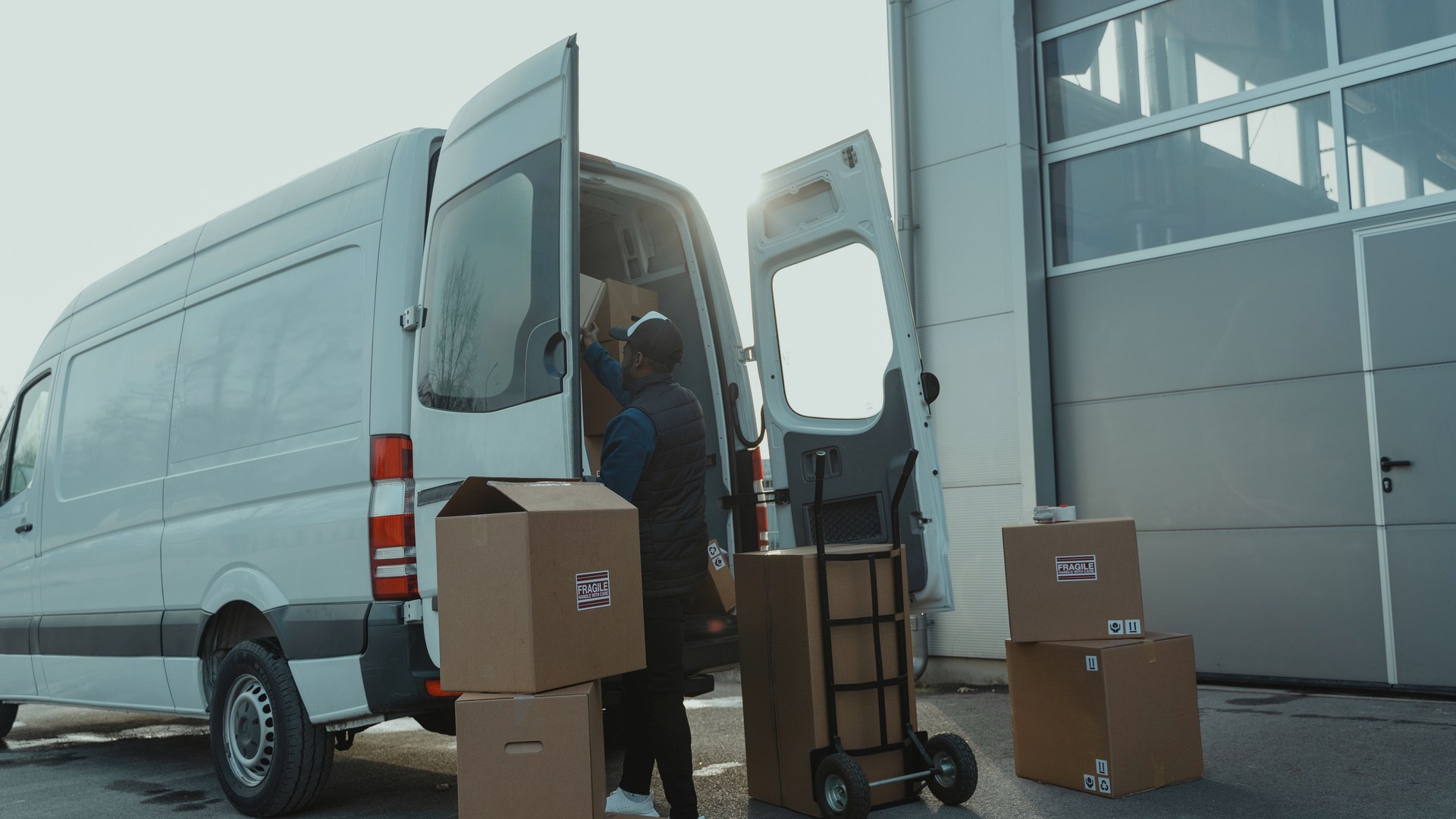
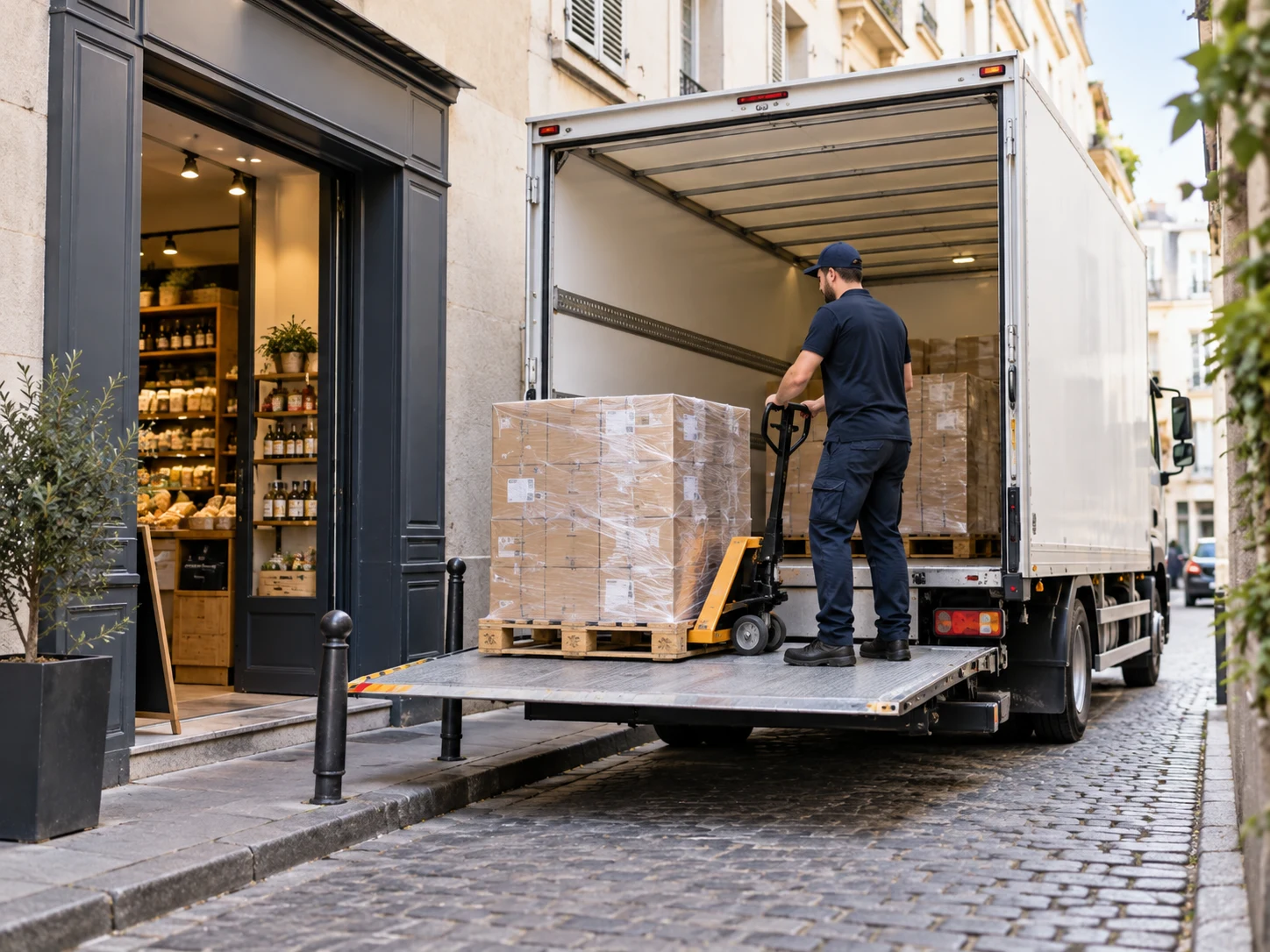
Driver using a manual pallet truck to move a pallet during a delivery

Definition

What is a pallet truck?

A pallet truck is a short-distance handling device designed to slide its forks under a pallet, lift it only a small distance from the floor and move it horizontally. Unlike a forklift or stacker, a conventional pallet truck is not designed to stack loads at height: its purpose is to move pallets efficiently on a suitable floor, inside a warehouse, on a loading dock or inside a vehicle.

Manual pallet trucks use a hydraulic pump operated through the tiller. Electric models add powered travel and, depending on the design, powered lifting. Specialist variants can also weigh the load or even load themselves into a van, which is useful when the driver must deliver without a loading dock, forklift or conventional tail lift.

Main configurations

The main types of pallet truck

Manual pallet truck

The most common configuration. The tiller operates a hydraulic pump to raise the forks, while the operator pulls or pushes the truck. It is simple, robust and well suited to occasional or regular pallet movements on smooth, level floors.

Electric pallet truck

A battery-powered drive motor moves the machine, reducing physical effort. Compact pedestrian electric pallet trucks are particularly suitable for truck loading and unloading, repetitive movements and onboard use when their weight and dimensions are compatible with the vehicle.

Weighing pallet truck

Load cells are integrated into the forks and connected to a display. The operator can therefore move and weigh the pallet with the same machine. Professional ranges include both manual and electrically driven weighing models.

Self-loading pallet loader

This is a specialist machine rather than a conventional hand pallet truck. Using support legs and a higher lifting system, it can raise a pallet to vehicle-floor level and then load the machine itself into a van or light truck. This allows a single driver to deliver pallets without a conventional tail lift.

Technical guide

Capacities and dimensions commonly found

There is no universal specification. The values below are useful reference points taken from current professional ranges and must always be checked on the exact machine in use.

2.0–2.5 t

Common manual range

Professional hand pallet trucks are commonly found around 2,000 to 2,500 kg. A typical EUR-pallet configuration uses forks around 1,150 mm long and roughly 520 to 555 mm overall fork width.

1.4–2.0 t

Compact electric range

Compact pedestrian electric ranges commonly cover 1,400 to 2,000 kg and are designed for pallet transport, truck loading and onboard use. Heavier electric models also exist above this range.

2.0–2.5 t

Weighing versions

Current weighing pallet trucks include 2,000 and 2,500 kg models using multiple load cells under the forks. Exact weighing accuracy and certification depend on the specific equipment.

400–1,000 kg

Self-loading systems

Specialist self-loading pallet loaders are available in several sizes, with current ranges covering roughly 400 to 1,000 kg and different loading heights to suit vans and light trucks.

Fork length, fork width, wheel material, service weight, battery type and turning radius vary significantly by model. Before carrying a pallet truck in a vehicle, its own weight must also be deducted from the available payload.

Self-loading equipment

How can a driver work without a tail lift?

The equipment sometimes seen in small delivery vans is generally a dedicated self-loading pallet loader or compact stacker rather than an ordinary pallet truck. Its lifting mechanism raises the pallet to the vehicle loading height. Support legs then allow the chassis of the machine to be raised so that the loader itself can be pushed or driven into the vehicle.

This type of solution can make a driver autonomous when the collection or delivery site has no dock or forklift and the van is not equipped with a conventional tail lift. It also has stricter limits than a standard warehouse pallet truck: payload, loading height, pallet format, vehicle floor height and the self-loader's own weight must all be checked.
Pallet truck + tail lift

The standard combination for deliveries without a dock

A conventional pallet truck only moves the pallet horizontally. When the vehicle floor is higher than the ground, a tail lift is often used to raise or lower the pallet and the pallet truck together.

The total weight placed on the lift is therefore the pallet truck plus the pallet and the goods. This combined weight must remain within the lift's load diagram and the vehicle's available payload.

Use cases

When is a pallet truck particularly useful?

Moving palletised goods over short distances
Truck loading and unloading with a tail lift
Deliveries to shops, workshops and small sites
Repeated warehouse handling with an electric model
On-the-spot weight checks with a weighing pallet truck
Autonomous van delivery with a self-loading system

Before use

Points to check before moving a pallet

✓Actual weight of the pallet and load
✓Condition and format of the pallet
✓Rated capacity of the pallet truck
✓Floor quality, slope and surface condition
✓Compatibility with the tail lift or truck floor
✓Required travel distance and frequency of use

Drivet Transport International

Frequently asked questions

What is the difference between a manual and an electric pallet truck?+

A manual pallet truck uses a hydraulic pump operated through the tiller and the operator provides the traction. An electric pallet truck uses a battery-powered drive motor, and depending on the model may also power the lift. Electric versions reduce physical effort and are especially useful for frequent movements, ramps or heavier daily use.

How much can a pallet truck carry?+

It depends on the model. Common manual pallet trucks are often rated around 2,000 to 2,500 kg, while compact electric pedestrian models commonly cover about 1,400 to 2,000 kg. Heavier electric ranges also exist. The rated capacity shown on the machine must never be exceeded.

Can a pallet truck be used without a tail lift?+

Yes, if the pallet is already at the same level as the vehicle floor or if another loading method is available. Standard pallet trucks cannot load themselves into a van from ground level. Dedicated self-loading pallet loaders exist for this purpose and can allow a driver to work independently without a conventional tail lift.

What is a weighing pallet truck?+

A weighing pallet truck integrates load cells and a weight display so the operator can move and weigh a pallet with the same machine. Capacities of 2,000 to 2,500 kg are common in current professional ranges, although the exact precision and any certified weighing function depend on the model.

What is a self-loading pallet truck?+

The term is commonly used for specialised compact self-loading stackers or pallet loaders that can raise the pallet to vehicle-floor level and then load the machine itself into a van or light truck. They are not conventional hand pallet trucks. Current specialist ranges include models from roughly 400 to 1,000 kg depending on the required loading height.

Transport request

Need a transport quote?

Tell us the goods, pallet weight, access constraints and unloading conditions so our team can assess the appropriate transport and handling solution.

Request a transport quote